

Best Battery Charger for Car: 7 Smart Chargers Compared
A weak or discharged 12-volt battery can leave your car unable to start, but the right charger depends on the battery chemistry, voltage, capacity, and how quickly you need to recharge it. This guide compares seven currently identified chargers and maintainers, from low-current storage units to higher-output models. It also separates a charger from a jump starter: a charger replenishes a battery over time, while a jump starter supplies short-term starting power. Before connecting any device, check the vehicle owner’s manual for the correct charging points and procedure. Follow the battery and vehicle makers’ manuals for charging instructions and approved connection points. NHTSA separately advises checking a vehicle’s battery and charging system before winter driving.
Quick Picks
| Product | Best for | Key advantage | Purchase link | Jump to Review |
|---|---|---|---|---|
| PZ.P 15-Amp Smart Battery Charger | Faster charging for compatible 12V or 24V batteries | 12V 15A / 24V 8A; lead-acid and LiFePO4 modes | Check the price on Amazon | Jump to Review |
| NOCO GENIUS1 1-Amp Smart Charger | Low-current maintenance and smaller batteries | 6V/12V, lead-acid and LiFePO4 support | Check the price on Amazon | Jump to Review |
| Mroinge MBC022 2-Amp Maintainer | Low-current care with a selectable battery-type version | 12V 2A; listing identifies lead-acid and LiFePO4 | Check the price on Amazon | Jump to Review |
| Battery Tender 3-Amp Charger and Maintainer | Routine charging and maintenance for 6V/12V batteries | Switchable 6V/12V; lead-acid and lithium modes listed | Check the price on Amazon | Jump to Review |
| 12-Amp Smart Battery Charger and Maintainer | Higher-output charging for compatible 12V/24V batteries | Listing states 12A at 12V and 7.5A at 24V | Check the price on Amazon | Jump to Review |
| 20-Amp Smart Charger for 12V/24V Batteries | Faster charging when the battery maker permits 20A | Listing states 12V/20A and 24V/10A | Check the price on Amazon | Jump to Review |
| E-FAST 25A Smart Battery Charger | Higher-output charging for compatible 12V/24V batteries | Selectable 2A–25A modes; listing includes 12V booster mode | Check the price on Amazon | Jump to Review |
1. PZ.P 15-Amp Smart Battery Charger

What We Like
- Selectable battery chemistry
- Temperature compensation
- Status display
- Automatic maintenance
What We Don’t Like
- AC outlet required
- Not a jump starter
The PZ.P is the highest-output option in this group for owners who regularly charge larger compatible batteries and want a display with current charging information. Its Amazon Creators listing identifies 12V output up to 15 amps and 24V output up to 8 amps, with separate support stated for lead-acid types and LiFePO4. It also lists temperature compensation, a long lead, and a multistage charging process. Those details make it easier to compare with a small maintainer, but the charger still needs a suitable household AC outlet and a battery whose chemistry and voltage match the selected mode. Check the current manual for any battery-capacity range and the recommended connection sequence before use.
The product listing describes reverse-polarity, overcurrent, overvoltage, and short-circuit protections. Treat these as product claims, and still follow the vehicle manual and charger manual for connection points and charging steps. A higher amp rating can shorten charging time on a suitable battery, but it does not make this a universal fit. Confirm the battery capacity range, charging voltage, connector reach, and whether the vehicle manufacturer requires disconnecting the battery or using designated under-hood terminals. The listing also says this is not a jump starter, so it will not provide a cranking boost for a car that will not start. The cable length and clamp reach should also suit the layout of your battery and the approved charging point.
My Recommendation
Consider the PZ.P if you want a higher-output charger for a compatible 12V or 24V battery and can verify the battery type before use. Its chemistry support and display may suit a home garage. Choose a smaller maintainer for storage care, or a jump starter for emergency starting.
2. NOCO GENIUS1 1-Amp Smart Charger

What We Like
- Compact design
- 6V and 12V modes
- Temperature compensation
- Maintainer function
What We Don’t Like
- Slow for large batteries
- Limited 1A output
The NOCO GENIUS1 is a compact 1-amp charger and maintainer for owners who value a small footprint and can leave a battery charging over a longer period. The current listing identifies 6V and 12V modes and support for several lead-acid chemistries as well as LiFePO4. It also describes temperature compensation and maintenance functions. Its low output is a natural fit for small batteries or gradual charging when the battery maker permits that approach; it is not the right tool when you need to restore a large, deeply discharged automotive battery quickly. A long, gradual maintenance cycle is a better match for this output than a rushed recovery attempt.
For car use, verify the battery voltage and chemistry first, and remember that the product’s 1-amp rating affects how long charging can take. Do not treat a charger’s recovery or desulfation mode as a repair for a damaged battery. The listing says it can charge a deeply discharged battery in certain conditions, but the vehicle maker’s guidance and the battery’s condition remain decisive. Check the manual for connection order, whether the battery can remain connected to the vehicle, the required outlet, and any restrictions for charging in an enclosed area. The small body is convenient, though it does not replace a higher-current charger for frequent garage work. Confirm that the unit’s modes are accessible and clearly labeled before leaving it connected for an extended period.
My Recommendation
Choose the GENIUS1 for a small battery, long-term maintenance, or a compact unit for a second vehicle when its 6V/12V and chemistry specifications match. Its gentle output is the tradeoff. If you need a faster recovery charge for a typical car battery, compare a 3- or 4-amp maintainer or a higher-output charger instead.
3. Mroinge MBC022 2-Amp Maintainer

What We Like
- 2A maintenance output
- Selectable chemistry version
- Multiple protection claims
- Vehicle and powersport use
What We Don’t Like
- 12V only
- Check exact version
The Mroinge MBC022 is a 12V, 2-amp automatic charger and maintainer aimed at vehicles that sit between uses. The Amazon listing describes versions for lead-acid and LiFePO4 batteries, a five-stage charging sequence, and several protective functions. Because product variations can differ, make sure the selected package is the correct battery-type version rather than assuming every MBC022 listing has identical modes. Two amps can be practical for gradual charging and maintenance, but it is not a high-speed choice for a large battery that needs substantial recovery. A seasonal vehicle that is stored between drives is a more natural use case than repeated fast charging.
Before buying, compare the exact model label and manual with the battery label in your car. Confirm that the output is 12V, the chosen chemistry mode matches, and the battery capacity is within the manufacturer’s stated range. The listing describes spark, reverse-polarity, overcharge, short-circuit, and temperature protection; those features do not eliminate the need for correct polarity or a safe charging setup. If your vehicle has battery monitoring, unusual battery placement, or manufacturer-specific charging terminals, consult its owner’s manual. The compact maintainer requires household AC power, and its two-amp output means patience is part of the deal. Keep the vehicle’s engine-off and ignition instructions in mind as well, since some models have specific charging procedures. A two-amp maintainer is best viewed as a gradual-care tool; it is not intended to recover a battery quickly after a deep discharge.
My Recommendation
The MBC022 may suit a car, motorcycle, or seasonal vehicle that needs gentle 12V maintenance and whose battery type matches the selected version. Its low output and chemistry-specific choice need attention. Pick a more powerful unit if charging speed matters, or a simple lead-acid-only maintainer if you do not need lithium support.
4. Battery Tender 3-Amp Charger and Maintainer

What We Like
- 6V/12V selection
- Float maintenance
- Long combined reach
- Ring and clamp leads
What We Don’t Like
- AC powered
- Verify the exact current rating
The Battery Tender 3-Amp model offers a middle ground between a small maintainer and a higher-output charger. Its listing describes switchable 6V or 12V operation, automatic transition to float maintenance, and support for lead-acid and lithium batteries. It includes ring-terminal and alligator-clip leads, which can help when the battery is awkward to reach, and states a combined cable reach of about 11 feet. Verify the actual charger label and the chosen battery mode before use; some listing text refers inconsistently to amperage, so the physical model specifications should be the final check. Its included connector options may save a separate accessory purchase when they match the vehicle’s approved charging points.
A 3-amp output is suited to routine charging and maintenance, but it will take longer than a higher-output unit when a larger battery is substantially depleted. The included lead options are useful only when they match the battery terminals and the manufacturer’s procedure. Do not connect directly to a battery if the vehicle manual specifies remote charging posts or a particular grounding point. The product listing states a five-year warranty and customer support; warranty coverage and exclusions should be checked in current manufacturer terms. This charger needs an AC outlet, so it is a garage or driveway tool rather than a portable emergency starter. Check the actual packaging and model suffix because listing details and included leads can change between versions.
My Recommendation
Consider this Battery Tender if you want a moderate-output charger with both clamp and ring-terminal connections for compatible 6V or 12V batteries. The convenient leads and float function are the main draws. If you need fast charging, choose a model with a higher confirmed output; if you only maintain a small battery, a lower-current unit may be enough.
5. 12-Amp Smart Battery Charger and Maintainer

What We Like
- 12V/24V listing
- LCD status display
- Automatic float mode
- Multiple chemistry claims
What We Don’t Like
- Brand identity is unclear
- Check chemistry and voltage carefully
This 12-amp smart charger is a higher-output option for shoppers who want one unit that the listing says can serve 12V and 24V batteries. The Amazon Creators record identifies 12 amps at 12V and 7.5 amps at 24V, plus an LCD showing charge information and an automatic float stage. It lists several lead-acid types and lithium support. The product identity in the listing is generic, so confirm the maker, exact model number, warranty contact, included leads, and manual before purchase rather than relying on the broad title alone. Because its listing title and feature details differ, verify the specification plate and manual before relying on an output claim.
The listing includes a long compatibility list, but battery chemistry and charging voltage must match exactly. Do not assume a charger labeled for lithium supports every lithium battery; LiFePO4 and other lithium chemistries are not interchangeable charging profiles. Verify the charging range and battery capacity guidance from the battery and charger makers. The page describes protections and pulse repair, but those claims should not be read as a guarantee that an aging battery can be restored. A 12-amp charger also needs correct vehicle-specific connection points and a suitable AC supply. It is not a jump starter, and its 24V mode is unnecessary for most passenger cars. Ask the seller for a manual and confirm the package includes the clamps and connectors shown in the current listing. If the battery is deeply discharged, first verify it is safe to charge and that the charger recognizes its voltage. Do not leave the unit unattended unless both manuals allow that setup.
My Recommendation
This model may work for a buyer who has compatible 12V or 24V batteries and can verify the seller, manual, and chemistry modes before ordering. Its output and display are attractive on paper, while limited brand clarity calls for extra checking. If you prefer established support, compare a NOCO or Battery Tender model.
6. 20-Amp Smart Charger for 12V/24V Batteries
What We Like
- High listed output
- 12V and 24V modes
- Display and automatic stages
- Long cable claim
What We Don’t Like
- Chemistry mode selection matters
- Not for every battery size
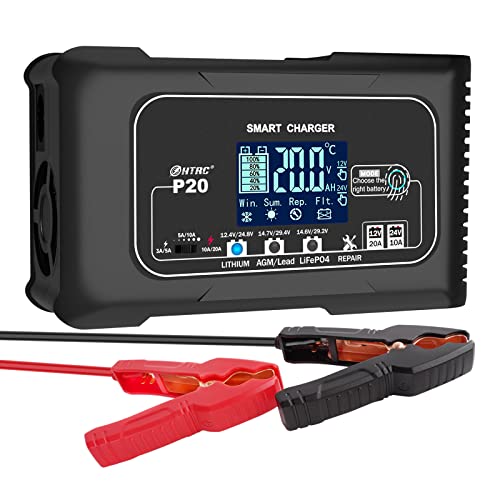
The 20-amp model is intended for buyers who value faster charging and also need a 24V option for non-passenger-vehicle equipment. Its listing states 20 amps at 12V and 10 amps at 24V, with automatic voltage detection, a display, temperature compensation, and multiple battery-type settings. Those are Amazon listing claims, not a substitute for checking the charger’s product label and manual. Higher current can be useful for a compatible battery, but the battery maker’s permitted charging rate, state of health, and the vehicle’s charging procedure should determine whether this output is appropriate. The manufacturer’s stated current limit for the particular battery should take precedence over the charger’s maximum rating.
Do not select a high-output mode just because the battery is low. Confirm the battery chemistry and rated capacity, and follow the vehicle maker’s instructions for charging with the battery installed. The listing says the unit cannot activate a depleted battery, so it should not be purchased as a guaranteed recovery device. Check cable length, clamp quality, warranty and seller identity, and verify that the 24V mode cannot be selected accidentally when connected to a 12V passenger car. It requires AC power and is not a portable jump starter. If the battery is swollen, leaking, damaged, or repeatedly discharges, stop and have it assessed rather than trying repair modes. Confirm the unit’s controls make the selected voltage and chemistry obvious before connecting it.
My Recommendation
Choose this higher-current charger only when its manual confirms a suitable charging rate for your battery. It may make sense for a garage serving larger 12V or 24V batteries, but many everyday drivers will be better served by a smaller maintainer from a clearly identified brand. Match the mode carefully and treat the listed recovery claims conservatively.
7. E-FAST 25A Smart Battery Charger

What We Like
- Up to 25A / 15A output listed
- Adjustable current settings
- 12V/24V automatic detection
- 12V booster mode advertised
What We Don’t Like
- Booster mode is 12V only
- AC outlet required
The E-FAST is the highest-output charger in this group, with the listing claiming up to 25A for 12V batteries and 15A for 24V batteries. It lists automatic voltage detection, selectable 2A, 8A, 20A and 25A settings plus Auto mode, and support for lead-acid types and LiFePO4. A 12V-only booster mode is also advertised. These are seller claims, so check the current manual and charger label before relying on the output or booster function. The maker recommends matching the current setting to battery size and chemistry.
The listing describes an eight-stage process, temperature-based seasonal modes, pulse repair, and protections including reverse-polarity and overcharge protection. Treat these as product claims, not proof that a damaged battery can be repaired. Use only the mode approved for the battery, follow the vehicle manual for connection points, and do not assume a high-current setting is appropriate simply because it is available. The booster feature is advertised for 12V batteries only and should not be treated as a substitute for the maker’s instructions or a separate jump starter. Confirm warranty terms, seller support, and charging requirements before purchase. Check the battery’s rated capacity and condition, and verify that the selected current is within its manufacturer’s limit. Keep the charger ventilated during use, and follow the maker’s instructions about temperature, supervision, and storage. If the booster feature is important, verify its exact operating steps and eligibility before connecting it.
My Recommendation
Consider the E-FAST only if its current manual confirms the battery voltage, chemistry, and charging rate you need. Its adjustable output and advertised 12V booster mode are versatile on paper, while its high maximum current calls for careful setup. A small maintainer is simpler for storage; keep a dedicated jump starter for roadside starting.
How to Choose a Car Battery Charger
Start with the battery label and vehicle manual, then match voltage, chemistry, and charging output. A charger that offers several modes is useful only when its instructions clearly support your battery and your vehicle’s charging procedure.
Match voltage and battery chemistry
Most conventional passenger cars use a 12-volt starting battery, but classic vehicles, motorcycles, and equipment may use other voltages. Check the label rather than guessing. Then identify the chemistry: flooded lead-acid, AGM, gel, or LiFePO4 batteries need compatible charging settings. A “lithium” label is not enough by itself; confirm the charger specifically supports the battery type and voltage printed on your battery. For manufacturer-specific systems, including some AGM installations, use the owner’s manual or service guidance. NHTSA’s guidance is simple: follow the vehicle maker’s instructions for charging and maintenance.
Choose a suitable output and use
Low-current chargers are useful for gradual maintenance or smaller batteries, while a higher amp rating can reduce charging time when the battery manufacturer permits that rate. Actual time also depends on the battery’s capacity, charge level, temperature, and condition. For a car that sits unused, a maintainer with an automatic float or maintenance mode can be convenient. For a battery that will not crank the engine, remember that a standard charger may take hours; a jump starter is a different product. Do not assume “repair,” “recondition,” or desulfation modes can restore a damaged or worn-out battery.
Check connection steps and safety
Read both manuals before connecting clamps. Some vehicles specify remote positive and ground points, or require special steps to protect onboard electronics. Confirm cable reach, outlet access, polarity, and whether the charger is intended for indoor or outdoor use. Do not charge a battery that appears cracked, swollen, leaking, or unusually hot. If you are unsure about battery condition, terminal access, or the manufacturer’s procedure, ask a qualified technician. A charger’s protection features are useful safeguards, but they do not replace correct setup. On cars with battery-monitoring sensors or batteries installed in the trunk, use designated charging terminals and consult vehicle-specific procedures; access and grounding points vary by model. If the correct method is unclear, have a qualified technician handle the connection. Never charge a battery with visible case damage or leaking electrolyte.
Frequently Asked Questions
Can I use any 12V charger on my car battery?
No. Match the battery chemistry and charging voltage, and follow the vehicle manual for connection points and charging steps.
How many amps should a car battery charger have?
Choose an output appropriate for the battery capacity and the battery maker’s permitted charge rate. Lower-current units take longer but can suit maintenance; higher output is not automatically better.
Can a battery charger jump-start my car?
Usually no. A charger replenishes the battery over time. A jump starter is designed to provide short-term cranking current.
Can I leave a charger connected overnight?
Only if the charger’s manual permits unattended maintenance and the vehicle and battery instructions allow it. Use the specified mode and setup.
Will a repair mode fix an old battery?
Do not count on it. A repair mode cannot guarantee recovery from internal damage or normal end-of-life wear. Test a repeatedly failing battery and charging system.
Final Verdict
The best car battery charger is the one that matches your battery and the vehicle maker’s charging procedure. The NOCO GENIUS1 and Mroinge are low-current options for gradual maintenance; Battery Tender offers moderate-output choices, while the PZ.P, 20-amp, and E-FAST models target higher-output charging when their ratings are appropriate. E-FAST also advertises a 12V booster mode. Confirm every model’s exact mode, output, and instructions before connecting it.
Affiliate disclosure: This article contains Amazon affiliate links. If you purchase through them, CarInsightPro may earn a commission. As an Amazon Associate I earn from qualifying purchases.


Pingback: Choose a Battery Charger for a Ford Fusion