A slow-start or weak-battery complaint on a Ford 6.7L diesel is a symptom, not a diagnosis. First note whether the starter cranks slowly, the engine cranks normally but does not fire, or the truck does not crank at all. Those patterns point to different checks. Many Super Duty applications use two batteries, and a weak battery, poor connection, starter-circuit problem, glow-plug issue, cold-weather strategy, or fuel problem can produce overlapping symptoms. Begin with the owner’s manual for the exact model year and have the battery system tested under load. Do not keep cranking or use starting fluid; Ford warns against ether or gasoline in the diesel intake. Record maintenance history, but base battery and starting-system repairs on test results and the exact truck’s service information.
Describe what happens when you try to start
Record the outside temperature, whether the engine is cold or warm, how long it sat, and exactly what the dash, lights, and starter do. If the starter turns slowly or the lights dim sharply, the battery condition, cable connections, grounds, or starter circuit deserve prompt testing. If there is no crank, note whether the dash powers up and whether a security or starting-system message appears. If it cranks at normal speed but does not start, battery power may still be adequate for cranking while another system needs diagnosis.
Ford’s 6.7L diesel starting instructions vary by model year. Some manuals tell the driver to wait for the glow-plug indicator to turn off and limit each cranking attempt, then pause before retrying. Follow the exact instructions for your truck. Repeated long cranking can overheat or damage the starter and drain the batteries. Do not jump straight to a failed battery just because the engine is slow to fire, and do not assume a normal cold-start delay means a fault.
Check the battery system professionally
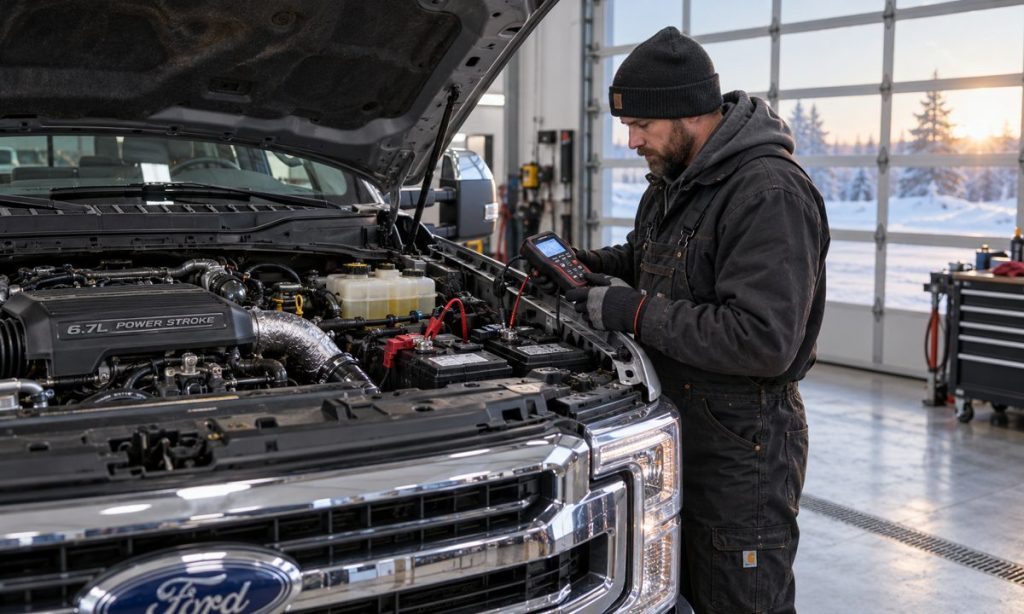
A visual inspection can reveal loose, corroded, swollen, leaking, or damaged battery connections, but it cannot confirm battery capacity. A qualified technician can test each battery individually and as a system, measure cranking voltage and current, inspect cable voltage drop and engine grounds, and verify charging performance. In a dual-battery setup, one weak battery can affect the system even if the other looks healthy. Both units should be evaluated rather than replaced or condemned based only on age or a dashboard reading.
Avoid disconnecting cables or probing high-current starter wiring unless you have the correct procedure and tools. Batteries can deliver high current and expose you to acid, sparks, and injury. If a case is swollen, hot, leaking, or smells unusual, do not attempt a home load test or jump start; keep clear and get professional help. Use only the battery type and rating specified for the vehicle, including any battery-monitoring reset or relearn procedure required for its year.
Separate a crank problem from a fuel or preheat problem
If the engine cranks at a normal speed but does not start, the cause may involve glow-plug preheat, fuel supply, fuel quality, a sensor or control issue, or another engine fault. On a cold 6.7L diesel, watch for the wait-to-start or glow-plug indicator and follow the manual’s startup sequence. Do not bypass the preheat system. Ford’s cold-weather information also describes seasonal diesel fuel and recommends maintaining at least a specified fuel level in some covered models to reduce fuel-starvation risk in freezing conditions. Verify the guidance for your year.
A warning light, stored diagnostic code, fuel-water message, rough running, smoke, or loss of power can help a technician choose the next test, but no single symptom proves a failed part. If the truck ran out of fuel, had recent fuel-system work, or has a water-in-fuel warning, tell the technician. Do not open high-pressure diesel fuel lines or loosen injectors to “bleed” the system; high-pressure fuel can penetrate skin and requires specific service procedures.
Look at cold-weather and maintenance factors
Cold weather increases battery demand and makes the engine and fluids harder to turn. Use the model-specific block-heater instructions and temperature threshold in the owner’s manual; do not substitute an unapproved heater or extension setup. A correct oil grade and level matter, but changing viscosity without checking the manual is not a reliable fix for slow cranking. Check that the fuel is appropriate for the season and that scheduled fuel-filter service is current. If the symptom began immediately after maintenance, note the work and parts used so a technician can verify the correct procedure and fitment.
Owner discussions about 6.7L hard starts commonly describe intermittent slow cranking, cold-only behavior, or uncertainty about aging dual batteries. Those reports show why symptom timing and battery testing are useful, but they involve different years and conditions. Forum posts cannot confirm that your battery, glow-plug system, fuel, or starter is defective.
A practical diagnostic sequence
- Read the exact model-year starting and cold-weather instructions.
- Record temperature, cold or warm engine, crank speed, dash messages, and warning lights.
- Do not exceed the manual’s cranking limit; stop if the starter slows or cables heat.
- Have both batteries, terminals, grounds, starter circuit, and charging system tested.
- If cranking speed is normal, scan for codes and follow Ford’s diagnostic procedure for the recorded symptoms.
- Give the technician service history, recent repairs, fuel level, and any cold-weather details.
Do not replace both batteries, a starter, glow plugs, or fuel components by guesswork. A proper diagnosis can distinguish battery capacity from a connection, charging, preheat, fuel, or control problem. Stop attempts and arrange service if the truck produces smoke with a no-start, displays a red warning, has hot or damaged battery cables, or repeatedly fails to start.
Frequently Asked Questions
How can I tell if the 6.7L batteries are weak?
Slow cranking or major light dimming can be clues, but only a proper test of each battery and the connected system can confirm condition. Dual-battery trucks should have both batteries evaluated.
Should I replace both batteries at the same time?
Have both tested first and follow Ford or battery-maker guidance for the exact truck. Do not assume a battery is bad from age alone or replace parts without testing.
Can cold weather make a healthy diesel crank longer?
It can take longer for a diesel to start in very cold conditions, and Ford’s instructions include a preheat sequence for covered models. Follow the manual’s limits and seek diagnosis if behavior is abnormal or worsening.
Can I use starting fluid if the engine will not start?
No. Ford warns against using ether or gasoline in the diesel air intake. Follow the manual and get the truck diagnosed instead.
What if the engine cranks normally but does not fire?
That points away from a simple slow-crank complaint but does not identify the cause. A technician should check codes and follow the vehicle-specific fuel, preheat, and control-system diagnostic procedure.
Final Words
Start by separating slow/no crank from normal crank with no start, then record conditions and follow the correct Ford starting sequence. Have the dual batteries, connections, grounds, starter circuit, and charging system tested before replacing parts. A normal-speed crank that does not fire needs a different diagnostic path, and repeated cranking or improvised starting-fluid use can cause harm. Keep service records for related maintenance, including the specified Ford 6.7 diesel oil filter, but rely on testing and the exact model-year service information to identify the fault.
References
- Ford Super Duty Owner’s Manual: 6.7L Diesel Starting Instructions (select the manual for the exact year).
- 2017 Ford Super Duty Owner’s Manual.