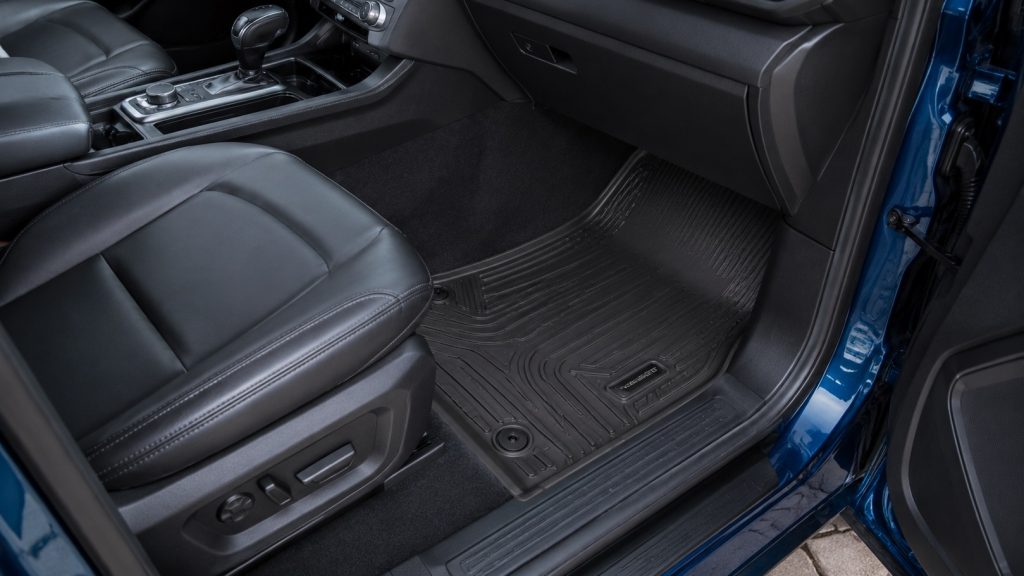
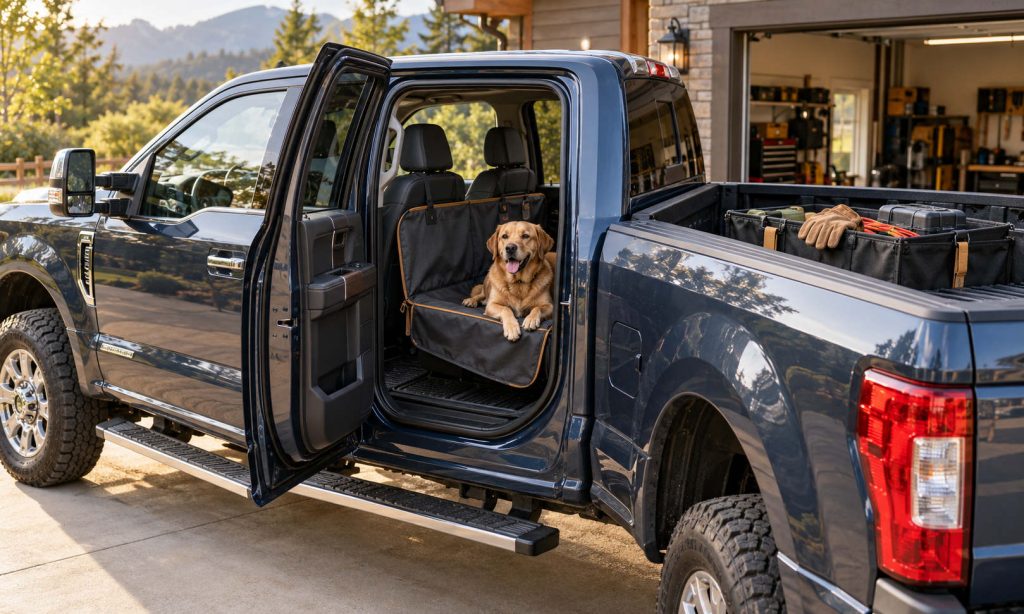
Choosing an accessory material for pets, cargo, and daily use in a Ford F-250 starts with where the accessory will sit and what it must handle. A seat cover has different needs from a bed mat or a cargo organizer. Hair, muddy paws, abrasive tools, wet gear, sun exposure, and frequent removal all affect the choice. Material names such as “Oxford,” “canvas,” “waterproof,” or “heavy duty” do not establish a standard thickness or test rating on their own. Compare the construction, backing, seams, care instructions, exact fit, and safety compatibility for the specific F-250 cab and use.
Separate cabin use from bed and cargo use
For the passenger compartment, prioritize a fitted cover or liner that protects the upholstery and still allows normal use of the seat, belts, child-seat anchors, and seat-mounted equipment. A dog cover needs to catch hair and dirt, resist claw abrasion, and come out for cleaning. A cargo organizer should hold its shape without blocking controls or becoming a loose object in the cabin. For the bed, a mat or liner needs traction, drainage, and resistance to the items you carry. The bed is exposed to weather and sun, while cabin fabrics may be protected from direct rain but face body oils, grit, food, and pet moisture.
Identify the truck’s model year, cab style, seat layout, floor configuration, and any special trim before shopping. F-250 interiors and beds vary. A front bench, center console, rear seat storage, fold-up seat bottom, carpeted floor, or vinyl floor can change the fit. An accessory that is suitable for one SuperCab or Crew Cab may leave gaps or block access in another.
How common material families compare
Woven polyester and nylon
Woven polyester and nylon are common in covers, organizers, and soft-sided cargo barriers. They are relatively light, fold for storage, and can be easier to remove than a rigid liner. Denser weaves and reinforced seams can help with repeated loading and abrasion, but the fiber name alone does not tell you the weave density, coating quality, or stitch strength. Hair can cling to some textured fabrics, and liquid may pass through unless the product has a tested barrier or separate backing. Check whether the care label allows machine washing, spot cleaning, or only wiping.
Canvas and heavy woven cloth
Canvas-style material can suit a work truck that carries tools, camping gear, or bulky items because it is often substantial and resists everyday scuffing. It may be heavier, take longer to dry after getting wet, and hold grit in its weave. A water-resistant finish can wear with washing and abrasion. Check for a removable liner, reinforced corners, and a clear cleaning method if the accessory will see mud, pet accidents, or oily equipment.
Vinyl, coated fabric, and synthetic leather
Smooth vinyl or coated fabric is appealing when quick wipe-downs matter. It can shed hair and surface dirt more easily than a fuzzy weave. The tradeoffs include heat buildup in a sun-exposed cabin, a slick surface for cargo or an unsettled dog, and possible cracking or peeling if the coating ages or is exposed to harsh cleaners. “Waterproof” should be treated as a product claim: seams, zippers, openings, and the edge of a seat cover can still let liquid through. Read the care label and test any cleaner on a hidden area.
Rubber and thermoplastic liners
Rubber or thermoplastic mats can be practical in the bed, footwell, or cargo area where grit, water, and heavy objects are expected. Raised edges can help contain debris, while molded channels can direct water away from a load. Check that the mat lies flat, does not interfere with pedals, and has a surface texture that holds the cargo you carry. A strong rubber odor, curling edges, excessive slipperiness, or a poor fit are reasons to reconsider a liner. Use the intended bed or cabin product; one type does not automatically fit both locations.
Choose for the mess you actually expect
For pet trips, favor a removable washable fabric or a smooth wipe-clean surface with a non-slip backing, but do not choose purely by the word “waterproof.” Hair removal, drying time, and how the cover stays in place may matter more. For muddy boots, garden supplies, or wet sports equipment, a molded liner with raised edges may be easier to rinse than a fabric organizer. For tools with sharp corners, look for reinforced seams and secure attachment points, then protect the truck’s interior or bed from concentrated impact. Avoid letting loose cargo slide around in the cab.
Daily family use often rewards a material that is comfortable, quiet, and easy to remove. A very thick or rigid cover may interfere with a folding seat or make passenger changes inconvenient. A low-cost thin cover may be easy to store but can bunch up and transfer pressure or grit onto the upholstery. Consider the accessory’s installation time, the number of pieces to clean, and whether you will leave it in place most days or install it only for specific trips.
Check fit, cleaning, and safety before buying
Read the exact product dimensions, truck-year range, cab fitment, and installation notes. Ask whether the material is coated, what the backing is made from, and whether the product can be machine washed or must be wiped. Look for clear instructions about drying and reinstallation. A removable cover should be easy to take off without pulling on seat wiring or forcing a strap around a sharp edge. A bed liner should sit securely and match the bed length and configuration.
Seat covers need an additional safety check. Ford’s Super Duty owner information warns that accessory seat covers not released by Ford could prevent airbag deployment. If you are considering a seat cover, confirm that the exact cover is approved for the specific seat and side-airbag arrangement. Do not cover airbag seams or improvise a cut. If removing or installing factory seat trim is required, follow the owner’s manual and have a qualified Ford service provider handle it.
A simple decision process
- Write down whether the accessory is for a seat, cabin floor, cargo area, or pickup bed.
- List the main exposure: pet hair, mud, water, tools, sun, or frequent washing.
- Choose a material family based on cleanup and comfort, then check its actual construction and care label.
- Match dimensions and attachment points to the exact year, cab, seat, and bed configuration.
- Confirm airbag, belt, child-seat, pedal, and cargo-restraint access wherever applicable.
- Keep the part number and instructions so you can reorder or clean it correctly.
Frequently Asked Questions
Is canvas always tougher than nylon for an F-250 accessory?
No. Strength depends on weave, coating, stitching, reinforcement, and how the item is installed. Compare construction details and the maker’s care guidance rather than relying on the material name.
What material is easiest to clean after a dog ride?
A smooth coated surface can be quick to wipe, while a washable fabric may be more comfortable and removable. Check hair pickup, drying time, backing, and the product’s actual cleaning instructions.
Is a waterproof seat cover fully leakproof?
Not necessarily. Seams, openings, zippers, and edges can allow liquid through. Treat waterproof wording as a product claim and check construction and care details.
Can I use any seat cover on my F-250?
No. Seat shape and side-airbag equipment vary. Confirm exact fit and Ford approval for that seat before installation.
Should I choose rubber for cargo in the pickup bed?
It can help with wet or dirty loads, but check bed fit, drainage, edge height, traction, and whether the mat remains flat. Secure cargo separately.
Final Words
The right F-250 accessory material depends on location, mess, weather exposure, comfort, and how often you will clean or remove it. Woven fabrics can be flexible and washable, coated materials can be easy to wipe, and rubberized liners can suit wet or gritty cargo. Verify the exact construction, dimensions, care instructions, and fit for your truck. For anything covering a seat, check Ford’s guidance for your model year and confirm airbag compatibility before installing it.