
Before you install or use an accessory in a Ford Escape, confirm that it fits your exact vehicle and does not interfere with the controls, visibility, airbags, or electrical systems. “Escape” covers many model years, trims, engines, and packages, so a broad fitment label may hide important exclusions. Start with the model year, trim, body style, and factory options. Then compare the accessory’s application notes with the vehicle and inspect the location where it will sit or connect. These checks apply to mats, seat covers, phone mounts, lighting, cargo equipment, and powered devices. For a specific example, see this guide to floor mats for a 2018 Ford Escape. For interior measurements, see how to measure a Ford Escape before ordering custom-fit accessories.
Identify the Escape configuration
Write down the model year and trim from the registration or vehicle information label. Confirm the body style and powertrain, and note whether the Escape has features that may change fitment, such as power-adjustable seats, a panoramic roof, a specific lamp package, or a factory cargo system. If a maker asks for a production date, engine, drivetrain, or package, provide that information too. Ford’s official owner-manual lookup helps you find instructions for the correct model year.
Compare the accessory’s full part number and application notes with the vehicle rather than relying on a product photo or a broad “fits Escape” claim. Check for exclusions by generation, trim, seat style, hybrid configuration, or factory option. If the vehicle has been modified or repaired with different seats, wheels, wiring, or suspension parts, include those changes in the fitment check. Ask the accessory maker or a qualified installer if the configuration is unclear. Avoid drilling, cutting, or connecting wires based on an uncertain fit.
Inspect the installation area
Floor mats and pedal clearance
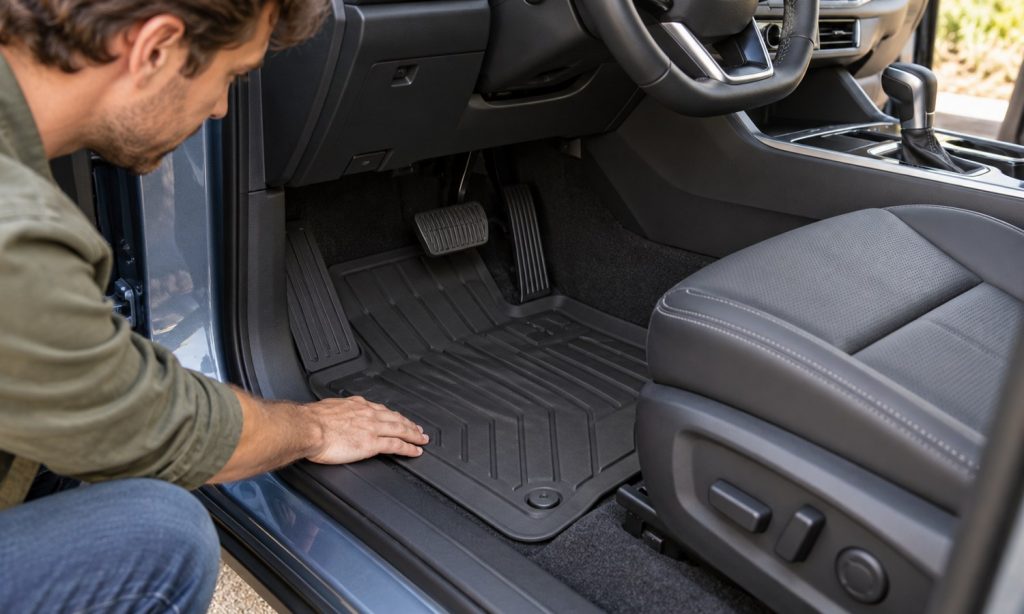
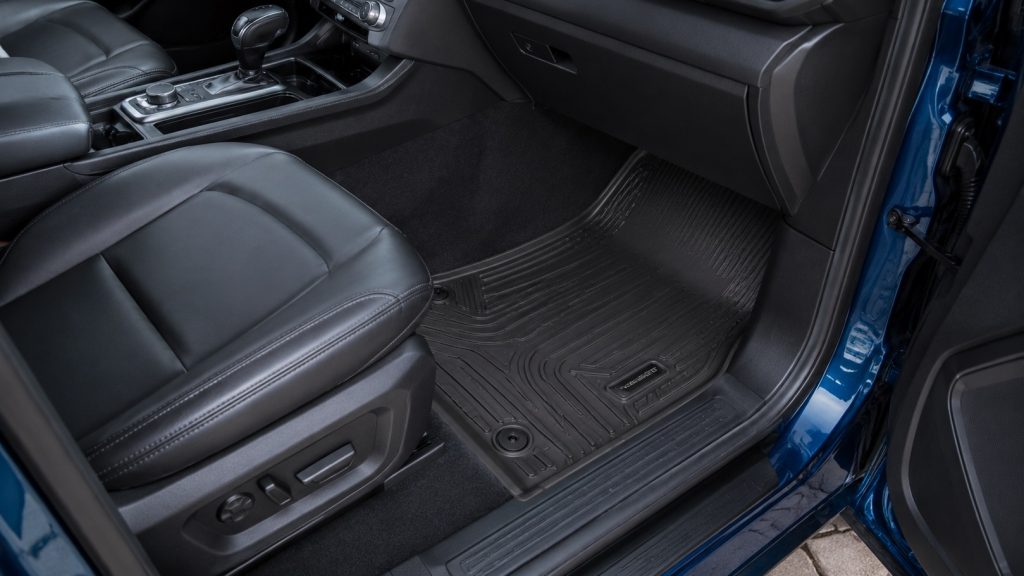
Remove the old mat before fitting a replacement. Confirm the new mat lies flat, follows the footwell shape, and locks into the Escape’s factory retention points. It must not ride up the firewall, curl at an edge, overlap another mat, or contact the accelerator or brake pedal through its full travel. Ford and NHTSA warn that loose or stacked mats can interfere with pedal operation. Move the driver’s seat through its adjustment range and recheck the mat. Keep loose objects out of the footwell.
For a 2018 Escape, confirm whether the mat set covers the front row, rear row, or cargo area; those are different fitment zones. Check contours around the center hump, seat tracks, and anchors. A similar-looking mat may have different retention hardware or edge shape, so confirm the part number and stated application before using it.
Seat covers and occupant systems
Inspect the seats for airbag labels, seams, wiring, sensors, buckles, and anchors. Seat-mounted side airbags need a clear deployment path. Use a cover only when the manufacturer specifically documents compatibility with the Escape’s exact seat and airbag arrangement. Do not cover, compress, or sew across a deployment seam unless the cover is designed and approved for that use. Check that covers do not block seat-belt buckles, child-seat anchors, seat adjustments, or occupant sensors. If a connector is disturbed or a restraint warning appears, stop and arrange qualified service rather than probing the wiring.
Phone mounts, cameras, and lighting
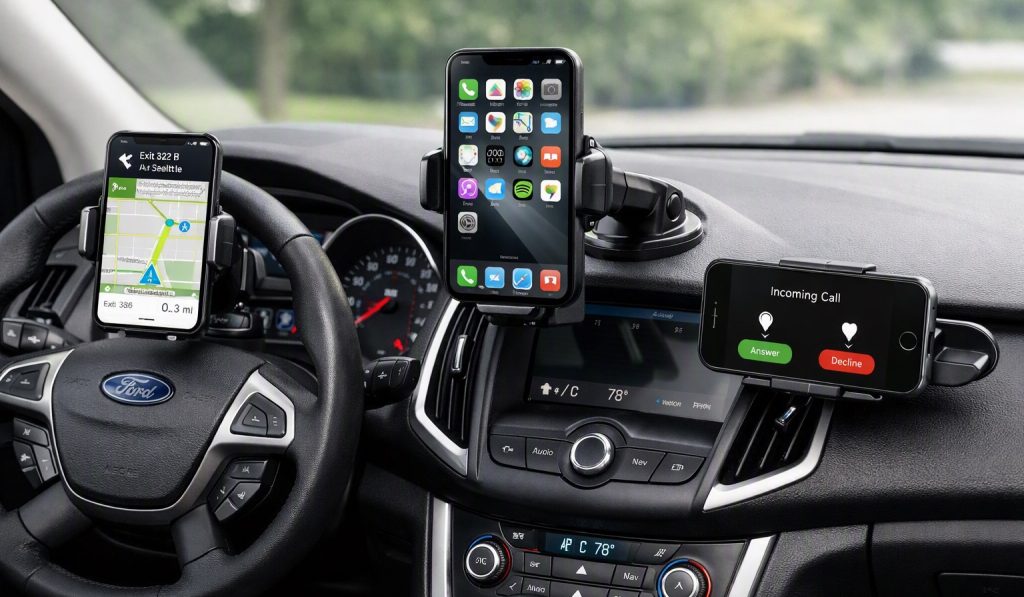
For a phone mount or camera, sit in your normal driving position and assess the view through the windshield and side windows. The mount should not block the instrument cluster, mirror, controls, or an airbag cover. Secure cables away from pedals and moving seat tracks. Choose a location that allows only brief glances and set up the device before driving. Check state rules about windshield placement.
For LED headlights or another electrical accessory, verify that the part is made for the Escape’s exact lamp housing and electrical system. A bulb that fits the socket may still produce an unsuitable beam pattern or have the wrong connector, sealing, or electrical load. Lighting and wiring vary by year and trim. Do not splice wires using a generic diagram. If a change causes warning messages, flicker, moisture, or an uneven beam, stop using it and have the installation inspected.
Read the instructions and check for conflicts
Read the complete installation instructions before opening the package. Note required tools, fasteners, torque values, fuse locations, software steps, and warnings. Confirm that the instructions match both the vehicle year and the accessory version. If the job involves removing trim near airbags, disconnecting a battery, lifting the vehicle, or altering restraint or high-voltage parts, follow the correct service procedure and use suitable equipment. If you do not have the information or tools, use a qualified technician.
Consider how an accessory interacts with nearby equipment. A cargo organizer should not obstruct a liftgate, rear visibility, seat folding, or emergency access. Roof-mounted equipment must fit the actual rails or crossbars and remain within the Escape’s published load limits. A device connected to a 12-volt outlet or USB port must use the correct connector and electrical rating. Do not assume an outlet remains powered after the vehicle is switched off; check the owner’s manual and device instructions.
Check operation after installation
Before driving, confirm fasteners are secure, edges are tucked away, cables are routed safely, and nothing can become a projectile. Refit trim and covers. Check that seats, doors, windows, mirrors, switches, and cargo barriers work normally. Start the vehicle and look for new warning lights or messages. For lighting, verify that every lamp works and have aim checked where appropriate. For electronics, confirm normal operation without blocking the driver’s view or creating distracting alerts.
Make an initial stationary check, then drive cautiously at low speed only if the accessory is secure and no warning signs are present. Recheck it after the first trip and periodically afterward. Clips can loosen, mats can shift, and cables can migrate. Stop using the item if it moves, rubs, overheats, smells of burning, triggers a warning, or affects a safety system. Keep the instructions until you are confident the fit and operation are correct.
Common mistakes to avoid
- Choosing by vehicle name alone instead of year, trim, seat style, or package.
- Leaving the original driver mat under a replacement.
- Assuming a universal accessory is safe around airbags, pedals, cameras, or wiring.
- Drilling or splicing before confirming the right location and procedure.
- Ignoring a new warning light, unusual noise, or poor fit after installation.
- Treating seller photos as proof when the part number or application list says otherwise.
Frequently Asked Questions
How can I confirm an accessory fits my Ford Escape?
Match the part number to the Escape’s model year, trim, body style, and relevant options. Read the maker’s application notes and exclusions. Ask the maker or a qualified installer if a vehicle detail is uncertain.
Can I place a new floor mat over the factory mat?
No. Remove the old mat and secure the replacement to the factory retention points. A second layer can shift and interfere with pedal movement.
Are universal seat covers safe for every Escape?
No. Seat shape and airbag locations vary. Choose a cover documented as compatible with the exact seat and side-airbag layout, and keep belts, anchors, and sensors accessible.
Where should I put a phone mount?
Use a stable position that preserves your view of the road, mirrors, instruments, and controls. Check local windshield rules and set the device before moving.
What if a warning light appears after installation?
Stop using the accessory and do not probe restraint or electrical connectors. Consult the Escape owner’s manual and arrange qualified diagnosis, especially for an airbag or other safety-system warning.
Final Words
Good Ford Escape accessory fitment starts with identifying the exact vehicle, reading the part-specific instructions, and checking nearby controls and systems. After installation, confirm secure attachment, normal operation, and clear sightlines before driving. If fitment is uncertain or the job touches airbags, high-voltage parts, or vehicle wiring, pause and get qualified help. A careful inspection can catch a mismatch before it becomes a distraction or safety problem. For a specific interior-accessory example, compare the fitment checks with this guide to floor mats for a 2018 Ford Escape.
Pingback: Ford Transit Connect Accessory Fitment Checks