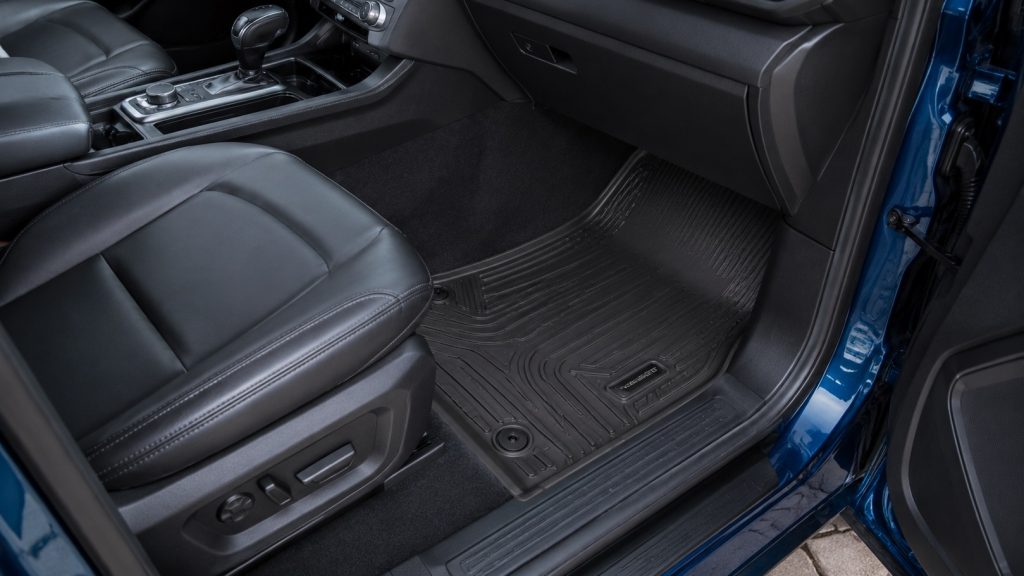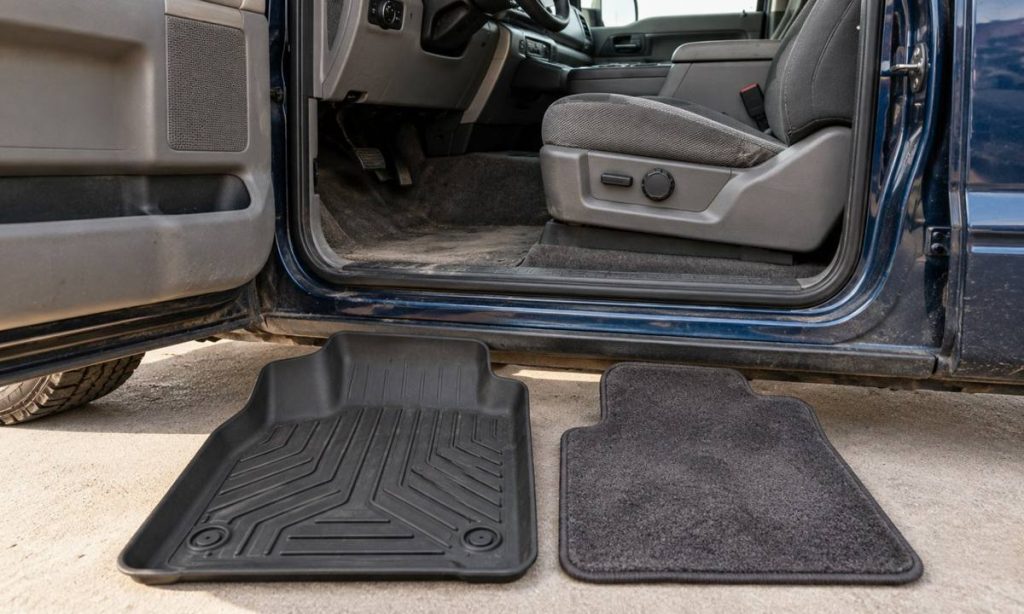
Choosing between all-weather and carpet protection for a Ford F-150 depends on what enters the cab, how often you clean it, and how much of the original carpet you want visible. All-weather liners are designed to catch water, mud, sand, and road salt; carpet mats keep a softer, quieter factory-style feel and can be simpler to blend with the cabin. Neither material is automatically best for every truck. A 2005 F-150, for example, needs floor protection shaped for its cab layout and floor anchors, not just a mat labeled for “F-150.” If you are also protecting the seats, see this guide to seat covers for a 2005 Ford F-150. Fit, retention, and coverage matter as much as material.
What “all-weather” and carpet protection mean
Carpet protection usually means carpeted mats placed over the factory carpet. They can catch grit and ordinary dirt while retaining a soft surface underfoot. Their pile may be easier to vacuum than a grooved liner, and many look closer to the original interior. But carpet absorbs moisture. Heavy slush, wet work boots, or a spill can soak through to the underlying carpet if the mat is saturated or coverage is limited.
All-weather protection generally refers to rubber, thermoplastic elastomer, or similar water-resistant mats and liners. A flat mat covers part of the footwell; a molded liner may have raised edges and channels that hold more liquid and debris. “All-weather” is a broad product label, so compare actual shape, edge height, material, retention points, and cleaning directions. A higher wall can contain more mess but may be bulkier to remove or position around seats.
Compare the practical trade-offs
| Consideration | All-weather liner or mat | Carpet mat |
|---|---|---|
| Water and slush | Usually easier to contain and remove for cleaning | Absorbs moisture; saturation can reach factory carpet |
| Dust and dry grit | Grooves can catch debris but may need rinsing | Vacuuming can lift fine dirt from the pile |
| Cabin feel | Often firmer and more utilitarian | Softer and closer to a carpeted interior |
| Routine cleanup | Shake out, wipe, or wash as directed; dry before reinstalling | Vacuum regularly and spot-clean using compatible products |
| Coverage | Some liners cover footwell sides; others are simple flat mats | Usually covers a defined floor area with less side coverage |
These are general material differences, not guaranteed results. Construction varies by maker and model. Some carpet mats have a dense backing or water-resistant treatment; some all-weather mats are flexible and easy to lift, while others are rigid. Read the cleaning instructions and check owner feedback for repeated comments about fit, movement, odor, or edge coverage, treating those as individual experiences rather than proof about every set.
When all-weather protection makes sense
Consider a water-resistant liner if the F-150 regularly carries muddy boots, wet gear, pets, landscaping materials, or passengers in snow and rain. It can make it easier to remove mess before it dries into the factory carpet. Deep channels and a raised perimeter may help keep liquid from running off the mat, but only if the liner fits the exact floor shape and remains flat. A shallow, loosely fitted mat may offer much less containment than its product name implies.
Think about removal and storage too. A large one-piece rear liner may cover a broad area but can be awkward to lift when dirty. A multi-piece design may be easier to handle, although gaps between sections can collect grit. If the truck has under-seat storage, a center hump, or different rear-seat hardware, confirm that the liner clears those features and lets storage lids or seat mechanisms operate.
When carpet mats may suit the truck better
Carpet protection can be a comfortable choice if the F-150 is mainly used on paved roads, has a carpeted cabin you want to preserve visually, and rarely sees standing water or heavy mud. The material can feel less hard beneath your shoes and may blend with the truck’s interior color. Carpet does not mean no protection: it can catch everyday grit and reduce direct wear on the factory floor, but wet debris needs faster attention.
For a work truck, carpet mats may be easier to vacuum between jobs, but fine grit can settle into the fibers and require a thorough cleaning. Check whether the backing grips the factory carpet and whether the driver-side mat uses the truck’s retention posts. Do not add a carpet mat over another mat to increase protection; stacked layers can move and interfere with pedals.
Check F-150 cab fit before choosing
Confirm model year, cab style, seating configuration, and floor type. Regular Cab, SuperCab, and SuperCrew layouts have different floor dimensions; front bench and bucket-seat configurations can also change the shape. A 2005 Ford F-150 belongs to a different generation from later trucks, so do not assume a newer F-150 mat will fit it. Check whether the set includes only front mats or also rear-floor pieces, and whether it is designed for carpet or a vinyl floor.
Inspect the retention points and compare them with the product’s anchor holes or clips. Ford’s 2005 F-150 Owner’s Guide is the vehicle-specific reference for the original truck; use the instructions for the exact vehicle and accessory. After installation, verify that the driver’s mat is secured and that the accelerator and brake pedals move freely. NHTSA warns that improperly secured mats can interfere with pedal operation. Never leave the original mat underneath a replacement.
Cleaning and care by material
For carpet mats, vacuum loose dirt first and follow the maker’s directions for spot treatment. Avoid soaking the mat or using a cleaner that discolors the fibers or damages its backing. Let it dry fully before returning it to the truck. For all-weather mats, remove them from the cab before rinsing or washing so water and grit do not spill onto the carpet. Use a mild cleaner only if permitted by the manufacturer, rinse away residue, and dry completely before reinstalling. Ford’s cleaning guidance also says mats should be fully dry before they go back in the vehicle.
During cleaning, inspect for curled edges, cracked material, worn backing, broken clips, or a mat that no longer lies flat. Replace a damaged or unsecured driver’s mat. Keep the floor beneath the mat clean and dry; trapped moisture can contribute to odor and damage over time. A quick monthly check is useful if the truck often carries wet or dirty items.
Frequently Asked Questions
Are all-weather floor liners better than carpet mats?
They are often more convenient for wet or muddy use, while carpet can feel softer and suit cleaner, drier driving. The better option depends on your conditions, coverage needs, and cleaning habits.
Will a 2005 F-150 floor mat fit every cab style?
No. Cab, seat, floor, and rear storage layouts can change the mat shape. Confirm the exact application and part number for the truck before ordering.
Can I keep carpet mats under an all-weather liner?
No. Use one properly secured driver-side mat at a time. Stacking mats can cause movement and pedal interference.
Do carpet mats protect against spills?
They can catch dry debris and small amounts of dirt, but carpet absorbs liquid. Remove and clean them promptly after a spill and dry both the mat and underlying floor.
How often should I clean F-150 floor protection?
Clean it when dirt or moisture builds up, and inspect it regularly for movement, damage, or blocked anchors. Trucks used in wet or dusty conditions may need more frequent attention.
Final Words
For a Ford F-150 that sees wet boots, mud, or winter slush, a well-fitted all-weather liner can simplify cleanup. Carpet mats can suit a cleaner-use truck when comfort and a factory-like appearance matter more. Compare fit, retention, coverage, and care instructions for the exact cab and year, including a 2005 F-150. Whether you choose carpet or a water-resistant surface, keep the driver’s mat secured, avoid stacking, and make sure the pedals move freely. If you are updating the cabin more broadly, the linked 2005 F-150 seat-cover guide covers a separate interior-protection decision.