How to check oil filter compatibility before servicing a Ford Focus starts with identifying the car’s exact year, engine, and market, then confirming the filter by a Ford catalog lookup or a reputable fitment record tied to the vehicle identification number (VIN). “Ford Focus” alone is not enough: engine choices, production changes, and filter-housing designs can vary across model years and trims. A filter that threads on or appears to fit is not necessarily correct. Check the specified filter type, housing cap or gasket, seal dimensions, pressure and bypass requirements where applicable, and the engine-oil specification in the matching owner’s manual. If the catalog and the vehicle disagree because of an engine replacement or modified housing, stop and have a parts professional verify it before draining the oil.
Identify the exact Focus configuration
Record the model year, engine size and code if available, trim, production date, and country or market. Use the VIN with Ford’s parts catalog or a Ford dealer to identify the engine and original filter application. A VIN-based lookup is more reliable than matching only the model badge, especially when a vehicle has a midyear change or has had an engine or filter housing replaced. Ford’s parts site specifically advises using the VIN for the most accurate parts search.
Do not assume that two Focus models with the same displacement use the same filter. The part may be a spin-on canister or a cartridge element in a reusable housing, depending on configuration. A replacement engine can change the required part. Read the engine identification and inspect the housing only when the engine is cool and the service manual permits access. If the part number cannot be confirmed, do not buy or install a filter based only on a generic image or a store shelf lookup.
Compare the complete filter application
Once you have a candidate part number, confirm that it matches the application in a current catalog and the manufacturer’s cross-reference. Check the complete number, not just a brand name or a partial code. For a spin-on filter, verify the thread, gasket diameter and position, canister dimensions, and application. For a cartridge system, confirm the element shape, height, end caps, O-rings, and any included cap or drain-plug seals. The wrong seal or a cartridge that does not seat correctly can leak or bypass oil.
Filter media and internal design also matter. The correct filter must meet the engine application’s filtration and flow requirements. If the manufacturer specifies a bypass valve setting, anti-drainback valve, or other feature, verify those details using the filter maker’s technical application data or Ford parts information. Do not assume that a physically similar filter has the same internal design. Avoid mixing an unverified cross-reference with a filter housing that has been modified.
Use the owner’s manual for oil service requirements
The oil filter works with the engine’s lubrication system, so verify the required oil specification, viscosity, capacity, and service interval from the owner’s manual for the same year and engine. Do not transfer oil details from one Focus engine to another. A 2013 Focus owner guide, for example, describes the maintenance schedule for that specific model year; it cannot establish the filter for every Focus. Keep the filter packaging and installation instructions available during service and record the installed part number.
The filter’s external size or a catalog statement such as “fits Focus” is not proof that the engine uses the required specification. Where a parts listing and owner documentation conflict, check for engine code, production date, or a non-original housing and ask Ford or a qualified technician to resolve it. Do not stack washers, force a cap, or reuse a seal that the service instructions say to replace.
Before installation
Work on a cool engine where possible and follow the vehicle’s service procedure. If access requires raising the car, use approved lift points and properly rated stands; never work beneath a car supported only by a jack. Prepare a drain pan and protect yourself from hot oil. Compare the new part with the removed one, but treat that as a secondary check: the old filter may itself be incorrect. Confirm any housing cap torque, gasket placement, and oil-fill procedure from the correct manual rather than guessing.
After installation, refill with the specified oil quantity as directed, start the engine only as the manual instructs, and check for leaks around the filter and drain plug. Verify the oil-pressure warning goes out normally, then shut down and recheck the level using the prescribed method. If a leak, warning, unusual noise, or abnormal pressure indicator appears, switch off the engine safely and get professional help. A filter mismatch or a loose seal can cause rapid oil loss.
Common compatibility mistakes
- Searching by “Ford Focus” without model year, engine, or production details.
- Assuming a filter is correct because the threads or housing appear to match.
- Confusing engine air, cabin air, fuel, and engine-oil filters.
- Using an old cross-reference without checking whether the catalog has a later superseding number.
- Reusing an O-ring or gasket that should be replaced, or installing it in the wrong groove.
- Ignoring a replacement engine or non-original filter housing.
- Relying on an old filter as proof of fitment without confirming it was installed correctly.
A practical verification checklist
- Identify year, engine, trim, market, and production details.
- Run the VIN through Ford’s current parts catalog or ask a Ford parts counter to verify the application.
- Confirm filter type and part number in a second fitment source or manufacturer application guide.
- Check the complete gasket, O-ring, housing, and internal specification requirements.
- Match engine oil and service instructions to the correct owner’s manual.
- Stop if the engine or filter housing has been changed and compatibility is uncertain.
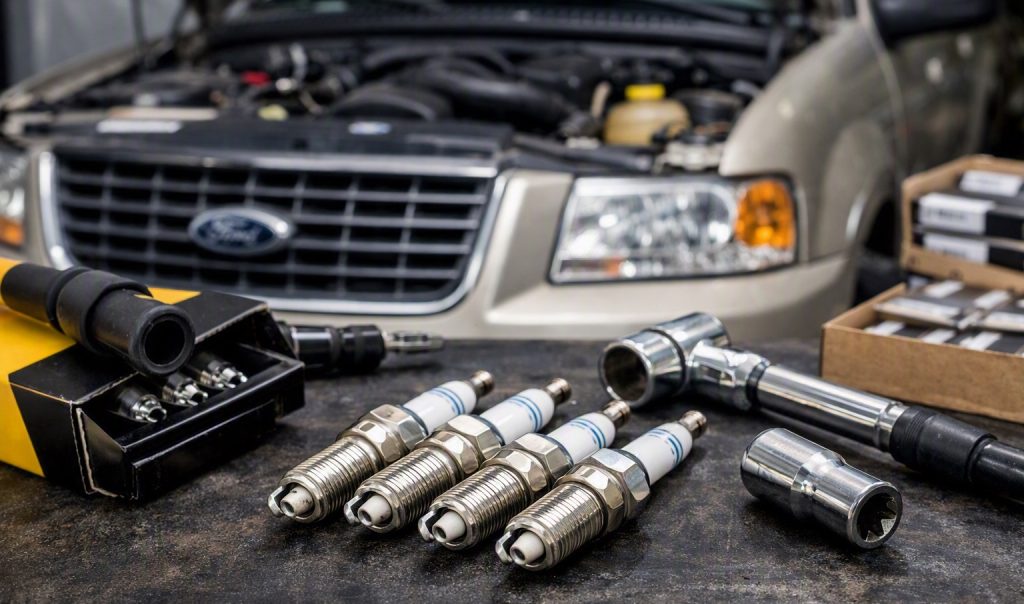
Keep maintenance items distinct when checking parts: spark-plug and oil-filter applications are separate catalog lookups, and neither should be selected by the Focus badge alone.
If your vehicle is a 2013 Focus, the site’s 2013 Ford Focus oil-filter review is a model-year-specific product comparison. Treat it as an example for that application and verify your own VIN, engine, and filter housing before ordering.
Frequently Asked Questions
Can I choose an oil filter by model name alone?
No. Use the VIN, model year, engine, market, and production details. Focus applications can vary, and a replacement engine or housing can change fitment.
If the filter threads on, is it compatible?
Not necessarily. Thread fit does not confirm gasket position, filter height, flow or bypass requirements, or that the filter is specified for the engine.
Should I match the old filter’s number?
Record it, but verify it independently. A previous service may have used the wrong filter, or the part number may have been superseded.
What if the VIN lookup returns more than one filter?
Check engine code, build date, and housing design, then ask a Ford parts professional to resolve the catalog split before purchase or service.
Where should I take used oil and filters?
Collect them in suitable containers and use a local recycling or household hazardous-waste program that accepts used motor oil and filters. Do not pour oil onto the ground or into a drain.
Final Words
To verify an oil filter for a Ford Focus, identify the exact engine and build details, then confirm the part through a VIN-based Ford catalog and the filter maker’s application data. Check the entire filter and seal design, follow the matching owner’s manual, and stop if modifications make the application uncertain. A careful fitment check helps avoid leaks and incorrect service.
References
- Ford Parts: Find the Right Part for Your Vehicle (VIN lookup guidance).
- 2013 Ford Focus Owner’s Guide (illustrates year-specific service information; use the matching manual for your vehicle).
- U.S. EPA: Managing, Reusing, and Recycling Used Oil.