How to diagnose a slow-start or weak-battery problem on an 8N Ford Tractor starts with separating slow cranking from an engine that cranks normally but will not fire. A weak battery, poor cable connection, unsuitable replacement cable, starter fault, or charging problem can slow the starter. If the starter turns at normal speed but the engine does not catch, ignition, fuel, or compression may be involved instead. Original Ford 8N electrical specifications describe a 6-volt positive-ground system, but many surviving tractors have been converted to 12 volts or rewired over decades. Identify the system actually installed before testing, charging, or jump-starting it. If polarity or wiring is uncertain, stop and ask a tractor technician to inspect it.
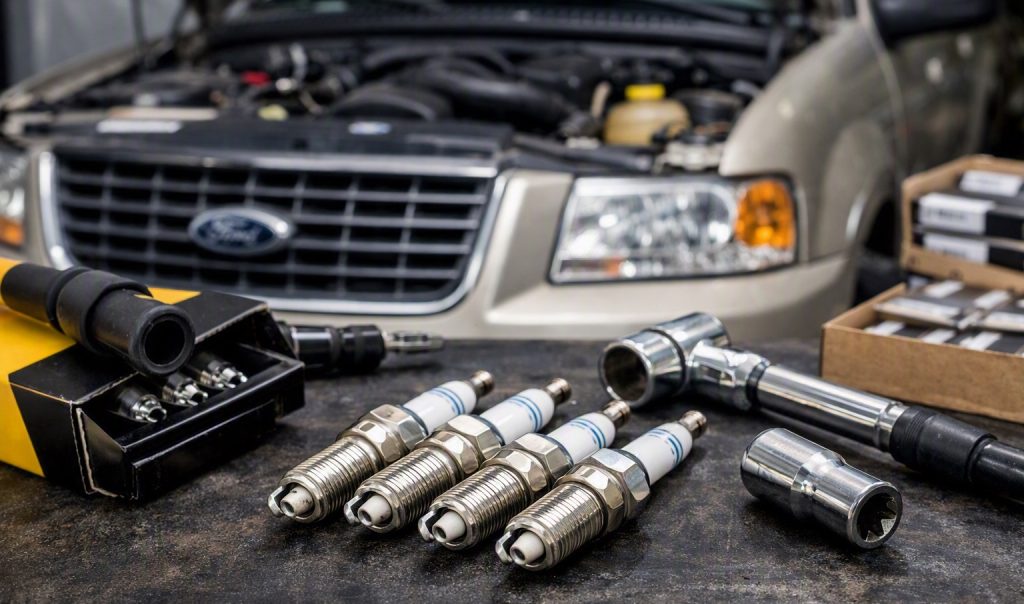
If the starter cranks normally but the engine will not start, spark plugs are a separate ignition check; see the guide to spark plugs for an 8N Ford Tractor after you confirm the cranking system is working.
First decide what “slow start” means
Listen and observe with the tractor in a safe, stationary condition. A slow, labored starter that turns the engine reluctantly is a cranking-speed problem. A starter that clicks without turning, turns intermittently, or stops abruptly needs a different check from an engine that spins at its usual speed but does not fire. Record whether the symptom happens cold, after several attempts, or after the tractor has been running. These details help a technician reproduce the issue.
Do not repeatedly hold the starter if it is struggling, cables are heating, or the battery smells, leaks, swells, or becomes unusually hot. Stop the attempt and arrange inspection. Repeated cranking can overheat starter components and discharge the battery further. Keep the tractor in neutral with the parking brake set, PTO disengaged, and people clear of moving parts before any observation or service.
Identify the battery and wiring system
Check the battery label for nominal voltage and identify which terminal is connected to the chassis. Original 8N data list a 6-volt battery with positive ground; that does not prove that a particular tractor still has the original system. Conversion kits may change voltage, polarity, starter wiring, charging equipment, ignition components, and cable routing. Look for a conversion alternator or other evidence, but do not infer voltage from appearance alone. Compare the battery, cables, starter, generator or alternator, regulator, and wiring diagram for the installed configuration.
A charger or jump source connected with the wrong voltage or polarity can damage electrical components and create a fire or battery hazard. Do not follow a generic 12-volt jump procedure on an unknown tractor. If you cannot confirm voltage and polarity from labels and reliable documentation, have a qualified person identify the system first.
Inspect visible battery and cable problems
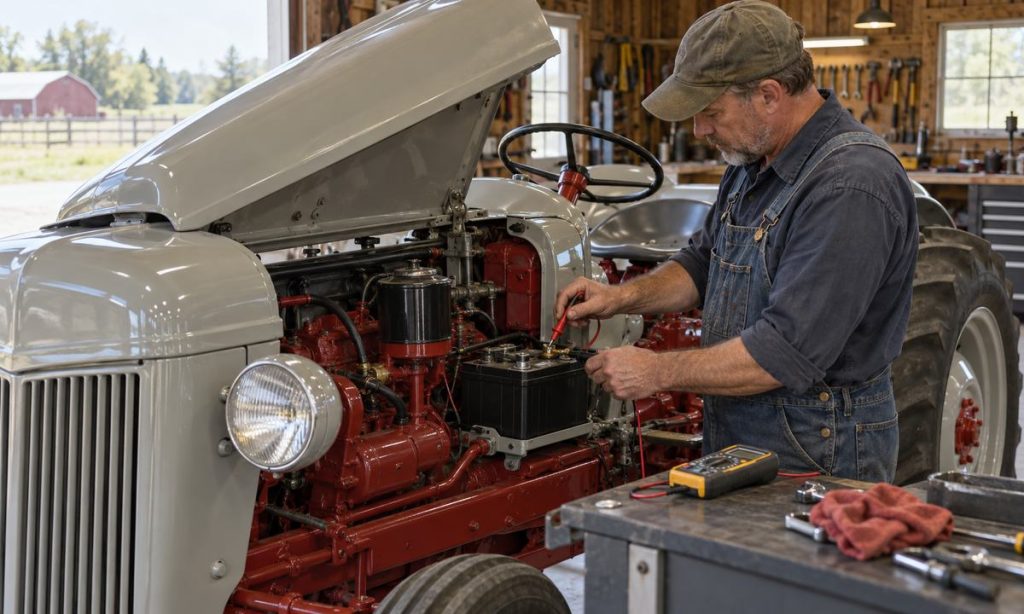
With the engine off and key or ignition switch off, inspect the battery case, hold-down, terminals, cable insulation, ground connection, and starter connections from a safe position. Look for loose clamps, corrosion, damaged insulation, frayed strands, undersized replacement cables, or a ground strap attached to a painted or rusty surface. Poor contact can create resistance that prevents enough current from reaching the starter even when the battery appears charged. Do not bridge terminals with a tool or remove jewelry while working near the battery.
Battery acid and hydrogen gas are hazards. Avoid flames, sparks, smoking, and metal tools that could short the terminals. Follow the battery maker’s safety instructions and wear appropriate eye and hand protection. Cleaning or tightening terminals may require disconnecting cables in the correct order for the installed polarity; if you are unsure, leave that work to a technician. A visibly damaged, leaking, or swollen battery should not be charged or used.
Have the battery and starting circuit tested
A battery can show voltage at rest but fail under starter load. A battery shop or tractor mechanic can test its state of charge and ability to deliver current using a tester appropriate for the battery’s voltage and rating. If the battery passes, the technician can check voltage drop across the positive and ground paths during cranking, inspect cable size and connections, and evaluate the starter switch, solenoid if fitted, and starter motor. This is more useful than replacing parts based only on a single click or a dim headlight.
Cold weather, long storage, low state of charge, sulfation, an aged battery, or parasitic draw can contribute to poor cranking. A charging-system fault can leave a good battery discharged after use. On an original system, generator and regulator operation is different from a converted alternator setup. The correct tests and settings depend on the parts actually installed, so use the matching service information rather than modern vehicle assumptions.
If cranking speed is normal but the tractor will not start
A normal-speed crank with no start shifts attention away from battery capacity and toward ignition, fuel delivery, or mechanical condition. Check the basics safely: fuel supply and shutoff, ignition switch position, visible wiring damage, and whether the tractor has a known spark or fuel issue. Do not remove fuel lines or test ignition near spilled gasoline without the correct tools and procedure. If the starter is turning normally but there is no combustion, a mechanic can test ignition and fuel systems without guessing at parts.
The Ford 8N uses a conventional gasoline engine and ignition system, but details vary with original equipment and later modifications. The linked 8N spark-plug guide covers a separate maintenance choice; it is not a substitute for verifying spark, wiring, timing, fuel, or compression when troubleshooting a no-start.
A useful symptom log
- Does the starter turn slowly, click, stop, or crank at normal speed?
- What voltage and polarity are shown by the installed battery and wiring?
- Does the symptom occur cold, after storage, or after several starts?
- Do cable connections, the battery, or the starter become hot?
- Has the tractor been converted from its original electrical configuration?
- When was the battery last tested and the charging system inspected?
Write down any recent work, battery replacement, wiring changes, or long storage period. This helps the technician distinguish a discharged battery from a cable, starter, or charging-system fault. Avoid adding unverified parts or changing polarity to “see if it helps”; an incorrect change can damage the tractor and make diagnosis harder.
Frequently Asked Questions
Was an 8N Ford Tractor originally 6 volts?
Historic 8N specifications identify a 6-volt positive-ground arrangement. Many tractors have been converted or modified, so verify the installed battery, polarity, and components before service.
Does a clicking starter prove the battery is bad?
No. A discharged or failed battery is one possibility, but loose or corroded cables, a switch, solenoid, or starter fault can also cause clicking. Test the circuit before replacing parts.
Can I use a modern 12-volt charger?
Only after confirming the battery’s voltage and chemistry and following the battery and charger instructions. Do not charge an unidentified or damaged battery.
Why does it crank normally but still fail to start?
That points toward ignition, fuel delivery, or mechanical causes rather than a weak cranking battery alone. Diagnose those systems separately and use the manual for the installed configuration.
Should I replace the battery first?
Test it and inspect cables before buying a replacement. A poor connection or charging fault can make a good battery appear weak or discharge a new one.
Final Words
For a slow-starting 8N Ford Tractor, first determine whether the starter cranks slowly or the engine cranks normally without firing. Verify the actual battery voltage and polarity, inspect visible connections safely, and test the battery, cables, starter, and charging system as a complete circuit. Since original and converted tractors differ, use documentation that matches the installed parts. If cranking is normal but the engine will not catch, check ignition and fuel separately; the 8N spark-plug reference addresses one distinct ignition component.
References
- Ford Fordson Collectors Association: Old Ford Tractor Specifications (historic 8N electrical specification).
- I&T Ford Shop Service Manual, Series 2N/8N/9N (service information; verify it matches the tractor’s installed system).
- Ford Fordson Collectors Association: 8N Operator’s Manual Data.