
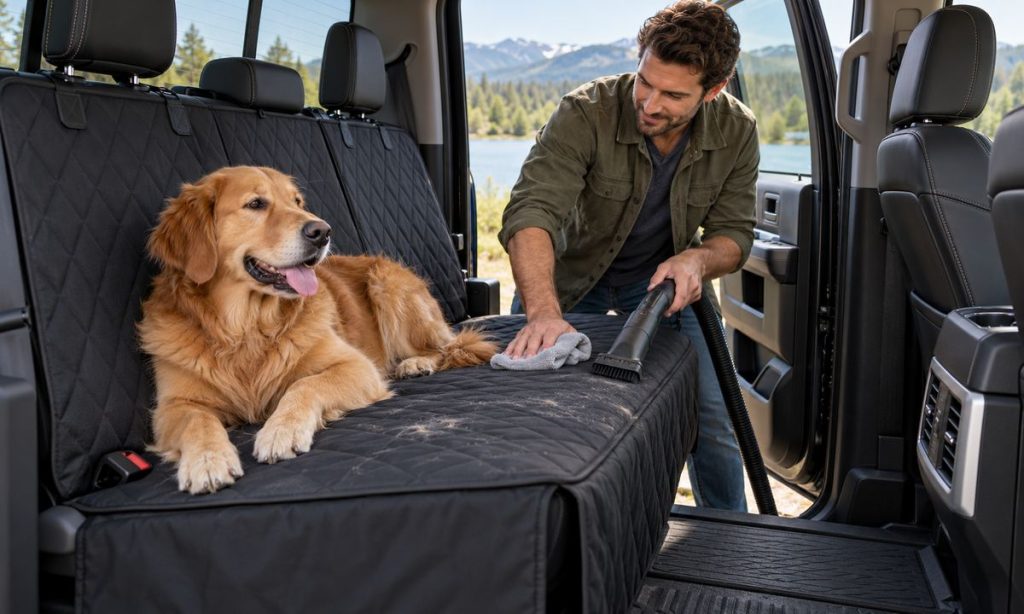
A dog seat cover can help protect a Ford F-150’s upholstery from hair, mud, and routine wear, but the cover must fit the truck’s seat and be cleaned according to its own care label. Protecting the interior also means keeping the cover away from side-airbag seams, seat-belt buckles, child-seat anchors, and seat controls. The F-150 has different cab, seat, and upholstery configurations, so measure the seating area and confirm the cover’s fit for the exact model year and trim. Use gentle cleaning methods that suit both the cover fabric and the original material underneath. A cover does not replace a restraint or make an unsecured dog safe in a moving vehicle.
Choose a cover that protects the right surfaces
Before installing a cover, identify whether the F-150 has a bench, bucket seats, a fold-up rear seat, a center armrest, or other trim features. Check that the cover’s dimensions and attachment points match the cab and seat. A hammock-style cover may protect the seat cushion and seatback, while a bench-style cover may be easier to use with passengers. The best design is one that remains secure, is easy to remove for cleaning, and leaves safety hardware accessible.
Look for openings or panels intended for seat belts and child-seat anchors, and confirm that the cover does not conceal labels or interfere with the buckle. If a seat has a side airbag, do not cover or constrain its deployment seam with a generic cover. NHTSA cautions that accessories on or near side airbags and improperly covering seatbacks can affect airbag operation. Check the exact F-150 owner’s manual and cover-maker instructions; if they do not clearly confirm compatibility, do not use that cover and ask a Ford service professional.
Install it without trapping dirt or blocking restraints
Vacuum the seat first and check for grit, pet hair, or debris that could rub against the upholstery under the cover. Follow the cover maker’s installation instructions, routing straps around rather than over seat-belt hardware, power-seat controls, head-restraint release points, and airbag seams. Tighten it enough to prevent sliding but do not stretch or force straps against trim. Sit in every seat position and confirm belts latch, head restraints adjust, and the seat folds or moves normally.
Use a separate, properly fitted pet restraint attached to an approved vehicle belt path or restraint point as directed by its manufacturer. Do not attach a tether to an unverified seat loop or rely on the cover’s straps to secure an animal. The dog cover protects upholstery; it is not a crash restraint.
Clean the cover according to its material
Start with the cover’s care label. Many fabric covers can be vacuumed or washed, while waterproof backings, coatings, or anti-slip layers may require hand cleaning or low-temperature washing. Remove loose hair with a vacuum or lint tool, then treat mud after it dries so it can be lifted without grinding grit into the fibers. Blot spills instead of rubbing them deeper. Use only the cleaning method and detergent recommended by the cover maker, and dry it fully before reinstalling to reduce trapped moisture and odor.
Avoid bleach, strong solvents, high heat, or pressure washing unless the product instructions explicitly allow them. A waterproof layer can crack or delaminate if exposed to harsh chemicals or hot drying. If the cover has removable panels, note their orientation before washing and reinstall all straps and buckles securely. Inspect seams, anchors, and non-slip backing after cleaning; replace a cover that is torn, stretched, or no longer stays in place.
Care for the F-150 upholstery underneath
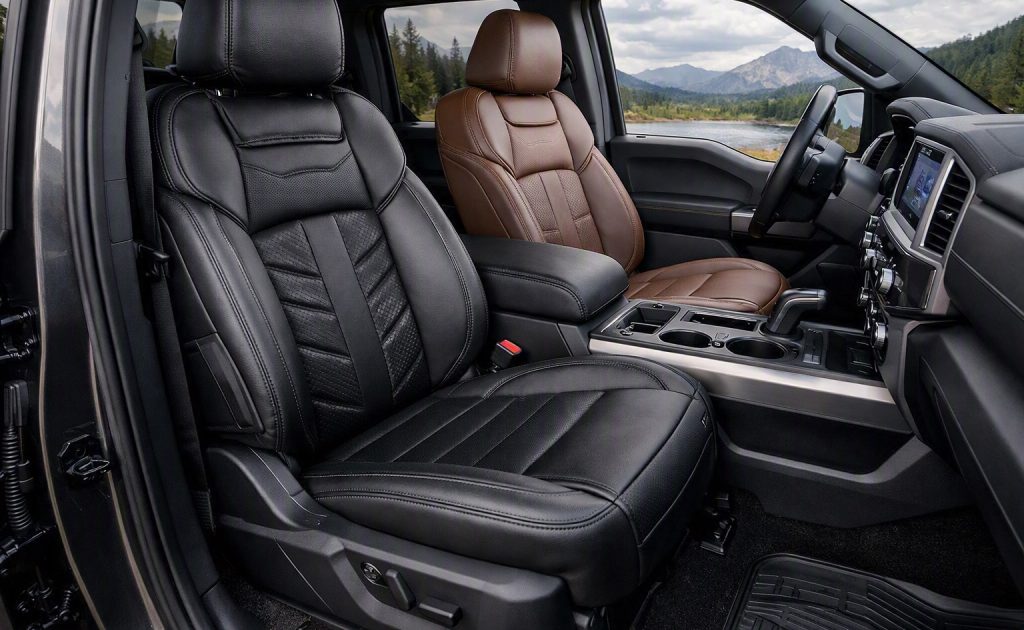
When removing the cover, vacuum loose hair and grit from seams before wiping the seat. Use the Ford owner’s manual for the exact upholstery type because cloth, vinyl, and leather-trimmed surfaces have different care requirements. Test a cleaner on a hidden area first and use a clean, soft cloth. Do not saturate seat foam, scrub perforated surfaces aggressively, or allow liquid to enter electrical controls, heaters, ventilation openings, or connectors. Avoid household products that leave a slippery residue or discolor trim.
Leather-trimmed areas may require a Ford-approved or material-compatible cleaner and conditioner, while cloth may need a fabric cleaner used sparingly. Follow the manual’s instructions and allow the seat to dry before covering it. Regularly inspect for trapped moisture, staining, abrasion, and loose cover fasteners. A cover that is left wet or dirty can hold grit against the upholstery and cause the very wear it is meant to prevent.
A simple cleaning routine
- Remove the cover and vacuum hair and debris from both the cover and the seat.
- Check the cover care label and use the stated wash or spot-clean method.
- Clean the underlying seat using the method for its actual fabric or trim.
- Dry both surfaces completely before reinstalling the cover.
- Confirm belts, buckles, anchors, seat controls, and airbag areas remain clear.
- Inspect straps, seams, backing, and restraint access after each wash.
For product fitment ideas, see the site’s Ford F-150 dog seat-cover guide. Use its recommendations as a starting point, then verify that the selected cover fits the truck’s exact seats and complies with Ford’s safety instructions.
Prevent abrasion between cleaning days
Shake out loose sand and brush away dried mud before it builds up. Fine grit trapped under a cover can act like sandpaper as passengers move across the seat. After a wet trip, remove the cover when practical and let both the cover and upholstery dry completely. Keep a small towel or washable liner for especially muddy conditions, but do not layer products so thickly that seat belts, buckles, or airbags are affected. Inspect the seat bolster edges and seams periodically because these are common contact points for claws, hardware, and sliding fabric.
If you are comparing a dog-specific cover with a conventional fitted cover, see the site’s Ford F-150 seat-cover guide as another fitment example. Check the seat design and airbag requirements for your truck before using either type.
Frequently Asked Questions
Can any dog seat cover fit a Ford F-150?
No. Cab, seat type, trim, armrests, and model year affect fit. Check the cover maker’s application details and measure the seating surface.
Can the cover go over a side-airbag seam?
Do not cover or constrain an airbag deployment seam unless the cover is specifically designed and approved for that seat. Follow the F-150 manual.
Can I machine-wash a waterproof cover?
Only if its label permits it. Waterproof backing and coatings can be damaged by heat or unsuitable detergent.
How do I remove dog hair from the seat beneath the cover?
Remove the cover and vacuum the seat and seams first. Use only a cleaner and tool appropriate for the upholstery material.
Does a dog seat cover restrain a dog?
No. A cover protects the upholstery. Use a separate, properly fitted restraint according to its maker’s instructions.
Final Words
Protect a Ford F-150 interior by selecting a dog seat cover that matches the seat, stays secure, and leaves airbags and restraints clear. Clean the cover according to its label and care for the upholstery using the instructions for its material. Dry everything before reinstalling and use a separate restraint for the dog.
References
- Ford Owner Manuals (select the F-150 year for upholstery care and seat-airbag guidance).
- NHTSA: Vehicle Air Bags and Injury Prevention (general airbag safety information).
- NHTSA: Side Airbags (general guidance on accessories near side airbags and seat-back covers).
Pingback: Best Car Seat Covers for Hyundai Elantra 2: 7 Picks