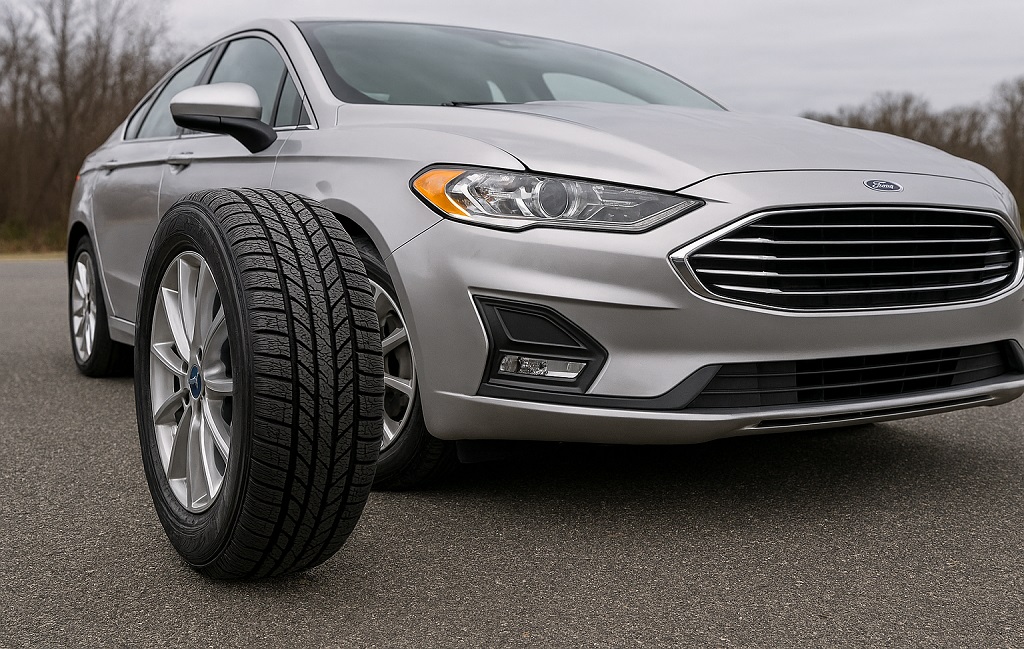
For a Ford Fusion carrying extra passengers or cargo, begin with the cold tire pressure on the driver-door tire label and the load limits in the owner’s manual. Do not raise pressure to the number molded on the tire sidewall just because the car is loaded, and do not use air pressure to make an overloaded Fusion safe. Towing adds another set of vehicle-specific limits: the exact year, engine, powertrain, hitch, and equipment determine whether that Fusion may tow and what weight it can handle. Our comparison of all-season tires for a Ford Fusion can help with tire research, but the vehicle placard—not a tire-shopping article—sets the starting inflation pressure for your car.
Read the tire label for your exact Fusion
The 2016 Ford Fusion owner’s manual directs drivers to the tire label for the vehicle’s recommended inflation pressure. The label is typically on the driver’s door edge or door-jamb area; location can vary by vehicle. It identifies the original tire size and cold inflation pressures for the front and rear. Read the label on your own car because tire sizes, wheel packages, trims, and powertrains can differ. Do not copy a pressure from a different Fusion or an online chart that assumes another tire size.
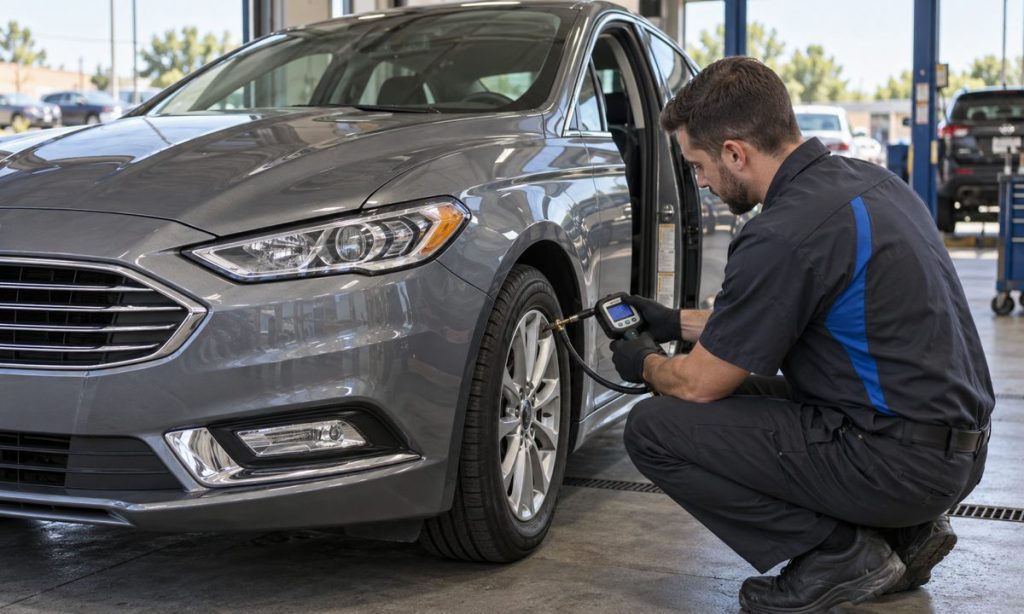
Use a reliable gauge to check all four tires before driving, when the tires are cold. “Cold” means the car has been parked for at least about three hours or driven only a short distance at low speed; driving heats the tires and raises the reading. If a tire is warm, do not let air out simply to reach the cold specification. Recheck it later when cold. The spare tire, if equipped, may have a different pressure requirement shown on its own label or in the manual.
Extra weight does not mean guessing a higher pressure
The placard pressure is selected by the vehicle maker for the specified tire and vehicle. Follow any separate loading instruction Ford provides for the exact model and tire. If the label and manual do not specify a different pressure for your load condition, do not invent one from the tire’s maximum sidewall pressure or from a generic load-inflation table. The sidewall figure is not the normal target pressure for the car.
Pressure cannot increase the Fusion’s rated payload, gross vehicle weight rating, or axle ratings. Add up occupants and cargo, including items in the trunk and any trailer tongue weight pressing on the hitch. Keep that total within the Tire and Loading Information label’s limit and the vehicle’s weight ratings. If the car sits low, bottoms out, handles poorly, or exceeds a label limit, reduce the load; adding air is not a fix for overloaded suspension, tires, or brakes.
Check towing eligibility before attaching a trailer
Do not assume every Fusion can tow the same trailer. The 2016 owner’s manual contains vehicle-specific towing warnings, requirements, and weight information. Check the original manual for the exact engine and powertrain, then confirm the trailer and hitch ratings. Some powertrain configurations may have restrictions that make towing inappropriate. If the manual does not clearly list an allowable trailer weight for your car, contact a Ford dealer before towing.
When towing is permitted, stay within the maximum loaded trailer weight, gross combined weight rating, gross vehicle weight rating, and front and rear axle ratings. Trailer tongue weight is carried by the car and reduces the remaining payload available for people and luggage. Follow Ford’s instructions for load placement, hitch equipment, safety chains, trailer brakes, and speed. Tire pressure does not compensate for excessive tongue weight or an unsuitable hitch.
Check the tire maker’s load index and approved size if your Fusion has replacement tires or wheels. A different size or load rating may require expert review; do not assume the original placard pressure applies to a non-approved tire. Ask a qualified tire professional to verify the tire’s load capacity at the vehicle’s specified pressure and to identify a manufacturer-approved alternative where appropriate.
Check for pressure loss and tire damage
Inspect the tread and sidewalls for cuts, bulges, embedded objects, uneven wear, and signs of rubbing before a heavily loaded trip. A bulge or exposed cord needs prompt professional attention. Check the pressures again after adjusting them, and replace valve caps. If a tire repeatedly loses pressure, have the tire, wheel, and valve inspected instead of topping it up indefinitely.
The tire-pressure monitoring system can warn when pressure becomes significantly low, but it is not a substitute for a gauge or regular checks. A TPMS light that flashes and then stays on may indicate a system fault; use the owner’s manual and arrange service. Do not rely on the warning threshold as the correct setting for a loaded trip.
Use a pre-trip pressure and load routine
- Read the tire label and use the pressure listed for the tire size fitted to the Fusion.
- Measure all tires cold with a gauge; inspect the spare separately if the vehicle has one.
- Check tire condition, load index, and size, especially after replacement tires or wheels.
- Count passengers, cargo, and trailer tongue weight against the vehicle’s payload and axle limits.
- For towing, verify eligibility and ratings in the correct owner’s manual before hitching.
- Recheck pressure when cold after a substantial temperature change, a tire repair, or a pressure adjustment.
Frequently Asked Questions
Should I add air to a 2016 Ford Fusion when carrying a heavy load?
Use the cold pressure on your Fusion’s tire label unless the owner’s manual gives a different instruction for that exact vehicle and load condition. Do not guess or inflate to the tire’s sidewall maximum.
Should tire pressure be higher when towing with a Fusion?
First verify that the specific Fusion powertrain is approved to tow and stay within every vehicle and trailer rating. Follow any exact pressure instruction in the manual; do not make up a higher pressure to offset tongue weight or overloading.
Is the pressure printed on the tire sidewall the correct setting?
Usually no. The sidewall lists tire information and a maximum pressure or load specification. The vehicle’s tire placard provides the normal recommended cold pressure for the original setup.
Can I measure pressure after driving?
You can check a warm tire for an obvious loss, but compare and adjust to the cold specification after the tire cools. Do not bleed air from a warm tire just to match the cold number.
What if I installed a different tire size?
Confirm that the tire size and load rating are approved for the Fusion. Ask a Ford dealer or qualified tire professional for the correct pressure guidance rather than assuming the original setting or using the sidewall maximum.
Final Words
Set Fusion tire pressure from the vehicle’s cold tire label and follow any specific instruction in the correct owner’s manual. Before loading or towing, check payload, axle and trailer ratings; pressure cannot raise those limits. Keep a gauge in the car, inspect the tires, and seek qualified advice when the installed size differs from the placard. Our guide to all-season tires for Ford Fusion is a separate tire comparison; verify the size and load rating against your vehicle before buying.
References
- Ford 2016 Fusion Owner’s Manual (tire-pressure, load-carrying and towing instructions; use the manual supplied for the exact vehicle).
- NHTSA TireWise: Tire Safety Ratings and Awareness (cold-pressure and tire-safety guidance).