Before adding a bed or roof accessory to a Ford F-150, verify the truck’s exact year, cab, bed length, trim, factory equipment, and weight limits. Two F-150s that look alike can have different bed-rail systems, roof attachment points, payload ratings, and accessory fitment. Start with the truck’s door-jamb labels and owner’s manual, then check the accessory maker’s application chart. For a different model-year-specific F-150 accessory example, see our guide to universal versus vehicle-specific F-150 accessories; that fitment guide is separate from bed and roof-rack compatibility.
Record the truck configuration
Write down model year, cab style, bed length, drivetrain, trim, and any factory bed or roof package. Confirm the bed’s inside length and rail shape on the truck rather than relying only on a seller’s “F-150” label. Accessory fit can change with a 5.5-, 6.5-, or 8-foot bed, factory bedliner, cargo management system, tie-down cleats, power tailgate, or a tonneau cover. A roof product may fit only specific cab roofs, door openings, factory rails, or roof crossbars.
Use the accessory manufacturer’s current application chart to confirm the exact year and configuration. Check whether the item is designed for factory equipment already on the truck, and whether it needs a separate bracket, rail, drilling, or a particular bed surface. If the listing describes a related generation instead of your year, ask the maker to confirm the part number and fitment in writing.
Check payload and axle limits before adding weight
Find the Tire and Loading Information label and Safety Compliance Certification label on the driver-side door area. The payload statement is specific to the vehicle as built. Count the accessory itself, its mounting hardware, passengers, cargo, and—when towing—the trailer tongue or kingpin load against the truck’s available payload. Ford’s owner-manual load-carrying guidance explains that trailer load transferred to the truck reduces available cargo capacity. Also remain within the gross vehicle weight rating and front and rear gross axle weight ratings shown for that truck.
A bed rack, drawer system, topper, and heavy tool box can consume a meaningful share of payload before tools or passengers are added. Weigh a fully equipped truck if the arithmetic is close or the cargo is substantial. Do not use a maximum payload advertised for a different F-150 configuration; engine, cab, bed, drivetrain, and options change the rating.
Fit bed accessories to the rails and equipment
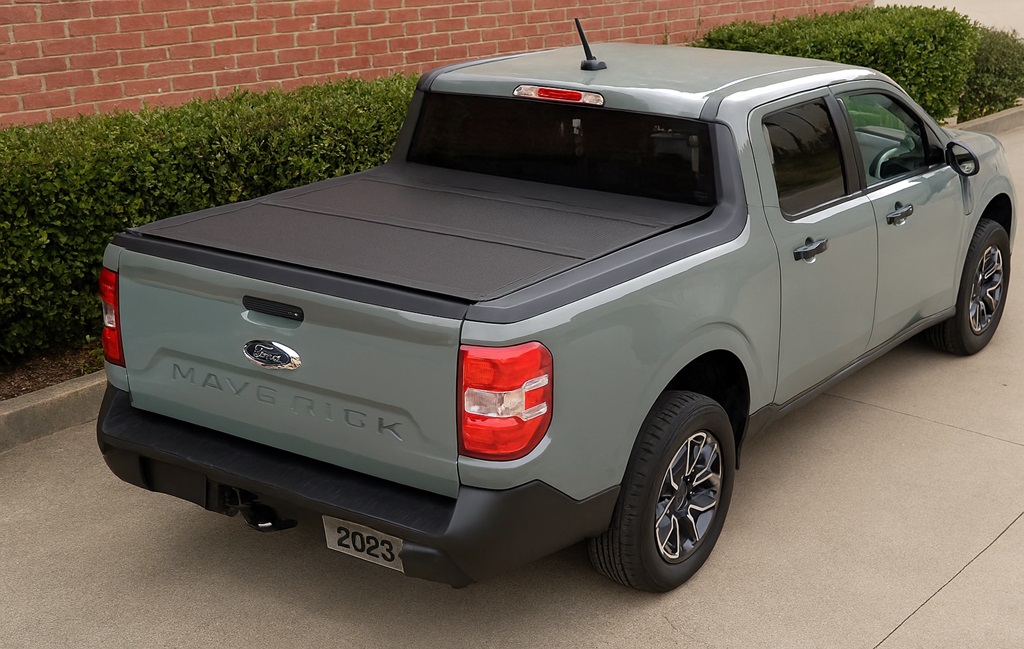
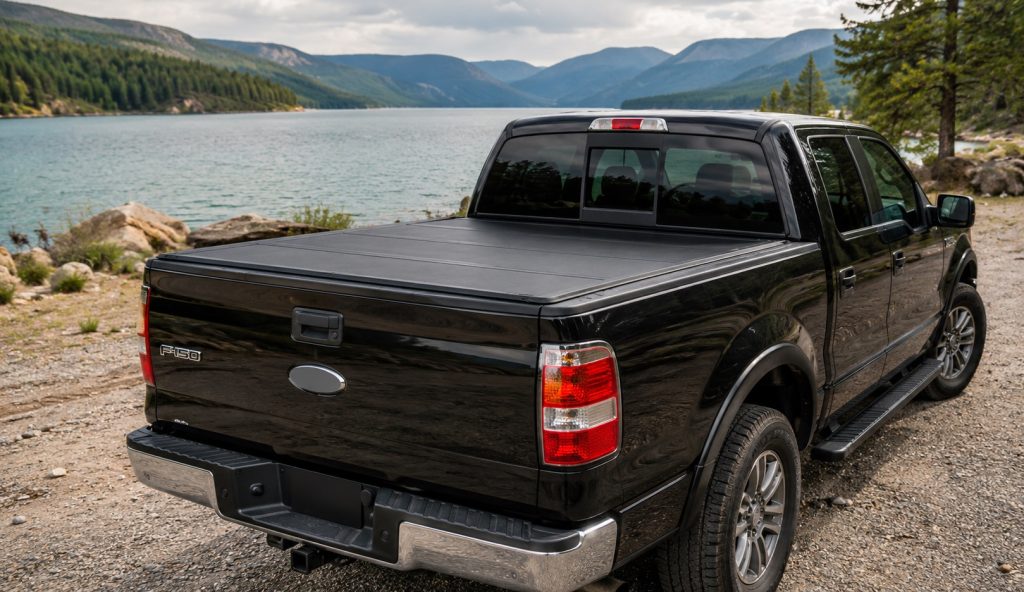
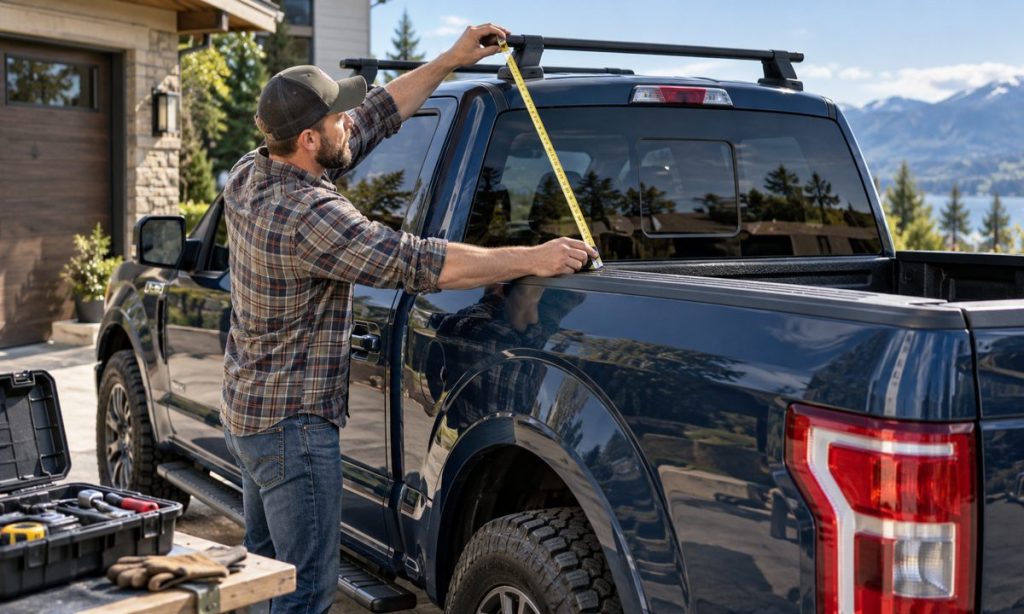
For a tonneau cover, bed cap, rack, toolbox, or bed extender, measure the bed at the points identified in the product instructions. Check front-to-back length, inside rail-to-rail width, rail height, and any taper or molded liner that affects clamps. Inspect the tailgate and corners for clearance. Confirm that the accessory does not block the third brake light, camera, bed lighting, cargo tie-downs, or tailgate operation.
Look for interference with factory bed rails, BoxLink or other cargo-management hardware, stake pockets, and tie-down cleats. A clamp may need to attach directly to a metal rail; a thick drop-in liner or bed cap can change the opening. Some products require drilling or a specific mounting surface. Follow the instructions and corrosion-protection requirements, and do not drill into a structural area unless the vehicle or accessory instructions identify the location.
Check how the accessory changes cargo restraint and access. A cover can prevent some taller cargo from fitting; a rack can reduce usable bed length or interfere with a cover. A toolbox or drawer unit adds weight and can shift cargo toward one axle. Verify that cargo remains secured to appropriate anchor points and cannot slide into the cab during a stop.
Verify roof-rack compatibility and loading
A roof accessory must be approved for the exact cab and attachment method. Confirm crossbar spacing, bar shape, clamp range, door-frame clearance, and whether the roof has a glass panel, factory rails, or other equipment that affects the installation. Do not assume that a rack for an F-150 SuperCrew fits a regular cab or SuperCab, or that a product listed for another model year uses the same mounting points.
Use the maximum roof load and installation instructions stated in the owner’s manual for your exact truck and rack system. There is no safe universal roof-load number for all F-150s and all rack combinations. Account for the rack, mounts, carrier, and cargo in the stated limit. Distribute weight evenly, keep it low and secure, and recheck the fasteners as directed. A roof-mounted load raises the center of gravity, adds wind resistance, and can change braking and handling. Observe any height restrictions and drive conservatively.
Inspect the installation before driving
Before loading, check every clamp, bolt, locking pin, seal, and safety tether against the product instructions. Open and close the tailgate, cover, doors, or sunroof through their normal range and confirm there is no contact. Check rear visibility, backup-camera view, brake-light visibility, and access to emergency equipment. After a short drive, stop in a safe place and recheck fasteners and cargo. Repeat checks at the intervals recommended by the accessory maker, especially after changing or adding load.
If a rack, bed rail, or roof attachment is damaged, loose, or rusted, correct it before travel. Do not improvise a mount with a self-tapping screw, mismatched clamp, or unapproved adhesive. If fitment is uncertain or installation involves structural drilling, have a qualified truck-accessory installer inspect the truck and part together.
Frequently Asked Questions
Can one F-150 bed cover fit every cab and bed length?
No. Bed length, rail shape, factory bed equipment, and model year matter. Confirm the exact configuration and part number on the manufacturer’s fitment chart.
Does an accessory’s weight count against F-150 payload?
Yes. Include the accessory and mounting hardware with occupants, cargo, and any trailer tongue or kingpin load. Use the payload statement and ratings on your truck’s labels.
Is there one roof-rack weight limit for every Ford F-150?
No. The permitted load depends on the truck, cab, rack, mounting system, and instructions. Check the owner’s manual and accessory documentation for the exact setup.
Can I install a bed rack over a tonneau cover?
Only if the rack and cover makers list a compatible combination. Many systems use the same rails or clamping space, so verify the specific product pairing before ordering.
What should I do if the listing says only “fits F-150”?
Ask for the full application chart and written confirmation using your year, cab, bed length, trim, and factory equipment. Do not order based on the broad vehicle name alone.
Final Words
Check fitment, mounting hardware, operating clearance, and the truck’s own payload and axle limits before installing a bed or roof accessory. Use only the load limit and attachment method for your exact F-150, then recheck the system after loading and driving. For a separate example of model-year fitment, our guide to 2016 Ford F-150 wiper blades shows why year details matter, while bed and roof accessories need their own fitment verification.
References
- Ford 2016 F-150 Owner’s Manual (load-carrying guidance; the truck’s original manual is primary for its equipment and limits).
- Ford Towing Guide (payload and ratings overview; use the exact truck labels and owner’s manual for vehicle-specific limits).
- Ford 2016 F-150 Cargo Area Accessories (illustrates model-year and configuration-specific accessory listings).