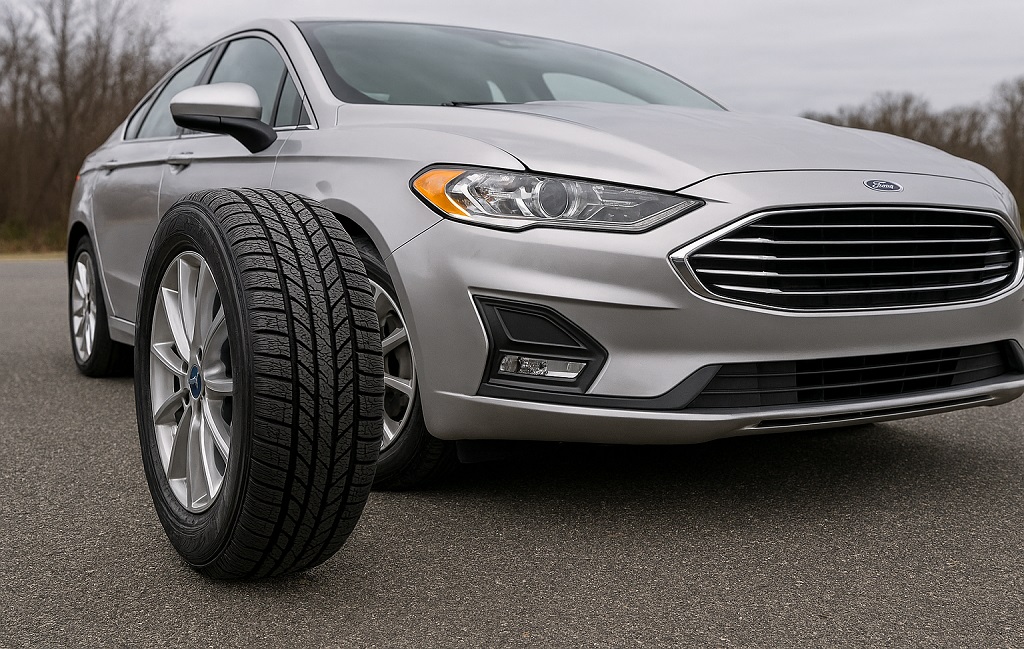
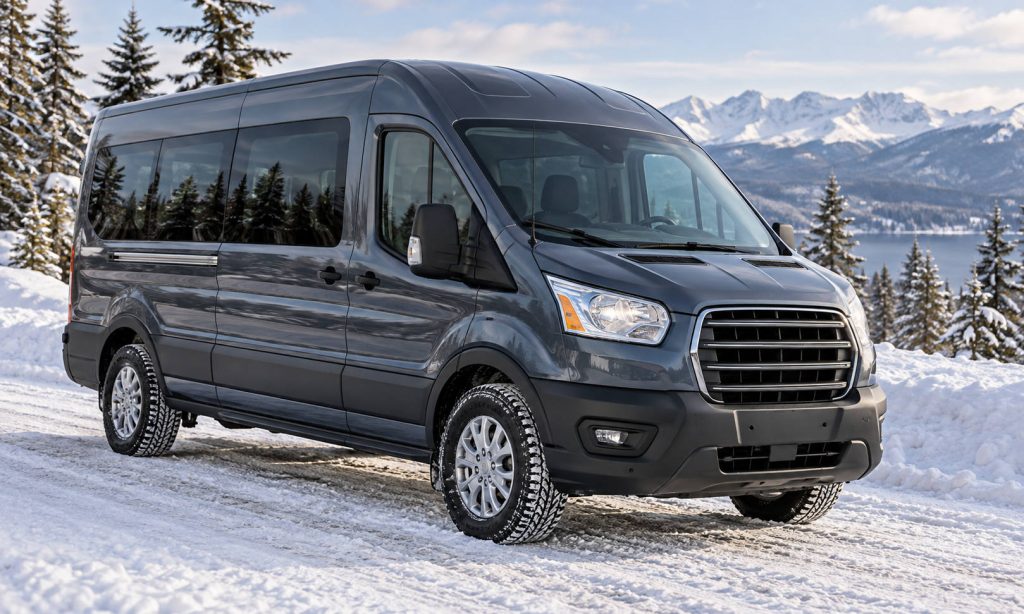
Winter tire sizing for a Ford Transit 350 XLT depends on the exact model year, body and wheelbase, drivetrain, axle setup, and the tire label on your van. “Transit 350” can describe single-rear-wheel (SRW) or dual-rear-wheel (DRW) configurations, and recent Transits may be rear-wheel drive or all-wheel drive. Those differences affect approved tire sizes, load capacity, wheel clearance, and whether snow chains are allowed. Begin with the driver-door tire placard and the owner’s manual for the vehicle’s build date; do not pick a size from another Transit or assume a common passenger-car winter tire will carry a loaded van. For general fitment context, the published Ford Transit 350 XLT tire guide can help frame your checks, while Ford documentation controls your vehicle’s limits.
Identify the Transit configuration first
Record the model year, VIN or build date, wheelbase/body style, engine, and whether the van is RWD or AWD. Confirm if the rear axle uses single or dual wheels. The XLT badge does not tell you all of those details. A tire-size table for one 350 configuration may not apply to another, and the available sizes can change by year and market.
Read the tire information on the driver-door label and compare it with the sidewall of every tire now installed. Check the complete size designation, load index, speed symbol, and whether the tire is a commercial LT/C-type or passenger-style tire. On a dual-rear-wheel van, verify that the paired rear tires are approved to work together and have compatible overall diameter, construction, and tread depth. If a wheel or suspension has been modified, have a qualified tire professional inspect the setup.
Match load capacity and pressure to van use
A Transit may carry people, tools, or cargo close to its axle limits. The replacement tire must have adequate load capacity at the vehicle’s specified cold inflation pressure. Do not choose a lower load index or a tire size that reduces capacity. A tire with a higher maximum sidewall pressure does not raise the vehicle’s GVWR or GAWR and does not authorize overloading.
Use the manual and placard for cold pressures, then account for the axle and load configuration. Do not copy a generic online pressure table: the same nominal tire size can have different load ratings and pressure requirements. Check pressure before a cold-weather trip, because temperature drops reduce tire pressure. Use a gauge rather than judging the sidewall by eye, and do not bleed air from a warm tire simply because its reading has risen after driving.
Choose winter capability without changing fitment limits
Dedicated winter tires can provide more traction than all-season tires in deep snow and cold conditions, but they must still meet the Transit’s size and load requirements. NHTSA recommends using snow tires in sets of four when needed and warns that their speed ratings may differ from the original tires. Check the snow tire’s speed symbol and the manufacturer’s instructions for its operating speed and pressure.
Look for the three-peak mountain snowflake symbol when severe-snow traction certification matters. The symbol identifies a tire that meets a standardized snow-traction performance threshold; it does not mean that the tire is suitable for every Transit configuration, nor does it guarantee performance on ice. A winter tire’s tread compound and pattern are designed for cold-weather use, but the size, load rating, and wheel fitment still have to be correct.
Check wheel clearance before using chains
Snow-chain rules vary by tire size and Transit variant. The 2024 U.S. Transit owner’s manual, for example, lists different chain permissions by tire size and by RWD single-rear-wheel, RWD dual-rear-wheel, and AWD configuration. It specifies particular limits for cable diameter, which axle may receive chains on some versions, and directs users to avoid fully loading the vehicle. Those 2024 instructions are examples, not universal rules for every XLT or model year.
Before buying chains or cables, use the manual’s exact table for your tire size and drivetrain. Check clearance to brake hoses, suspension parts, bodywork, and the inner dual tire. Some setups permit chains only on the outer tires; others restrict chains to a particular axle or cable type. If your manual says chains are unsuitable for the installed size, do not try a close-fitting substitute. Ask Ford or a qualified commercial-vehicle tire shop to confirm the approved option.
Do not assume a larger tire fits
Owner discussions about larger Transit tires often describe rubbing, trimming, suspension lifts, wheel offsets, spare-tire storage, and the difficulty of finding a winter-rated tire with the needed load index. These are anecdotal reports from different years and configurations. They are useful reminders to verify clearance, but they are not proof that a size works on your van.
A taller or wider tire can change speedometer readings, gearing, steering clearance, braking behavior, and load capacity. The spare carrier may also be too small. Before changing from the placard size, obtain written fitment guidance from Ford or a qualified tire professional who can check the specific wheel, offset, axle, suspension, and body clearance. Keep the original-size information and confirm TPMS compatibility as well.
Winter fitment checklist
- Match model year/build date, drivetrain, SRW or DRW configuration, body, and wheelbase.
- Verify the approved size, load index, speed rating, and cold pressure on the placard and in the manual.
- Install a compatible winter set on all four road positions unless the vehicle manufacturer specifies otherwise.
- Check dual-rear-wheel spacing, tire pairing, and inner clearance.
- Use only the snow-chain or cable type, axle position, and dimensions listed for your exact size and variant.
- Recheck pressure cold after a major temperature change and before a loaded trip.
Frequently Asked Questions
Can every Transit 350 XLT use the same winter tire size?
No. The approved sizes vary by year, drivetrain, axle arrangement, body, and equipment. Use the label and manual tied to your VIN or build date.
Can I install a smaller winter tire to improve snow traction?
Only if Ford approves that size for the exact configuration and it meets load and wheel-clearance requirements. A narrower size is not automatically safe or compatible.
Can I put chains on the front tires of an AWD Transit?
Do not assume so. Chain placement and permitted cable dimensions vary by tire size and variant; check the owner’s manual table for your exact setup.
Do winter tires need a different inflation pressure?
Use the pressure specified by Ford for the installed approved size and load condition. Ask a tire professional if the replacement tire’s construction requires clarification.
Is a three-peak mountain snowflake tire enough for every winter route?
No tire marking replaces appropriate speed, following distance, and route judgment. The symbol indicates a snow-traction standard, not guaranteed grip on every surface or fitment approval.
Final Words
For winter tires on a Ford Transit 350 XLT, identify the van’s exact build and axle configuration before selecting a size. Match load index and pressure to the placard, use four compatible winter tires, and follow the manual’s specific chain limits. Treat larger-tire reports as leads to investigate, not fitment approval. For a separate tire overview, see the Transit 350 XLT tire page.
References
- 2024 Ford Transit Owner’s Manual — chain use by tire size and vehicle variant.
- NHTSA Tire Safety — replacement tire and winter tire guidance.