
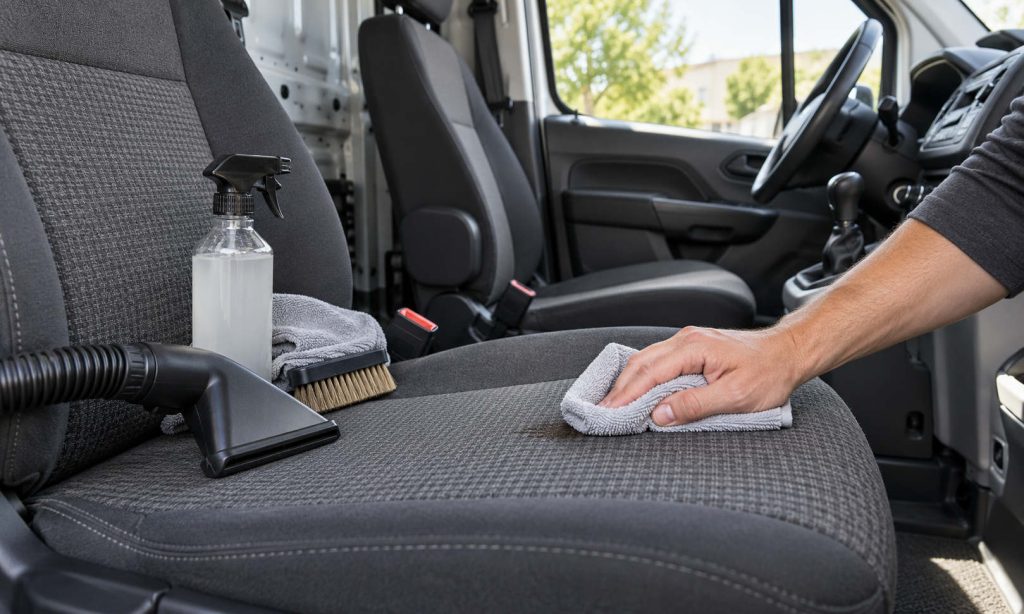
Protecting and cleaning the interior materials in a Ford Transit Connect starts with identifying the surface and checking the owner’s manual for the exact model year. Cloth, carpet, vinyl, leather, coated trim, and seat belts need different care. Work use can bring in grit, dust, oil, and damp clothing; family and pet trips add food, hair, and drink spills. Use the mildest method that works, clean a small hidden area first, and avoid soaking seats or trim. If you are weighing extra seat protection, the site’s Ford Transit Connect seat-cover guide can help you compare cover styles; check that any cover suits your exact seat and airbag setup.
Start by identifying the material
Transit Connect interiors vary by year, trim, market, and passenger or cargo configuration. A cloth seat and carpeted floor absorb liquid differently from a vinyl work seat or a leather-trimmed surface. Door panels may combine fabric, textured plastic, soft-touch coatings, and painted trim. Check the manual and, if needed, the vehicle specification or dealer before using a cleaner on a surface you cannot identify.
Look for loose dirt and grit before applying liquid. Vacuum seams, seat tracks, carpet edges, and the area beneath removable mats. Grit acts like an abrasive when rubbed into fabric, vinyl, or plastic. For pet hair, use a soft upholstery attachment or a tool approved for the fabric; avoid sharp blades that can cut fibers or upholstery. Remove floor mats and clean the floor beneath them so moisture is not trapped against carpet.
Clean cloth seats and carpet with limited moisture
For ordinary dust, vacuum slowly with a soft brush attachment. For a fresh spill, blot with a clean absorbent cloth instead of rubbing outward from the stain. Follow the product instructions for an automotive upholstery cleaner, and test it in a concealed spot first to check for color change or texture damage. Use only enough cleaner to lift the soil; saturating a seat can leave a ring, push liquid into the cushion, or lengthen drying time.
Work from the outside edge of a stain toward its center so it does not spread. Use a clean, lightly damp cloth to remove residue if the cleaner’s directions call for it, then blot dry. Let the area air dry fully before putting a cover or mat back in place. If an odor or stain remains, repeating a small, controlled treatment is safer than flooding the seat with detergent or using a household chemical that may leave residue.
For carpet, lift removable mats and vacuum before spot treatment. Treat a small patch at a time and avoid soaking the padding underneath. Check that the floor dries before replacing mats. If water or another liquid has entered beneath the carpet or near wiring, seat connectors, or a control module, arrange a proper inspection instead of continuing to spray cleaner into the area.
Care for vinyl, leather, and plastic trim
For vinyl and hard trim, start with a soft microfiber cloth and a small amount of cleaner approved for the surface. Apply liquid to the cloth rather than spraying directly around switches, screens, vents, or electrical connectors. Work gently across textured trim, then wipe away residue with a clean cloth. Avoid abrasive pads, strong solvents, and unapproved dressings that can leave glare or a slippery surface on the steering wheel, pedals, or gear selector.
If your Transit Connect has leather, use the manual’s recommended leather-care approach and a compatible cleaner. Test any product in a hidden area and wipe it away as directed. Avoid household glass cleaners, bleach, or solvents unless the exact Ford manual specifically allows them for that surface. Leather coatings and synthetic leather can look similar but respond differently to cleaners, so do not assume a product suitable for one finish is right for another.
Clean the headliner carefully with a lightly damp cloth only when the manual allows it. Too much moisture or pressure can loosen the fabric or leave a water mark. Use a soft brush for dry dust around seams and overhead fittings. Keep sprays away from the instrument panel, air vents, displays, and safety equipment.
Protect seat belts and airbag areas
Ford’s Transit Connect owner information includes specific cautions for seat-mounted airbags and safety belts. For the U.S. 2016 manual, Ford warns against chemical solvents or strong detergents on vehicles equipped with seat-mounted airbags, and says household or glass cleaners can affect seat fabric’s flame-retardant properties. Ford also cautions that solvents, bleach, or dye can weaken safety-belt webbing. These instructions are year-specific; check your own manual before cleaning or adding an accessory.
Do not spray a cleaner directly onto a seat side bolster, airbag seam, belt buckle, belt webbing, or retractor. Do not scrub, coat, or cover an airbag seam. If the belt is dirty, follow the manual’s approved method and let it dry fully before use. If a belt is frayed, cut, sticky, or will not retract smoothly, have it inspected rather than trying a harsh chemical treatment.
Seat covers and protective accessories must match the exact seat design and preserve the airbag deployment path. A cover that looks like it fits can still interfere with a side airbag. Check Ford’s guidance and the cover maker’s vehicle-specific fitment, and have a dealer handle removal or installation if the factory seat trim must be disturbed.
Prevent wear during daily and work use
Use removable mats that fit the floor and cannot slide into the pedals. Empty them regularly so sand and grit do not grind into carpet. In cargo areas, secure tools and containers so they do not strike trim during braking. Keep wet gear in a container or removable liner, then dry the area underneath. Sunshades can reduce direct sun on the dashboard when parked, but do not place objects where they interfere with airbags or visibility.
For pet travel, vacuum hair before it is pressed into the seat fabric. Use a compatible washable cover if you need frequent protection, and remove it to clean both the cover and the upholstery beneath it. A seat cover is for surface protection; it is not a pet restraint. Keep the vehicle’s seat belts, child-seat anchors, and airbag openings accessible. If a cover traps moisture against the fabric, remove it and dry both surfaces before reinstalling.
A simple cleaning routine
- Check the year-specific owner’s manual and identify the material.
- Remove loose dirt with a vacuum or a clean dry cloth.
- Test a compatible cleaner on a hidden area.
- Blot stains with controlled moisture; do not saturate the seat or carpet.
- Wipe away residue and allow the material to dry fully.
- Inspect belts, seat seams, mats, and accessory fit before returning the vehicle to service.
Frequently Asked Questions
Can I use household glass cleaner on Transit Connect seats?
Do not assume it is safe. Ford’s 2016 U.S. manual warns against household and glass cleaners on specified fabric, and cautions about chemicals near seat-mounted airbags. Check your exact year’s manual.
What is the safest way to clean a cloth seat stain?
Vacuum first, blot rather than rub, test a compatible automotive upholstery cleaner in a hidden area, and use limited moisture. Follow the product and vehicle instructions.
Can I use the same cleaner on vinyl and leather?
Only if its label says it is suitable for both and your owner’s manual permits it. Test a concealed spot and wipe away residue as directed.
How should I clean the seat belts?
Follow the exact manual instructions. Ford cautions against solvents, bleach, and dye on seat belts because they can weaken the webbing.
Can a seat cover protect the interior without affecting airbags?
Only when the cover is approved for the specific seat and airbag arrangement and installed as directed. Confirm fit with Ford’s guidance and the cover manufacturer.
Final Words
Good Transit Connect interior care is mostly about matching the cleaning method to the material, removing grit first, and keeping moisture and chemicals under control. Check the manual for your model year, especially around seat-mounted airbags and safety belts. Before adding a cover, verify exact seat fit and airbag compatibility.

Pingback: Ford Escape Accessory Materials for Pets and Cargo