
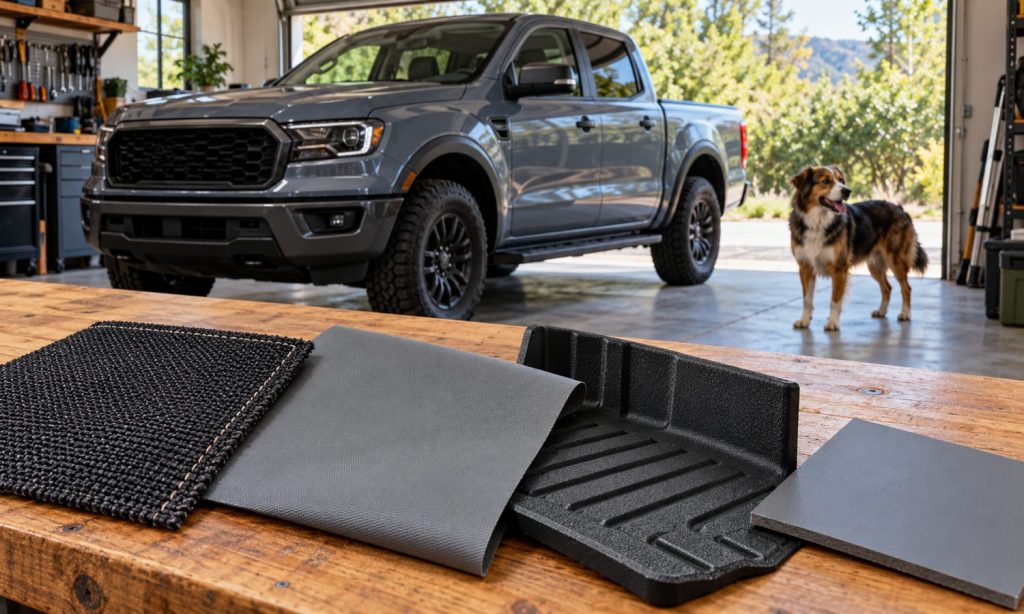
Choosing an accessory material for pets, cargo, and daily use in a Ford Escape starts with the surface you need to protect and the way the vehicle is configured. A seat cover, floor liner, cargo mat, and storage divider face different kinds of wear, moisture, dirt, and movement. Check your Escape’s model year, trim, seat layout, and any seat heaters, sensors, split-folding sections, or factory cargo features before comparing materials. For a simple material comparison, look at how the surface handles the mess you expect, how it stays in place, and whether you can clean it without damaging the vehicle or the accessory. A mat designed for a 2018 Escape, for example, may not be the right fit for another year. Pair material choice with exact fitment, and never let a cover or cargo item block a seat belt, control, airbag area, or driver visibility.
Start with the accessory’s job
Decide whether you are protecting seats from pet hair and claws, the floor from mud and grit, or the cargo area from wet gear and shifting loads. If you use the Escape for commuting and errands, ease of cleaning and a secure fit may matter most. If pets ride often, consider where the animal sits, how you restrain it, and whether a seat or cargo-area cover can be installed without interfering with belts or hatch access. If you carry boxes, tools, or outdoor equipment, look for a surface that resists abrasion and can be secured without covering tie-downs.
A material cannot compensate for the wrong shape or attachment. The vehicle-specific instructions should name your year and seating or cargo configuration. The guide to measuring a Ford Escape before ordering custom-fit interior accessories explains why taking measurements and checking openings can help you verify fit. Use the maker’s exact measurement method if it differs.
Compare common material types
Woven fabric and canvas: These surfaces can feel more like upholstery and may suit everyday seat use, but texture and weave affect how easily hair, crumbs, and grit release. Look at care directions and seams; a material that is washable still needs to fit the seat properly and stay clear of safety equipment.
Coated fabric and synthetic leather: Smooth coatings can make spills easier to wipe from a seat or cargo surface. They can feel warmer or less breathable than cloth, and a coating can wear or crack depending on construction, use, and care. Check whether a seat-cover maker permits use with heated or ventilated seats; do not assume a material is compatible just because it fits over the cushion.
Rubber and thermoplastic liners: Molded liners are commonly used on floors and in cargo areas because raised edges can help contain dirt or small spills. Confirm that a liner lies flat, uses the Escape’s intended retention features, and does not interfere with pedal movement or seat tracks. The Ford Escape accessory fitment checklist covers related clearance and installation checks. For cargo-area protection, see the guide to cargo and roof accessories for Ford Escape; neither page replaces a liner maker’s exact year and trim fitment data.
Water-resistant fabrics and layered covers: These may be useful for damp paws, muddy equipment, or wet clothing, but “water-resistant” does not mean waterproof under every condition. Look for care instructions, backing construction, and whether the cover allows liquid to pool near seat seams or electrical components. Let wet items dry promptly and check the vehicle’s manual for cleaning guidance.
Match pet and cargo needs without compromising safety
For pets, separate protection from restraint. A seat cover or cargo liner does not secure an animal. Use a restraint method appropriate to the animal and seating position, and ensure the cover does not obstruct the buckle or anchor point. Do not place a pet on a front passenger seat in a way that conflicts with the owner’s manual or airbag guidance. If the pet rides in the rear, verify that the cover does not keep the seat from latching after folding or block access to a seat belt. For a specific example, Ford’s 2018 Escape manual warns against accessory seat covers because they may prevent side-airbag deployment; check the manual for your own model year before installing any seat cover. A general fitment checklist cannot override that vehicle-specific warning.
For cargo, choose material and construction according to the item’s shape and weight. A slick surface can make some loads slide, while a grippy surface alone does not replace tie-downs. Keep heavy objects low and secure them using appropriate vehicle anchors. NHTSA advises drivers to tie cargo down with rope, netting, or straps, secure large objects directly to the vehicle or trailer, and double-check the load. A liner or cover is not a restraint. If an accessory changes the usable cargo space or obscures visibility, reconsider the arrangement. The article on checking cargo or roof accessories on a Ford Escape covers related load and fitment questions.
Think about cleaning and long-term use
Before choosing, read the cleaning instructions for both the accessory and the vehicle interior. Some coatings tolerate a damp cloth but not strong cleaners; some fabrics can be removed and washed, while their backing or fasteners cannot. Ask whether the material can air-dry fully and whether the maker recommends avoiding heat, solvents, or abrasive brushes. If you expect frequent muddy use, prioritize an accessory that can be removed and cleaned without leaving trapped debris or moisture underneath.
Consider the whole pattern of use rather than a single “durable” claim. Daily commuting may expose a cover to friction from getting in and out, while pets add hair and claws and cargo adds concentrated scuffing. When reading reviews, check which material, accessory type, vehicle, and care method the reviewer used. Treat comfort and cleaning reports as individual experience, then verify the accessory maker’s material details, fitment, and care instructions. Compare material options in the related Ford Ranger material guide as a general example only; its fitment does not transfer to an Escape. For the Escape’s own interior accessory measurements, use the Ford Escape measuring guide.
Fit and installation checks before use
- Confirm the material and accessory are listed for the Escape’s model year, trim, seat layout, and cargo configuration.
- Check seat airbags, belts, buckles, heating or ventilation, sensors, folding sections, and controls before using seat covers.
- Check that floor liners lie flat and do not touch pedals, obstruct seat tracks, or interfere with retention clips.
- Secure cargo independently; a protective surface is not a restraint system.
- Test seat movement, belt access, hatch operation, visibility, and accessory attachment while parked.
- Follow the maker’s care instructions and inspect beneath removable accessories for trapped moisture or debris.
If a cover needs force to fit, hides a safety label or deployment seam, or makes a seat control difficult to reach, stop and contact the manufacturer. The Ford Escape fitment checklist and interior-accessory measurement guide can help you check the exact layout before use. For a broader comparison of universal and vehicle-specific accessories, see this Ford F-150 fitment article; its examples are not Escape-specific. A separate comparison of carpet and all-weather floor protection illustrates how surface choice depends on use, though its fitment details apply only to the F-150. For pet-cover cleaning and fit considerations on another vehicle, see the F-150 dog-seat-cover care guide; do not transfer its fitment recommendations to the Escape.
Sources and vehicle-specific checks
- 2018 Ford Escape Owner’s Manual (seat-mounted side-airbag warning; applicable to that model year).
- NHTSA: Drive Safe—Secure Your Load (general cargo-securing guidance).
Frequently Asked Questions
Which material is easiest to clean after a muddy trip?
A smooth, removable, washable or wipe-clean surface may simplify cleanup, but confirm its care instructions and fit. Remove it as directed and dry both the accessory and the underlying vehicle surface.
Is a waterproof seat cover always best for pets?
Not always. Consider fit, comfort, breathability, cleaning, seat functions, and airbag compatibility as well as moisture resistance. A cover also does not replace a pet restraint.
Can I use a cargo liner from a different Ford model?
Only if the manufacturer explicitly lists the Escape’s exact year and cargo configuration. Similar dimensions or brand family do not confirm that the liner will stay flat or clear the hatch and seats.
Will a rubber floor liner protect every part of the carpet?
No. Coverage depends on the liner’s shape and the Escape’s interior. Check edges, footrest areas, seat tracks, and retention points, and remove debris that collects underneath.
How often should I inspect a pet or cargo cover?
Inspect it after installation and periodically during use, especially after carrying wet, dirty, or heavy items. Check that fasteners remain secure and that belts, controls, and latches remain accessible.
Final Words
The best accessory material for pets, cargo, and daily use in a Ford Escape is the one that suits the actual mess and wear you expect, can be maintained as directed, and fits the exact interior without interfering with safety systems. Compare fabric, coated surfaces, rubber, and layered covers by cleaning needs, feel, and attachment—not by a material name alone. Verify the Escape year and seat or cargo layout, secure pets and loads separately, and inspect the installation before driving. For the Escape’s interior layout, compare accessory dimensions against the custom-fit measurement guide and verify the year-specific product fitment before ordering.
Pingback: Ford Ranger Bed and Roof Accessory Fitment Checks