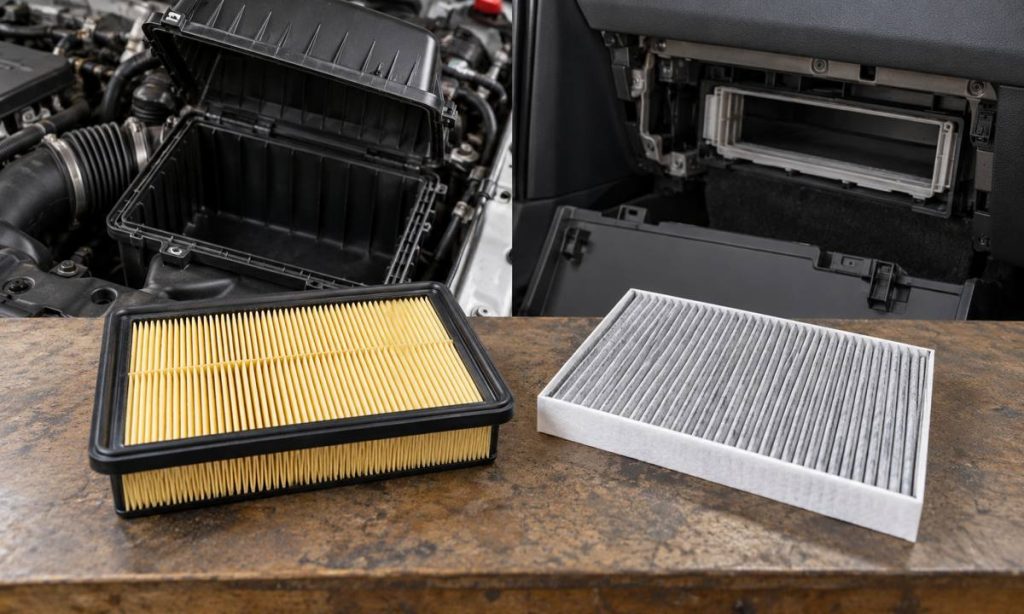
An engine air filter and a cabin air filter both clean air, but they protect different parts of the vehicle. The engine filter screens incoming air before it reaches the engine’s intake system. The cabin filter screens air moving through the heating, ventilation, and air-conditioning system. They are in different locations, have different shapes, and follow different service instructions. Replacing one does not replace the other. If you are deciding which filter to inspect, start with the symptom: reduced HVAC airflow may point you toward the cabin filter, while an engine filter is part of scheduled engine maintenance. Neither filter should be changed by a universal mileage rule. The correct interval and replacement method depend on your vehicle’s year, engine, and driving conditions, so use the owner’s manual and inspect the correct housing.
What each filter does
Engine air filter
The engine air filter sits in the intake path between outside air and the engine. It helps keep dust, leaves, insects, and other debris out of the intake system. The filter media and airbox are designed for a particular engine and airflow path. A filter that is damaged, poorly seated, or the wrong shape can let debris bypass the media or keep the airbox from sealing correctly. Some engine designs use more than one intake filter or have special service steps, so check the vehicle-specific manual before opening the housing.
Cabin air filter
The cabin air filter is part of the HVAC airflow path. Depending on the vehicle, it may filter outside air entering through the cowl, recirculated air, or both. It helps catch particles such as dust and leaves before air moves through the vents. Filter media varies: standard particulate media and activated-carbon media are examples, but the vehicle’s specified size, shape, airflow direction, and fit still matter. A cabin filter does not make the vehicle a sealed environment or guarantee removal of every gas, odor, or fine particle.
How they differ at a glance
| Feature | Engine air filter | Cabin air filter |
|---|---|---|
| Protects | Engine intake path from airborne debris | HVAC airflow path and cabin air stream |
| Common location | Engine-compartment airbox; varies by vehicle | Often behind glove box, under dash, or near cowl |
| Possible clue to inspect | Scheduled service or visible dirt/damage in the correct housing | Reduced vent airflow, accumulated debris, or scheduled service |
| Replacement interval | Use the exact maintenance schedule and conditions | Use the exact maintenance schedule and conditions |
| Can one replace the other? | No | No |
The locations in the table are common examples, not a promise about every make and model. Ford’s manuals, for instance, place some cabin filters behind the glove compartment and describe separate engine-filter procedures; other vehicles use different layouts. Find the correct manual for the exact year and engine before removing panels or opening an airbox.
When to inspect the engine air filter
Follow the maintenance schedule for your vehicle and engine. A schedule may specify inspection, replacement, or a shorter interval under dusty or severe operating conditions. Driving on unpaved roads, through construction dust, or in areas with airborne debris can load a filter more quickly, but do not substitute a guess for the manufacturer’s instructions. If you inspect it, look for heavy dirt, leaves, tears, wetness, deformation, or a damaged seal. A filter that appears dirty at the surface is not automatically beyond service; use the manual’s guidance and avoid shaking dirt into the intake.
Do not assume that a dirty filter is the cause of every engine concern. Hesitation, a warning light, or a change in fuel use can have many possible causes. A filter check is one maintenance step, not a diagnosis. If the engine airbox or intake duct is damaged or does not close securely, have the problem corrected before driving in dusty conditions.
When to inspect the cabin air filter
A cabin filter may need inspection when HVAC airflow seems weaker than usual, the filter is visibly loaded with leaves or dust, or the scheduled service is due. Those clues can also come from a blower, vent, or HVAC issue, so replacing a filter may not resolve every airflow problem. Some vehicles have no serviceable cabin filter; others have more than one. Check the manual or service information rather than forcing open a panel.
If your vehicle uses a directional filter, match the airflow arrow to the housing’s airflow direction. Confirm the filter sits flat and the cover closes fully. An incorrectly installed filter can leave gaps, restrict airflow, or allow debris to bypass the media. Avoid claiming that an upgraded filter will cure allergies or remove all odors; performance depends on the filter material, HVAC system, fit, and the particles or gases involved.
Replacement and maintenance mistakes to avoid
- Buying by vehicle name alone when year, engine, trim, or HVAC configuration changes fitment.
- Confusing the engine filter with the cabin filter and replacing the wrong part.
- Using a filter that does not seat or seal correctly in its housing.
- Ignoring the airflow arrow or service instructions on a cabin filter.
- Cleaning or reusing a disposable filter when the manufacturer says to replace it.
- Assuming a new filter will fix a warning light or unrelated engine or HVAC fault.
Frequently Asked Questions
Is the engine air filter the same as the cabin air filter?
No. The engine filter serves the intake system, while the cabin filter serves the HVAC airflow path. They have different locations and replacement procedures.
Which filter affects the air coming through the vents?
The cabin air filter is the filter associated with HVAC airflow. A clogged filter can be one possible reason for reduced airflow, but the blower, vents, or other HVAC parts may also be involved.
Does every car have a cabin air filter?
No. Availability and location depend on the vehicle. Check the owner’s manual or service information for the exact model year.
How often should I replace each filter?
Use the vehicle’s maintenance schedule and any severe-service guidance. Dusty roads and other conditions may require more frequent inspection, but there is no single interval for every vehicle.
Can I clean a dirty engine or cabin filter instead of replacing it?
Only if the filter maker and vehicle instructions allow cleaning. Many filters are designed to be replaced, and aggressive cleaning can damage the media or seal.
Final Words
The main difference in an engine air filter vs. a cabin air filter is what each one protects: the engine intake or the HVAC air stream. Check the correct filter and housing for your vehicle, use the proper maintenance schedule, and install the replacement in the specified direction and position. If a filter is damaged, the housing will not seal, or airflow or engine symptoms continue after routine maintenance, have the system inspected instead of assuming the filter is the only cause.