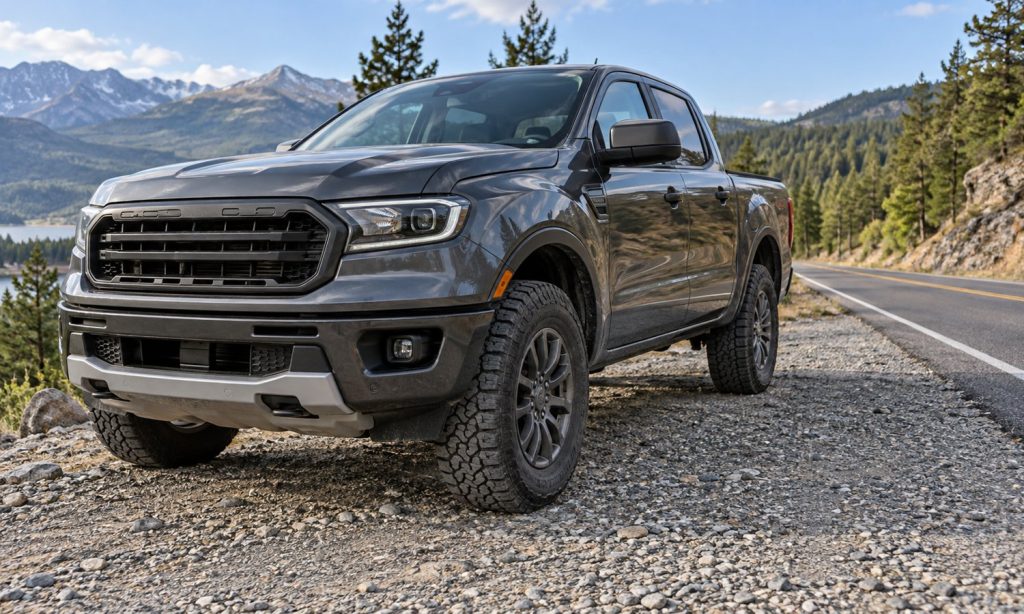
All-terrain vs. highway tires for Ford Ranger daily driving is a question about how much rough-road capability you actually use. Highway-oriented tires emphasize paved-road operation, while all-terrain designs balance pavement use with unpaved surfaces. Neither label guarantees quieter running, shorter stopping distances, or better winter grip across every model. Start with the tire type and specifications approved for your particular Ranger, then compare the conditions you encounter most often. A commuter that occasionally visits a maintained gravel parking area has different needs from a truck regularly crossing loose construction access roads. This guide explains the trade-offs, what to check before changing categories, and how to avoid confusing appearance with suitability. If you also consult our all-terrain tire guide for Ford Ranger, treat every listed size as a separate fitment question.
Start with the Ranger you actually drive
Ranger generations, trims, wheel packages, and regional specifications differ. Record the model year, trim, drivetrain, original wheel size, and any suspension modifications. Read the tire label and the correct US owner’s manual before considering a change. A tire can fit a wheel yet remain unsuitable because of its load rating, dimensions, construction, or clearance. The name Ranger on a tire’s product line also does not establish that it fits a Ford Ranger.
Ford’s replacement guidance can specify matching the original tire type as well as size and service ratings. If you intend to move from the original all-terrain category to a highway category, or the reverse, get application-specific confirmation from Ford or a qualified tire professional. Do not treat this comparison as approval to override the vehicle’s requirements. Modified trucks need additional assessment because their current equipment may no longer match the original label.
What changes between the two categories?
Think of the category as a starting point for investigation. It describes intended use, not a measured result for every tire sold under that label. The useful comparison is between compatible tires in the same size, with their actual specifications and relevant test evidence considered.
Paved-road comfort and noise
Highway designs generally put greater emphasis on road manners. All-terrain tread patterns may introduce more noticeable tread sound or a different steering feel, especially compared with the tires previously fitted. Ford specifically notes that performance all-terrain tires can have different ride, noise, and wear characteristics. That does not mean every all-terrain tire will be objectionable during a commute.
Separate a steady tread hum from a new vibration, pull, or rhythmic thump. Those symptoms may call for a condition, balance, or installation check rather than acceptance as normal tire character. Compare comfort with the correct cold pressure and a similar load. An overloaded truck or incorrect inflation makes an otherwise useful comparison misleading.
Gravel, dirt, and occasional trails
All-terrain tires are intended to balance on-road and off-road use. Their value becomes more relevant when unpaved travel is a regular part of your route rather than an imagined future trip. Describe the surface precisely: smooth gravel, loose stones, ruts, mud, and sharp rock are different demands. An all-terrain label alone does not establish protection against every cut or puncture.
Highway tires should not be assumed suitable for demanding trails simply because the truck has four-wheel drive. Conversely, choosing an aggressive-looking tire does not turn the Ranger into a vehicle with greater ground clearance or a higher payload rating. Match the whole vehicle to the terrain and turn back when the route exceeds its capability.
Rain and winter require separate questions
Do not rank wet-road performance by tread appearance. Compare available evidence for the actual tire and size, and distinguish wet braking from hydroplaning resistance and cornering behavior. A general description such as all-terrain cannot tell you how two individual tires perform in the same rain conditions. Reduce speed for standing water regardless of tire category.
Likewise, all-terrain and all-season describe different aspects of intended use and may appear together. Winter suitability needs its own assessment. NHTSA explains that winter tires are more effective than all-season tires in deep snow. Check the tire’s winter markings and applicable guidance rather than assuming that large tread blocks provide ice capability. Four-wheel drive does not remove the need for suitable braking and cornering traction.
Weight, loading, and everyday operating costs
A category change may also involve a change in tire construction or weight. Avoid attributing every difference to the tread category if the comparison also changes wheel diameter, tire size, or passenger-versus-light-truck construction. Ask the installer to explain each proposed change and its implications for the truck. A more demanding load designation is not a universal shortcut to better everyday comfort.
For fuel costs, compare credible evidence for the exact setup instead of assuming a fixed miles-per-gallon penalty. Tire condition, inflation, driving speed, load, and other vehicle changes affect the result. If you track fuel use, compare several tanks under similar conditions. A single trip with different weather or trailer use cannot isolate the effect of the tires.
Tread-life warranties also need context. Read mileage, rotation, inspection, and documentation conditions separately from the actual life you expect. No warranty makes worn or damaged tires safe to keep using. Plan for routine checks and record maintenance rather than choosing solely by a large advertised mileage figure.
Make a practical comparison before installation
Prepare a short description of a normal month’s driving. Include commuting miles, gravel-road frequency, winter conditions, passengers, cargo, and trailer use. Then identify the problems you want to solve: excessive noise, unsuitable terrain capability, poor fitment information, or an aging set. This keeps the discussion tied to actual needs.
- Confirm the full approved size, type, load index, and speed rating.
- Check the selected variant rather than a broad product-family description.
- Ask whether the existing wheels and spare remain appropriate.
- Confirm clearance and any drivetrain-specific matching requirements.
- Request the correct inflation and maintenance guidance for the approved setup.
Owner comments can help identify questions about noise or ride, but individual experiences depend on road surface, pressure, load, wear, and prior tires. Without those details, a statement that a tire feels quieter is not a reliable comparison for your Ranger. Use such reports as prompts for further investigation, not as vehicle-specific evidence.
Related guidance: all-terrain and highway tire trade-offs on a Ford Explorer.
Frequently Asked Questions
These questions address common decisions after you have confirmed the truck’s approved tire specifications.
Does a 4×4 Ranger automatically need all-terrain tires?
No. Drivetrain alone does not settle the choice. Start with the original specification and manufacturer guidance, then consider actual road use. Confirm any proposed category change before installation.
Can I mix highway and all-terrain tires?
Do not plan a mixed set as a compromise. Follow Ford’s matching requirements and have the complete arrangement checked, including size, type, condition, and drivetrain implications.
Should I lower pressure to make a tire quieter?
No. Use the prescribed cold inflation guidance. Pressure is not a tuning shortcut for hiding unwanted noise, and persistent noise or vibration deserves inspection.
Is occasional gravel use enough reason to change categories?
Not automatically. Describe the gravel’s condition and how often you encounter it. Have a professional assess whether the approved existing tire type suits that use before changing the setup.
Do larger tires improve every trade-off?
No. Larger dimensions introduce separate fitment and vehicle-system questions. Keep size changes distinct from category comparisons and obtain qualified confirmation before departing from the original specification.
Final Words
Compare all-terrain and highway tires for your Ranger by verified fitment and everyday conditions. Road noise, loose-surface use, weather, loading, and maintenance deserve separate attention. Use the Ford Ranger tire fitment discussion as additional context, while verifying every application independently. Choose only an arrangement consistent with the correct Ford guidance, and have uncertain category or construction changes reviewed before mounting.
References
The following official resources support the general tire-care and vehicle-specific verification guidance. Select the manual for your own model year and market.