
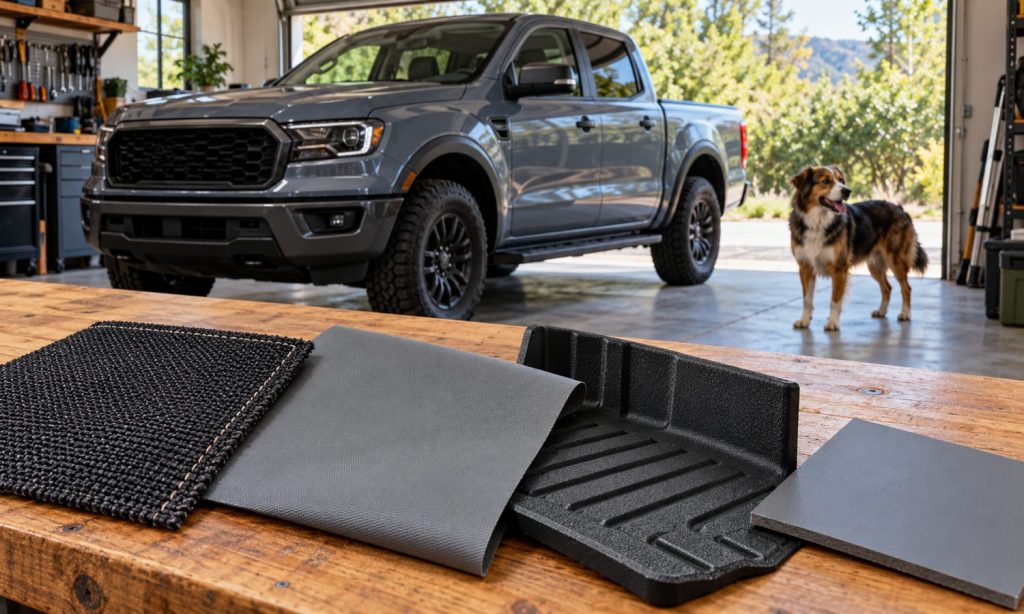
Deciding how to choose an accessory material for pets, cargo, and daily use in Ford Ranger starts with the job the accessory must perform. A seat protector, floor liner, organizer, and tonneau cover face different wear, moisture, and cleaning demands. Material names alone cannot tell you whether the finished item fits, contains spills, or tolerates your routine. For bed protection on a 2020 truck, the application checks in our 2020 Ford Ranger tonneau-cover guide help keep that decision tied to the correct bed configuration. This article explains how to evaluate construction, care instructions, and evidence without assuming one material is best for everything. It also separates upholstery protection from pet restraint and cargo organization from load securement, because a convenient protective surface does not perform those safety functions automatically.
Define the exposure the material will face
List the actual mess and wear: pet hair, muddy paws, wet outdoor gear, abrasive tool cases, spilled drinks, or everyday clothing. Then identify where contact occurs and how often. A removable rear-seat protector used on weekends has a different job from a permanently fitted liner beneath work equipment.
Write down three requirements in plain language. You might need hair removal without dismantling the accessory, containment of small spills, or access to a folding seat. Separate those requirements from preferences such as color and texture. This makes it easier to reject a material that looks appealing but cannot support the intended routine.
Include the environment. An interior organizer and an exposed bed cover need different documentation for sunlight, moisture, temperature, and cleaning chemicals. Do not assume the same fabric name means the same coating, backing, or outdoor suitability across two accessories.
Evaluate the complete construction
Ask what the item is made from layer by layer. A fabric face can sit over foam, a membrane, or a separate backing. Molded pieces can include different edge materials and fasteners. A metal panel can rely on seals and hinges that behave differently from the panel itself.
For woven or padded textiles, inspect seams, binding, backing, and how the item is removed for cleaning. For coated fabrics or vinyl-like surfaces, ask whether the coating and joins are covered by the care instructions. Do not infer waterproof performance from a smooth appearance or from the fabric’s name.
For molded rubber or plastic pieces, evaluate shape, edge height, flexibility, attachment, and removal access in the intended location. For rigid metal or composite panels, evaluate handling, hinge operation, storage position, and documented load limits. These are design checks; the base material alone does not establish overall durability or suitability.
A useful comparison records the exact model, construction, permitted use, cleaning method, and unresolved questions. Avoid ranking unrelated items by a single word such as heavy-duty. If the construction is undisclosed, treat that as missing information rather than evidence of quality.
Understand water-related claims
Water beading on a surface is different from keeping liquid from passing through a finished accessory. Textile testing distinguishes surface repellency from other water-resistance measurements. Ask what was tested, under which method, and whether the result applies to the fabric alone or the complete sewn item.
Check openings, seams, edges, and the underside. A buckle opening can allow liquid through even when the nearby material resists wetting. A floor liner’s containment also depends on its shape and position. Decide whether you need brief spill protection, repeated wet use, or a documented barrier, and verify that specific requirement.
Do not test a new accessory by flooding the Ranger’s interior. Follow the maker’s permitted inspection or test procedure away from upholstery and electronics when applicable. After ordinary use, inspect underneath for moisture. Protection is only useful when trapped dirt or water does not go unnoticed.
For pets, assess cleaning and restraint access separately
Pet use makes hair removal, washable components, drying, and secure positioning practical priorities. If samples are available, compare texture and your ability to remove loose hair using the permitted cleaning method. Consider how seams and fasteners will be cleaned, not only the largest flat surface.
Check whether the accessory leaves the pet’s appropriate restraint or carrier installation unobstructed. A hammock, seat protector, or nonslip backing is not a substitute for a properly secured pet-transport arrangement. Confirm the compatibility of the complete setup and follow its instructions rather than attaching restraints to accessory straps without approval.
Do not use a tonneau cover to create a pet enclosure in the bed. The American Veterinary Medical Association warns that transporting pets loose or tethered in open vehicle cargo areas is unsafe. Plan suitable transport in the passenger area with appropriate restraint; protective material selection cannot resolve an unsafe travel arrangement.
For upholstery protection, the Ranger seat-cover configuration checks are also relevant. Verify the exact seat, airbag, buckle, and control requirements before comparing fabric preferences. A washable material does not make an otherwise incompatible seat cover acceptable.
For cargo, distinguish wear protection from securement
An accessory can reduce contact between dirty equipment and a surface without restraining the equipment. Secure loads independently using approved attachment points and suitable equipment. Do not assume a grippy texture, padded divider, or closed cover will hold a heavy object during sudden braking.
Ask for evidence relevant to the damage you expect. Abrasion, puncture, tear, and impact are different questions. A reported abrasion-test result should identify its method and conditions; it is not a direct promise of years of service or immunity to sharp cargo. A thick sample can still have weak joins or unsuitable attachments.
Consider repair and replacement. Can worn inserts, seals, straps, or fasteners be replaced, and are instructions available? If a single damaged component makes the accessory unusable, include that limitation in your decision. Avoid altering load-bearing parts or adding homemade attachments to extend its life.
For tonneau covers, check the system around the material
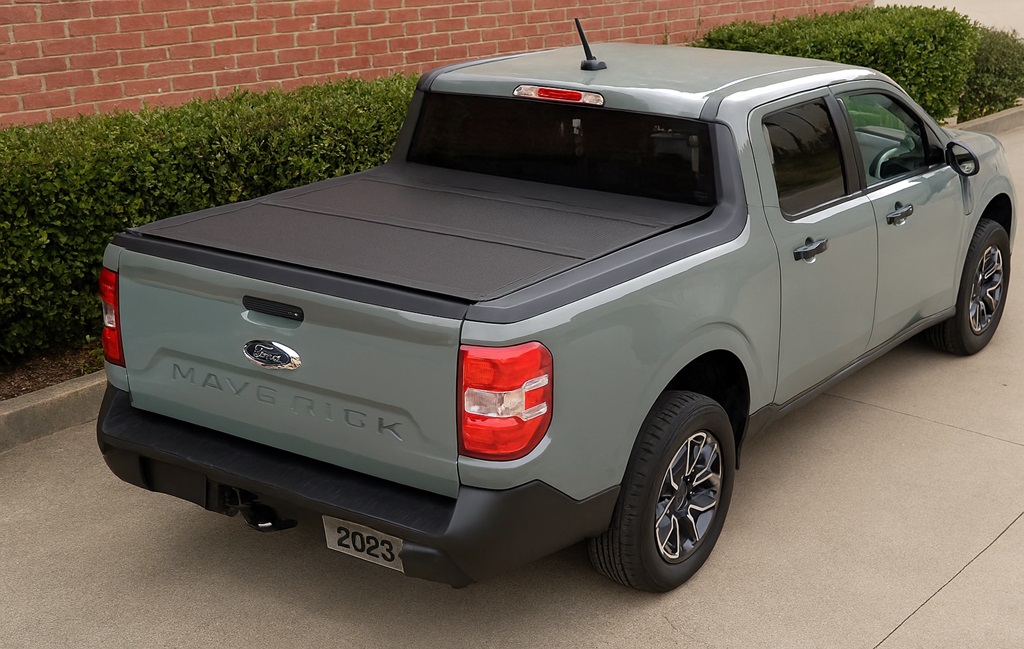
Soft fabric and rigid-panel bed covers use different constructions, but neither material category guarantees a dry bed. Verify rail fit, seal arrangement, drainage requirements, latch operation, and compatibility with the bedliner or other accessories. Follow the exact cover’s installation and maintenance instructions.
Ranger owner reports about one factory-branded hard cover described different amounts of water entry in different installations. Those anecdotes do not prove which material performs best or establish a leak rate. They illustrate why a material description should not replace checking the fitted system and protecting moisture-sensitive cargo appropriately.
Do not assume a hard panel can carry cargo on top. Use only the documented load rating and permitted arrangement for that exact product. The cover does not increase the truck’s payload rating, and its weight belongs in the overall vehicle-load assessment.
Make cleaning requirements part of the choice
Read the care label before ordering. Check whether the complete item is washable, whether inserts must be removed, and whether machine washing or heated drying is permitted. Confirm that its dimensions fit your cleaning setup and that you have a suitable place to dry it.
Inspect the accessory after cleaning for curling, loosened seams, damaged backing, or altered fit. On the driver’s floor, correct retention and pedal clearance remain mandatory. Around seats, preserve movement and restraint operation. Stop using an item that no longer stays correctly positioned, even if the material itself still looks clean.
Related guidance: Ranger bed-cover fitment and sealing considerations.
Frequently Asked Questions
Is a thicker material always more durable?
No single thickness measurement establishes durability. Construction, seams, attachments, and the type of wear all matter. Ask for evidence relevant to your use and check whether added bulk interferes with fit, folding, cleaning, or controls.
Does waterproof fabric make the whole accessory waterproof?
Not automatically. Openings, stitching, joins, and edges can change the result. Determine whether the claim covers the complete accessory and what conditions apply. Protect moisture-sensitive items separately when the installed system’s limits remain uncertain.
Can a seat protector replace a pet restraint?
No. It is intended to protect upholstery, not automatically to control an animal during a crash or sudden stop. Use an appropriate pet-transport arrangement and confirm that the protector does not interfere with its secure installation.
Should I compare abrasion numbers from different test methods?
Do not treat them as directly interchangeable. Ask for the method, specimen construction, conditions, and endpoint used. A number without that context does not establish which finished accessory will last longer in your particular truck.
What if the care instructions conflict with the vehicle manual?
Do not use the proposed cleaning or installation method until the conflict is resolved. Ask the accessory maker about compatibility with the affected vehicle surface. If no suitable method is confirmed, the accessory may not fit your intended use despite attractive material specifications.
Final Words
Choose Ford Ranger accessory materials by actual exposure, verified construction, workable cleaning, and safe fit. Keep pet restraints and cargo securement separate from surface protection. For a 2020 bed-cover application, revisit the tonneau-cover fit and sealing checks alongside the material information. The strongest decision is a documented match to your routine, not an assumption that one fabric, plastic, or panel type solves every problem.
Reference
American Veterinary Medical Association: safe transport of pets in motor vehicles.
2020 Ford Ranger Owner’s Manual: restraints, loading, and floor mats.
AATCC: water-resistance and repellency test-method distinctions.

Pingback: Ford Ranger Accessory Features for Work, Travel, and Family
Pingback: Ford Ranger Bed and Roof Accessory Fitment Checks