
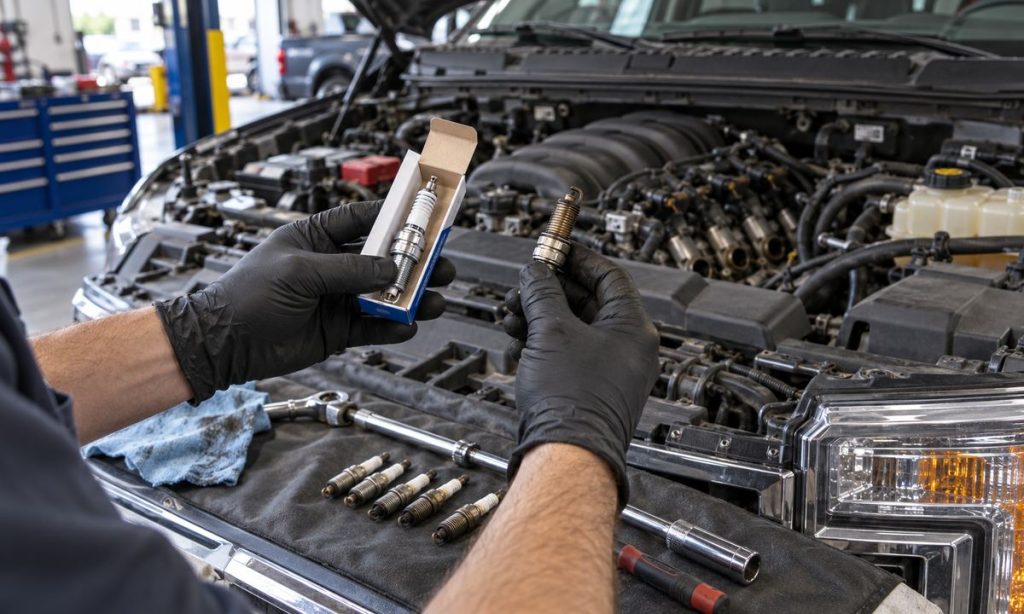
Choosing spark plugs for a Ford F-150 with the 5.0-liter gasoline V8 starts with the truck’s model year and engine configuration. The 5.0L Coyote has changed across generations, and plug design, heat range, gap, torque, and service interval must come from parts information and service data for that exact truck. Towing, short trips, dusty use, idling, or performance modifications can affect inspection needs, but they do not make a universal “heavy-duty” plug correct. Confirm the VIN, engine calibration, and any modifications before ordering. Use the Ford or Motorcraft application listing and the matching owner or service manual rather than selecting a plug from engine size alone.
Start with the exact 5.0L application
Record the model year, VIN, and whether the truck has its original engine and calibration. Ford used the 5.0L name across multiple F-150 generations; that label does not guarantee that one plug part number fits every year. Check a Ford or Motorcraft parts catalog by VIN, or ask a Ford parts department to confirm the original-equipment plug and any superseding part number. If the engine has been replaced, tuned, supercharged, or fitted with aftermarket cylinder heads, tell the parts counter. The original catalog match may not cover a changed engine.
A Ford Performance crate-engine sheet can list a plug and gap for that specific crate engine, but it is not a substitute for the production F-150 service specification. Performance parts may use different compression, boost, calibration, and operating limits. Do not transfer a gap value from a Mustang or a crate-engine instruction sheet to a pickup just because both have a 5.0L V8.
Compare plug design and materials
The correct plug must match thread diameter and reach, seat type, terminal, heat range, and the ignition system. The original-equipment design is the safest starting point. A different electrode material may be advertised as longer lasting or quicker firing, but it must still be approved for the specific engine. A plug that reaches too far into the chamber can create mechanical or heat-related problems; one with the wrong seat can fail to seal. Never use an adapter to make a mismatched plug fit.
Iridium, platinum, and copper describe electrode materials or designs, not a simple ranking of compatibility. Use the material and part application specified for the vehicle. Avoid choosing a colder plug solely because the truck tows or sees hot weather. Heat range is an engine-design choice, and changing it without a documented reason can lead to fouling or inadequate heat dissipation.
Let the manual set gap and service procedure
Check whether the specified plug is supplied pre-gapped and whether Ford permits adjustment. Fine-wire electrodes can be damaged by careless gapping. Do not assume a gap printed on a generic website applies to every model year or modified engine. Use a calibrated gauge only as directed by the service information, and replace a plug that is cracked, dropped, or has a damaged electrode.
Installation details matter. A plug tightened too loosely may not transfer heat correctly; overtightening can damage cylinder-head threads. Follow the model-year procedure for engine temperature, thread condition, torque, coil handling, and any specified lubricant. Do not add anti-seize unless the plug or vehicle maker instructs it; coatings can change the clamping force at a given torque. If access is difficult or a plug resists removal, stop before damaging the cylinder head and have a technician handle it.
Account for driving conditions without guessing
Frequent cold starts, repeated short trips, long idle periods, severe stop-and-go use, dusty roads, towing, or a performance tune may justify following the severe-service schedule or inspecting sooner. They do not automatically call for a different plug. Review the owner’s maintenance schedule for the truck’s year and conditions. If the engine develops a misfire, hard starting, rough idle, or a flashing malfunction indicator, scan for diagnostic trouble codes and diagnose the cause before replacing plugs. Ignition coils, injectors, fuel quality, air leaks, compression, and wiring can produce similar symptoms.
If the F-150 is modified, ask the tuner or engine builder for a documented plug recommendation that names the exact part number, gap, and reason. Do not infer a recommendation from boost level or online forum posts alone. A colder plug or reduced gap may be appropriate for some engineered combinations, but only the calibration and hardware supplier can validate it.
A practical pre-purchase checklist
- Confirm year, VIN, 5.0L engine, and original or modified status.
- Verify Ford/Motorcraft application and any superseded part number.
- Check plug reach, seat, terminal, material, heat range, and gap against the right service data.
- Read the correct maintenance schedule for normal or severe use.
- Buy a complete matched set and inspect each plug before installation.
- Use the specified torque and procedure, or have a technician install them.
A broad engine-size match is not enough to establish fitment. Confirm the model year, VIN, original or modified engine, and current Ford/Motorcraft application before ordering.
When to replace plugs and what to inspect
If the maintenance schedule calls for inspection or replacement, work on a cool engine unless the service procedure says otherwise. Lay out the new plugs in order and compare each one with the removed part. Differences in deposits, oil contamination, cracked ceramic, or electrode wear may point to an underlying issue rather than a simple age-related replacement. Photograph or label plugs by cylinder if the engine is being diagnosed, and preserve any scan codes before clearing them. Replace damaged coil boots or seals only when inspection and the vehicle procedure support it. Recheck that every coil connector and fastener is fully seated before starting the truck.
Once you have confirmed the correct application, compare the site’s spark-plug options for the Ford F-150 5.0 as a product-specific companion. Its fitment still needs to match the exact model year and any engine modifications described above.
Frequently Asked Questions
Does every Ford F-150 5.0 use the same spark plug?
No. The 5.0L engine spans multiple model years and configurations. Verify the exact truck by VIN and use the matching Ford parts listing and service information.
Should I choose a colder plug for towing?
Not by default. Use the specified plug unless an engine builder or tuner provides an application-specific recommendation for modified hardware or calibration.
Can I reuse the old plug gap specification?
Only if it matches the service specification for that engine year and plug. Gap requirements can differ across engines and replacement parts.
Do iridium plugs always last longer?
Material alone does not establish correct fit or maintenance interval. Use the part specified for the engine and follow its service schedule.
Can a misfire mean I need new spark plugs?
It can, but coils, fuel, wiring, air leaks, or mechanical faults can also cause a misfire. Scan codes and diagnose before replacing parts.
Final Words
Choose F-150 5.0 spark plugs by exact model year, VIN, engine condition, and verified service data. Match the part number, heat range, gap, and installation procedure to the truck, and account for severe use through the correct maintenance schedule. Modified engines need guidance from the builder or tuner. If symptoms are present or plug removal is difficult, have a qualified technician diagnose and service the engine.
References
- Ford Owner Manuals (select the F-150 year for engine maintenance and service information).
- Ford Parts: Spark Plugs (verify the correct vehicle application).
Pingback: Ford F-150 4.6 Towing and Dusty Use Maintenance