Before adding a cargo-area or roof accessory to a Ford Escape, confirm the accessory fits the exact model year and trim, stays within the vehicle’s loading limits, and does not interfere with visibility, airbags, doors, or factory equipment. The Escape is an SUV, so “bed accessory” usually means a cargo-area platform, liner, organizer, or similar item rather than a pickup bed component. For the roof, verify that crossbars and carriers are approved for the specific roof configuration. Ford’s roof load guidance directs owners to the Load Carrying section of the matching manual; there is no single roof-weight limit that applies to every Escape.
Clarify where the accessory will be installed
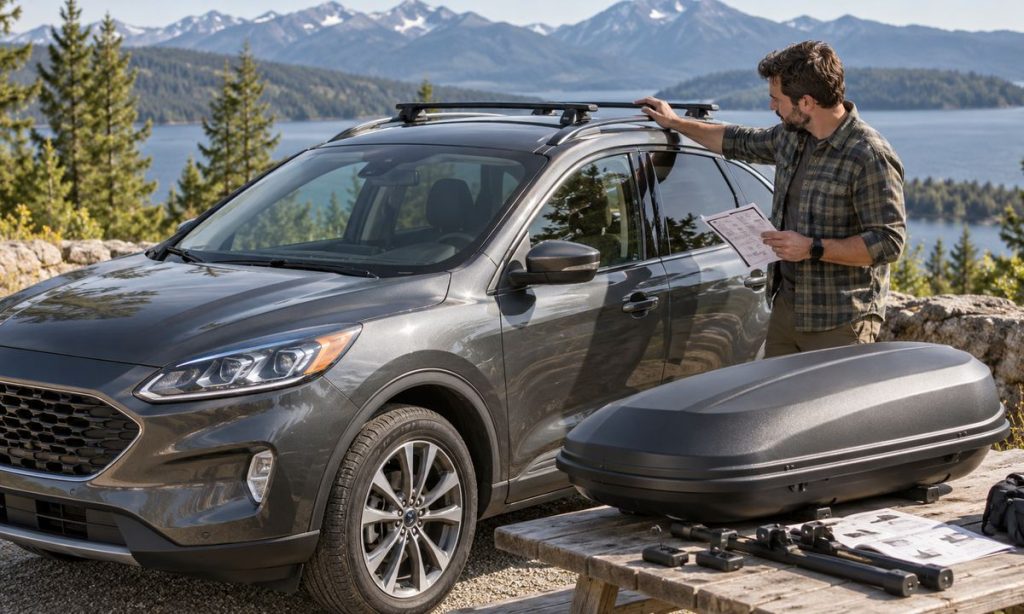
Decide whether the item sits inside the cargo area, attaches to the rear hatch or tow point, mounts to factory roof rails, or clamps to crossbars. These positions use different mounting hardware and have different risks. A cargo platform or sleeping deck must fit the floor and fold or remove without blocking seat-belt buckles, child-seat anchors, rear visibility, emergency equipment, or access to the spare tire and tools. A roof box or bike carrier must match the crossbar spacing, rail type, and door clearance.
If by “bed accessory” you mean a flat cargo-area sleeping or storage platform, measure the cargo floor with seats up and folded, then compare to the product dimensions. Check whether it requires drilling, adhesives, or removal of trim. Avoid modifications that interfere with wiring, seat-belt anchors, airbags, rear-seat latches, or corrosion protection. A cargo accessory should be secured so it cannot slide forward during hard braking.
Verify fitment and load limits
Use the accessory maker’s fitment list and the Ford parts or owner information for the Escape’s year, trim, roof style, and factory equipment. A rack intended for raised rails may not fit a bare roof or flush rails. Confirm the precise crossbar kit and mounting points, then follow its installation instructions, torque requirements, and periodic recheck schedule. Do not assume that an accessory that physically attaches is approved for the vehicle.
Account for the weight of the rack, crossbars, carrier, and cargo when checking the roof limit. The roof load limit is not interchangeable with payload, trailer, or dynamic carrier limits. The door-jamb tire and loading label shows vehicle-specific load information, while the owner’s manual describes roof loading and cargo distribution. Do not exceed any limit, and remember that a high roof load can affect handling, braking, wind sensitivity, and clearance even when it is under the stated maximum. Secure all cargo and check height before parking in garages or under structures.
Check access, visibility, and safety
A roof carrier must not block the hatch from opening, damage the roof, cover antennas or sensors, or interfere with a panoramic roof’s operation. Place cargo so it cannot shift, contact the roof, or extend beyond the carrier’s securement points. Recheck attachment points after the first short drive and at intervals specified by the rack maker. Remove accessories that are loose, cracked, or producing unusual noise.
Inside the vehicle, keep rear windows, mirrors, head restraints, seat belts, child-seat anchors, and side-curtain airbag deployment areas clear. Do not attach heavy items to seatbacks or trim unless designed mounting points are provided. Confirm that the hatch closes and latches fully with cargo in place. Keep the driver’s view and access to controls unobstructed.
Plan around the way you use the Escape
For frequent travel, consider wind noise, theft resistance, water sealing, ease of loading, and whether the accessory can be removed when not needed. A roof box can add height and drag; a rear cargo carrier can affect hatch access and rear parking sensors. A cargo-area organizer may be more practical for groceries or sports gear but still needs secure attachment. Check whether the accessory changes the vehicle’s clearance, camera view, or sensor operation.
If the Escape is used for family travel, verify that all occupants can buckle up and child restraints can be installed according to their manufacturers. Keep emergency gear accessible and avoid stacking cargo above the seatback where it could enter the cabin during a collision. For a roof accessory, confirm the maximum number and type of items the carrier allows, then secure straps and check them periodically during a trip.
Pre-installation checklist
- Identify the Escape model year, trim, roof rails, and any panoramic roof or factory options.
- Confirm accessory fitment, included hardware, weight, and installation method.
- Check the matching owner’s manual and vehicle labels for load limits.
- Include rack and carrier weight when calculating roof cargo.
- Make sure doors, hatch, windows, sensors, airbags, and seat belts remain clear.
- Secure cargo and inspect attachments before and during travel.
The roof and cargo checks differ from cabin fitment. For measuring the Escape’s interior before ordering a floor or cargo accessory, see the Ford Escape measurement guide. Verify roof-mounted products separately against the exact model-year manual and carrier instructions.
Think through removal and seasonal use
Consider how often the accessory will be removed and whether one person can lift it safely. Roof carriers can be awkward to handle above shoulder height, and storing them wet or under tension may shorten their service life. Keep the installation sheet, key, and fasteners together, and check for corrosion or damaged seals before each season. For cargo-area platforms, make sure removal does not require disconnecting seat wiring or disturbing trim. If a carrier makes the hatch harder to open or blocks a rear camera, change the configuration before the first trip. A careful trial fit in the driveway helps reveal these problems before travel.
Before comparing a carrier or cargo platform, review the site’s Ford Escape accessory fitment checklist. It covers vehicle-specific checks that complement this roof and cargo loading guide; confirm the exact accessory and model-year limits separately.
Frequently Asked Questions
Can a Ford Escape use a pickup bed accessory?
No pickup bed is present. If the intended product is a cargo-area platform, liner, or organizer, verify its dimensions and secure mounting for the specific Escape.
Is every roof rack compatible with every Escape?
No. Rail design, roof style, trim, and model year affect fit. Check both the vehicle and rack maker’s fitment information.
How do I find the Escape’s roof load limit?
Use the Load Carrying section of the owner’s manual for the exact year and the rack manufacturer’s instructions. Include the rack and carrier weight.
Can I drill into the roof for a rack?
Do not drill unless Ford and the accessory maker specify an approved procedure. Hidden wiring, corrosion protection, and structural integrity may be affected.
Can cargo rest above the seatbacks?
Avoid unsecured loads that could move into the cabin. Keep visibility clear and secure cargo using the vehicle’s approved tie-down points.
Final Words
Before installing a cargo-area or roof accessory on a Ford Escape, verify year-specific fitment, load limits, mounting hardware, clearance, and the effect on visibility and safety equipment. Count accessory weight, secure every load, and follow the exact owner and product manuals. If the install requires structural changes or uncertain wiring, ask a qualified installer.
References
- Ford: Roof Rack Load Limits (directs owners to the Load Carrying section of their specific manual).
- Ford 2020 Escape Owner Manual and Support (example model year; use the manual matching the vehicle).
- Ford Escape Cross Bars (fitment and owner-manual limitations are product-specific).