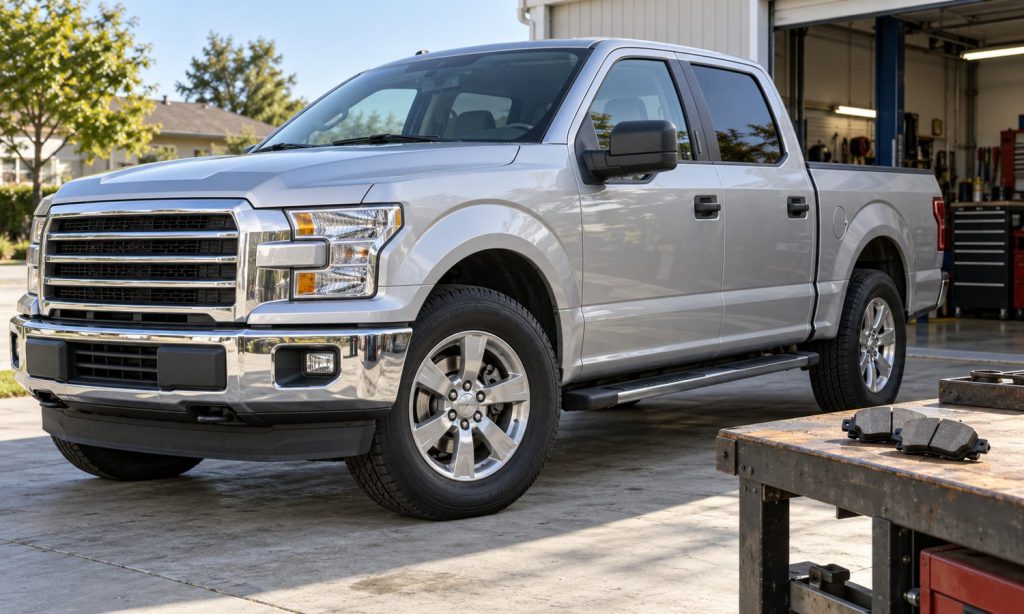
Brake pad bedding-in basics after a replacement on a Ford F150 4X4 start with the instructions for the exact pads and rotors installed. There is no single sequence of hard stops that suits every F150 model year, friction formula, and brake condition. The installer should verify the repair and explain any initial-use requirements before handing back the keys. Bedding helps new friction surfaces establish their working contact; it cannot correct a leaking hydraulic system, a sticking caliper, or a rotor outside its service limits. For a truck used for towing, commuting, or off-road travel, planning that first period of use matters. This guide explains the questions to ask, the role of rotor preparation, and the warning signs that should interrupt driving rather than trigger another attempt to bed the pads.
Identify the replacement parts and truck configuration
Write down the truck’s year, VIN, axle serviced, and any brake modifications. The F150 name covers many brake configurations, and 4X4 alone does not establish pad shape, rotor size, or the service procedure. A 2014 truck should not be assigned a later model’s electronic parking-brake procedure merely because both are F150s. Have the installer verify the actual equipment.
Request the installed pad and rotor part numbers and their instructions. Ask whether the shop has already performed the required conditioning or whether an initial-use period remains. If the pads and rotors specify conflicting procedures, the installer should resolve that with the manufacturers. Avoid creating a hybrid routine from unrelated instruction sheets or a forum discussion.
Understand the difference between bedding and repair checks
Bedding concerns the friction surfaces after a correct installation. New pad faces and rotor surfaces need the contact and conditioning intended by the component design. The required approach may involve controlled braking or particular restrictions during normal initial use. A prescribed process should include its limits, not simply a request to get the brakes hot.
Installation checks come first. A qualified technician should confirm secure components, correct hardware, normal caliper operation, hydraulic integrity, and predictable pedal response. The truck needs a suitable post-service check before entering normal traffic. You should not discover at the first busy intersection that the pedal travels farther than expected or that one wheel is dragging.
Rotor condition affects the result
Ask whether the rotors were replaced, resurfaced, or retained and what measurements supported that decision. A smooth appearance does not prove that a rotor meets thickness and dimensional limits. New pads cannot restore lost rotor thickness. For more on the decision, see when F150 4×4 rotors need replacement with pads.
Preparation also depends on the actual replacement rotor. Coated and uncoated surfaces may have different handling instructions. Do not remove every coating indiscriminately or apply lubricant to friction surfaces. Let the installer follow the part-specific preparation requirements, check the mating surfaces, and confirm that the selected pads are appropriate for the rotor arrangement.
Plan safe initial driving
Do not perform an improvised series of high-speed stops on public roads. If the applicable instructions require a controlled sequence, have the shop explain where and how it can be completed safely and legally. Traffic, limited visibility, slippery pavement, and nearby pedestrians take priority over completing a routine. Stop the process when conditions make it unsafe.
Where the instructions call for restrained initial use, leave extra following distance and avoid unnecessary heavy braking. Do not deliberately prolong braking by resting your foot on the pedal. Also avoid interpreting gentle use as a reason to under-brake in an emergency: use the braking needed to avoid a collision. Safety takes priority over protecting a bedding schedule.
Discuss towing and demanding routes before collection
Tell the technician if the pickup must immediately tow, descend long grades, carry substantial cargo, or return to a stop-intensive work route. That information helps the shop plan the handover and explain any restrictions. Do not assume that a long freeway trip completes bedding simply because it adds miles; distance and brake use are different measures.
Four-wheel drive does not replace brake conditioning or compensate for defective brakes. Keep the truck within its ratings, maintain any required trailer brakes, and follow the applicable towing instructions. If an initial-use restriction conflicts with a planned job, adjust the schedule or have the shop complete the required work before the truck returns to service.
Treat abnormal behavior as a reason to inspect
Stop safely for markedly reduced braking, a sinking pedal, a serious pull, an apparent fluid leak, or smoke from a wheel. Arrange professional assistance rather than continuing a bedding exercise. Follow the exact owner’s manual for brake warning lamps. Do not dismiss a warning because the pads were just changed; the timing does not establish the cause.
Ford’s 2014 F150 manual calls for inspection of continuous grinding or squealing and continuous steering-wheel vibration under braking. That guidance is useful context for a 2014 truck, not permission to ignore different symptoms on another year. Record whether the problem occurs cold, after several stops, or with the pedal released. These details help a technician investigate without you having to diagnose the component.
Related guidance: how towing weight affects Ford F150 brakes and suspension; a Ford F150 brake-pad fitment guide.
Frequently Asked Questions
Should the brakes smoke during bedding?
Do not use smoke as a target or a sign of success. Smoke can indicate excessive heat or another problem. Stop safely, keep clear of hot parts, and ask the installer to assess the situation rather than adding more hard stops.
Can I copy a performance-pad routine for ordinary replacement pads?
Only use a procedure expressly applicable to the installed components. A routine written for a different friction compound or track use can impose inappropriate heat and may be unsafe in ordinary traffic. Obtain the correct instructions instead.
Does replacing only one axle change the instructions?
It changes which components were serviced, but it does not create a universal alternative routine. Tell the technician which axle was replaced and follow that installation’s instructions. Both axles still need to function normally during the vehicle check.
Should I hold the parking brake to help condition the pads?
No. Do not drag the parking brake or assume it operates the same friction surfaces. Parking-brake designs and service procedures vary. Its adjustment and operation should be checked separately under the truck’s service information.
What if I cannot find the bedding instructions?
Use the invoice to identify the exact parts and contact the installer or manufacturer. Ask for written initial-use guidance and confirmation of the work already performed. Avoid guessing a stop count, speed, or cooling interval.
Final Words
For an F150 4X4, brake bedding belongs after correct parts selection, sound rotor preparation, and verified installation. Follow the instructions for the actual friction components, plan initial driving around any restrictions, and return abnormal behavior for inspection. A clear service handover is more useful than a universal internet braking routine.
Reference
2014 Ford F150 Owner’s Manual — brake warning and inspection guidance; use the manual for your own model year.