The accessory features that matter most for a Ford Ranger depend on whether the truck is mainly used for work, travel, family duties, or a mix of all three. Start with the job the accessory must do, then check fitment, weight, access, safety, maintenance, and how it interacts with equipment already on the truck. A feature that looks useful in a listing may be inconvenient if it blocks a tie-down, limits bed access, interferes with a child seat, or adds more roof height than your usual routes allow.
For work: prioritize capacity, access, and durability
For tools, supplies, or jobsite use, useful features may include secure cargo retention, quick bed access, weather protection, corrosion-resistant hardware, and a surface that is easy to clean. Compare the accessory’s rated load with the Ranger’s payload and axle limits, and account for its own weight before adding cargo. If the accessory must stay on the truck all week, consider how often it needs adjustment, whether it limits bed height, and whether tools remain accessible without unloading everything.
For a 2020 Ranger, a tonneau cover for Ford Ranger 2020 may offer weather protection or improve cargo organization, but check whether the selected design works with toolboxes, bed racks, tie-down tracks, and the cover’s own rails. A cover does not make the bed fully waterproof or secure against every type of theft. Read the installation and maintenance instructions and confirm that the tailgate and bed lighting remain usable.
For travel: think about storage, height, and weather
Travel accessories should make packing easier without compromising safe cargo placement. Consider whether you need covered storage, a place for bulky gear, a bed divider, or roof capacity for equipment that does not fit inside. Roof equipment adds height and weight and can change wind noise, handling, or fuel use. Confirm the vehicle’s roof limit and rack rating for the exact configuration, then check clearance for garages, branches, parking structures, and drive-throughs.
For longer trips, look at setup time, access to spare tire and recovery equipment, drainage, dust sealing, and whether the accessory can remain installed without blocking service points. If a bed cover or rack must be removed to reach cargo, estimate how that works in real conditions. For road trips that include rough roads, confirm that mounting hardware can be rechecked and that the load can be secured to approved points.
For family use: protect the cabin and keep safety access
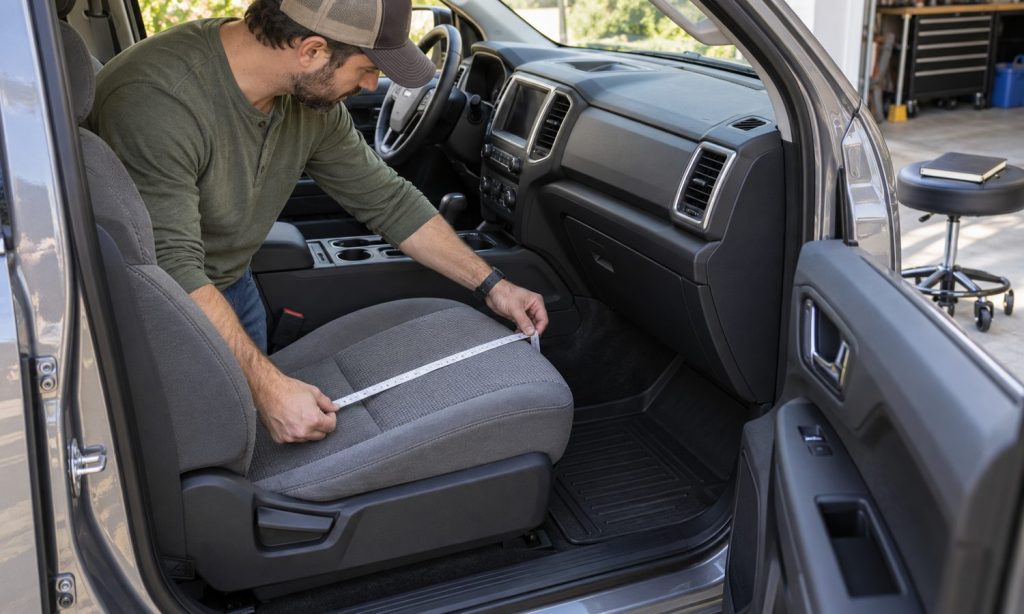
Family-focused features may include easy-clean seat protection, organized storage, shade, or a way to keep loose cargo from moving. Check rear-seat access, seat-belt routing, child-restraint anchors, head restraints, side-airbag seams, and driver visibility. Seat covers or organizers must fit the exact seat and preserve required safety features. Keep mounted items and cargo away from airbag deployment areas and avoid placing objects where they can become projectiles during a sudden stop.
For interior protection, compare our 2026 Ford Ranger seat-cover overview and Ford Ranger interior-care guide. They address cabin needs; the accessory must still match the truck’s model year, seat configuration, and airbag requirements.
Use fitment as a first filter
Before choosing by color, material, or convenience, confirm the Ranger’s year, cab, bed length, trim, and factory equipment. Check VIN-based fitment when available and compare actual dimensions at the mounting point. A 2020 accessory may not fit earlier Rangers, and two trims from the same year can have different rails, bedliners, sensors, or interior features. If the truck has modifications or previous repairs, include them in the fitment check.
For a tonneau-cover example, compare the 2020 Ranger tonneau-cover guide with the 2019 model-year overview; their fitment details are year-specific. For other Ranger accessories, see the custom-fit interior measurement guide and the accessory materials guide for cargo and daily use.
Our installation and fitment checklist for Ford Transit Connect covers general mounting checks, while the F-250 work, travel, and family accessory guide offers a related use-case framework. For the Ranger, use its own owner’s manual and the accessory maker’s exact instructions.
Compare features against your actual routine
Write down the three tasks the accessory must support and the two limits it cannot violate—for example, maximum carried load, garage height, rear-seat access, or the ability to remove it quickly. Consider the full ownership cost: cleaning, corrosion prevention, replacement hardware, storage when removed, and time spent accessing cargo. A simpler feature set may be more useful if it remains easy to use every day and does not block the truck’s original functions.
If several people use the Ranger, confirm they understand how to latch, lock, load, and inspect the accessory. Keep instructions with the vehicle, especially for racks or covers that need regular fastener checks. After installation, test the feature stationary, take a short cautious drive, and reassess whether it supports the intended use without rattling, obstructing visibility, or changing handling unexpectedly.
For further comparison of accessory materials and application across Ford vehicles, see the Ford Escape accessory-material guide. Use it for general material questions, not Ranger fitment.
Frequently asked questions
What feature matters most for a work Ranger?
Start with the job: secure load capacity and access often matter more than appearance. Confirm weight ratings, bed compatibility, and whether the accessory blocks tools or factory tie-downs.
Does a tonneau cover keep cargo completely dry?
Not necessarily. Seals, drainage, installation, and weather affect water entry. Follow the cover maker’s instructions and avoid storing sensitive items as though the bed were sealed.
Can a roof rack carry the same load as a bed rack?
No. Ratings and mounting structures differ. Use the exact Ford roof limit and rack rating for the vehicle, and account for the rack and cargo weight.
What should families check before adding seat covers or organizers?
Verify seat shape, side-airbag compatibility, seat-belt and child-seat access, and that the accessory cannot interfere with controls or deployment areas.
How do I choose one accessory for mixed work and family use?
List the regular tasks, fitment constraints, loads, access needs, and maintenance demands. Select features that serve the most frequent uses without exceeding vehicle or accessory limits.
Final Words
Choose Ford Ranger accessories by how the truck is actually used, then verify the fit, load rating, access, and safety impact for the exact configuration. Work needs often center on secure capacity and access; travel adds height, weather, and storage questions; family use calls for cabin protection and restraint access. For a 2020 tonneau cover, confirm bed and rack compatibility and the cover’s limits before deciding that it fits your routine.