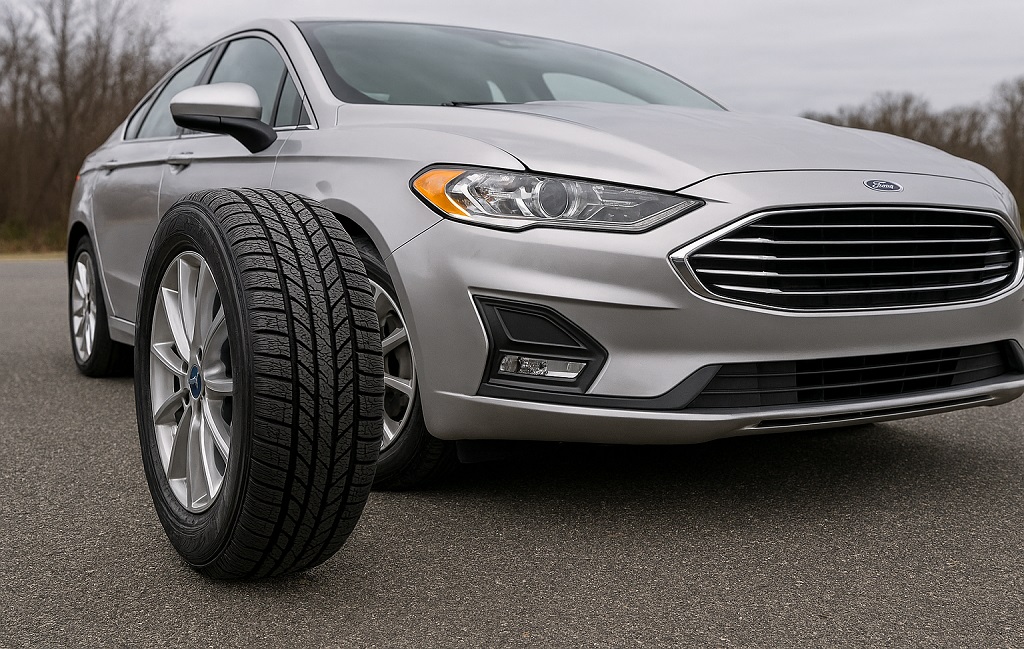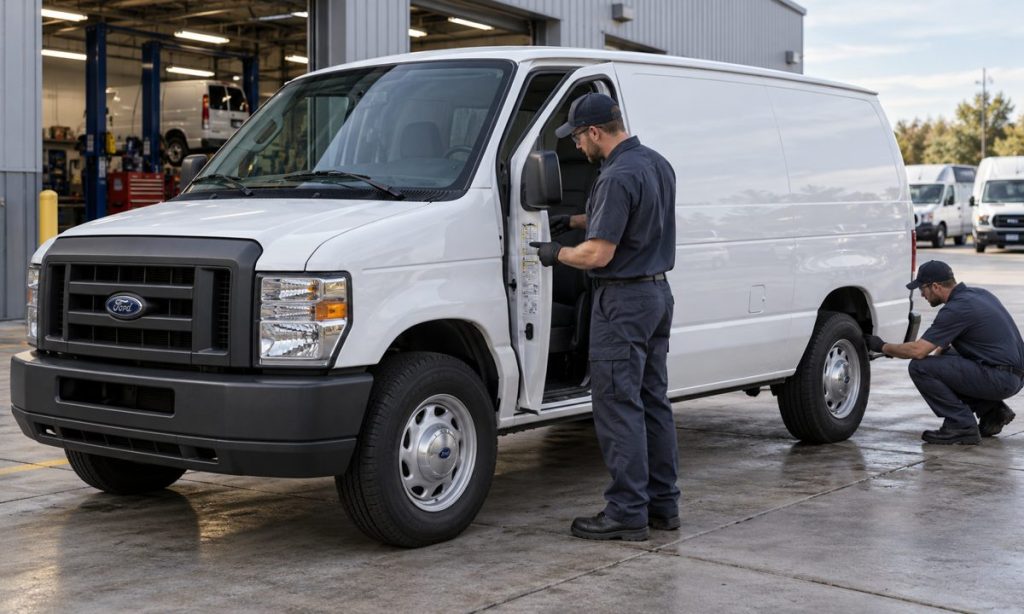
The right tire load range for a Ford E-250 depends on its model year, original tire specification, and how much weight it carries—not simply on the van’s name or whether it is used for work. Start with the Tire and Loading Information label and the certification label on the driver-side door area, then compare the full tire size and service description with the owner’s manual. For a practical overview of tires for a Ford E-250 van, use the model-specific guide alongside those vehicle records. The load range printed on a tire describes its capacity and inflation limits; it does not authorize carrying more than the van’s GVWR, either axle’s GAWR, or its payload limit. Never choose a lower-capacity replacement tire than Ford specified.
Start with the van’s own tire label
There is no one load range that applies to every E-250. The E-Series spans multiple generations and configurations, and prior owners may have changed wheels, suspension, or body equipment. Find the label on your particular van before shopping. Record the original tire size, cold inflation pressure, seating or cargo capacity, and the vehicle ratings. The owner’s manual for the correct year explains the label and loading terms. If the label is missing, damaged, or inconsistent with the wheels currently installed, ask a Ford dealer or qualified tire professional to identify the original specification by VIN and inspect the setup.
Do not use a generic online chart or another E-250’s door sticker as a substitute. A van with a different model year, wheel package, axle, or conversion may have different requirements. A camper conversion, shelving, lift, or replacement wheel can change the actual load distribution or clearance, but it does not automatically change the vehicle’s rated limits. If the vehicle has been modified, identify the parts and get the tire and wheel combination checked before carrying a heavy load.
What “load range” tells you
Load range is a tire category associated with a tire’s construction and inflation capability. It is commonly shown as a letter on light-truck tires—for example, Load Range E. The letter is not the same thing as the tire’s exact load capacity at every pressure. Capacity depends on the tire’s size, service description, and inflation pressure, as shown in the tire maker’s load-and-inflation information. The tire sidewall’s maximum pressure is also not a recommended everyday pressure for the van.
Compare the complete designation, not just the letter: tire type, size, load index or service description, speed rating where applicable, and construction. Ford’s manual for some E-Series years specifies replacing tires with the same size, load range, and construction as originally fitted; check the manual for your own year. A tire with a higher load range is not automatically a safe or comfortable upgrade. It still has to be an approved size with suitable load capacity, wheel compatibility, clearance, and pressure guidance.
Match the capacity to the real workload
“Usual workload” should mean the van as it is normally driven, including the driver, passengers, tools, shelving, equipment, and cargo. The label’s payload figure is a ceiling, not a target. Weigh the van in its typical working condition at a certified scale when the load is substantial or uneven. Ideally, obtain front and rear axle weights. Each axle must remain below its GAWR, and the full vehicle must remain below GVWR. Cargo packed near the rear can overload the rear axle even when the van’s total weight seems acceptable.
Then compare those actual axle loads with the tire maker’s capacity table for the exact tire and the van maker’s specified cold pressure. Do not divide total vehicle weight by four and assume the result is adequate: weight is not distributed evenly, and rear tires may carry more. Keep a margin for passengers, changing cargo, and load shifts. If a conversion adds substantial permanent weight, have a qualified upfitter or tire professional assess the axle and tire capacities rather than guessing from the load-range letter.
Public owner discussions about E-250 work and camper vans commonly describe a tradeoff: heavier-duty tires can support a demanding load when correctly specified, while an empty van on stiff tires may ride more firmly. Those reports are anecdotes from different years and setups, not proof that a particular tire or pressure is right for your van. Use them as a reminder to consider both load and ride, then rely on the van’s label, Ford’s manual, actual axle weights, and the tire manufacturer’s data.
Set pressure using the vehicle specification
For normal use, set cold tire pressure to the value shown on the driver-side tire label for the installed approved tire size. Check pressure before driving or after the van has been parked long enough for the tires to cool. Pressure rises as tires warm; do not bleed a warm tire down to the cold specification. Inspect all tires, including the spare if equipped, and use a reliable gauge.
A commercial tire’s maximum sidewall pressure is not a shortcut for choosing inflation. Likewise, do not lower pressure to soften the ride unless Ford’s applicable instructions and the tire maker’s load table support that pressure for the measured axle load and exact tire. Underinflation can cause excessive heat and damage; overinflation can affect handling, wear, and ride. If a fleet or conversion requires load-based pressure changes, ask a tire professional to document the calculation and keep the result within Ford’s limits.
Before ordering replacement tires
- Photograph the door label and read the owner’s manual for the exact model year.
- Verify the current wheel size, tire size, and any front-to-rear differences.
- Check that the replacement meets or exceeds the original load capacity and is suitable for the wheel.
- Confirm clearance, speed rating, construction, and spare-tire compatibility.
- Tell the tire shop about the van’s typical cargo, passenger count, and modifications.
- Ask the installer to set the specified cold pressure and confirm the TPMS configuration if fitted.
Stop and get expert help if the tire label conflicts with the installed equipment, an axle is near its rating, a tire is bulging or damaged, or the van handles unpredictably. Tires cannot correct an overloaded van, worn suspension, bent wheel, or poor alignment.
Frequently Asked Questions
Does every Ford E-250 need Load Range E tires?
No single load-range letter fits every year and configuration. Use the original tire specification on your van’s label and manual, then verify the replacement’s exact capacity and fitment.
Can I use a higher load range than the original?
Only after confirming the tire’s size, load capacity, wheel compatibility, pressure requirements, and clearance with Ford’s specifications and the tire maker. A higher letter alone does not establish compatibility.
Should I inflate to the maximum PSI printed on the tire?
Not automatically. The tire sidewall maximum is not the van’s routine setting. Follow the vehicle label and any verified load-based guidance that applies to the exact tire.
How can I tell whether my work load is too heavy?
Check the payload and GVWR on the certification labels and weigh the normally loaded van, preferably by axle. Never exceed GVWR, either GAWR, or the tire capacity at the specified pressure.
Does a stiffer tire make the van safer when empty?
Not by itself. Load capacity must meet the vehicle requirement, but the right tire and pressure also depend on the approved specification and actual use. Do not trade verified fitment for a subjective ride preference.
Final Words
Choose the E-250 tire load range from the van’s original specification and a verified assessment of its normal axle loads. Match the full tire designation and capacity, stay within GVWR and GAWR, and use the manufacturer’s cold-pressure guidance. The van’s model name alone cannot identify a safe replacement. Before ordering, compare the exact tire variation and vehicle configuration, and have a qualified tire professional resolve any mismatch. See the related guide to tires for Ford E-250 vans for further fitment context.
References
- 2008 Ford Econoline Owner’s Guide (year-specific example; use the manual for your van’s year).
- NHTSA Tire Safety Ratings and Awareness.