Deciding which accessory features matter most for work, travel, or family use in Ford Focus begins with the trips you actually make. A commuter carrying a laptop needs different storage from a family loading a stroller, and a hatchback has different cargo access from a sedan. Prioritize secure fit, unobstructed controls, useful capacity, and realistic cleaning needs before counting extra pockets or electronic features. If navigation is part of your routine, the fit checks in our 2015 Ford Focus phone-holder guide are relevant to that specific model year. This article provides a broader way to assess accessories without turning every convenience into a necessary purchase. Identify the exact Focus configuration first, then judge features against one typical workday, one longer journey, and the passengers you carry most often.
Define the job before comparing features
Write down the three problems you want to solve. Examples include a bag sliding around, muddy shoes marking the carpet, or charging cables interfering with storage. Describe the problem concretely: how often it happens, where it occurs, and what must remain accessible. That prevents an attractive feature list from replacing a useful decision.
Next, record the model year, body style, seating arrangement, and trim details that affect the installation. Do not assume a sedan liner fits a hatchback or that a conventional Focus accessory fits a Focus Electric. Verify the exact application and measure the available space with your usual seats and cargo configuration.
A feature deserves priority when you can explain its daily benefit and its tradeoff. A rigid compartment can separate work equipment but consume space when empty. A removable container can simplify unloading but still needs appropriate restraint in transit. Choose the behavior you need rather than treating more compartments as automatically better.
For work: stability, access, and quick unloading
Work accessories should make the transition between parking and your destination straightforward. Check whether document storage keeps papers flat, whether a bag fits through the opening, and whether the accessory can be removed without emptying it. Measure your actual laptop bag or tools rather than using a catalog’s general capacity claim.
Separate organization from cargo restraint. A partition that keeps pens sorted is not necessarily designed to retain a heavy toolbox during sudden braking. Confirm permitted attachment points and stated load limits. Do not turn child-restraint anchors, seat wiring, or adjustment mechanisms into improvised cargo mounts.
Consider cleaning after the work you do. Dusty equipment calls for accessible corners and removable inserts. Wet footwear makes containment and drying important. If the accessory takes longer to clean than the original problem took to manage, its extra features may not serve your routine.
For travel: usable space and fewer interruptions
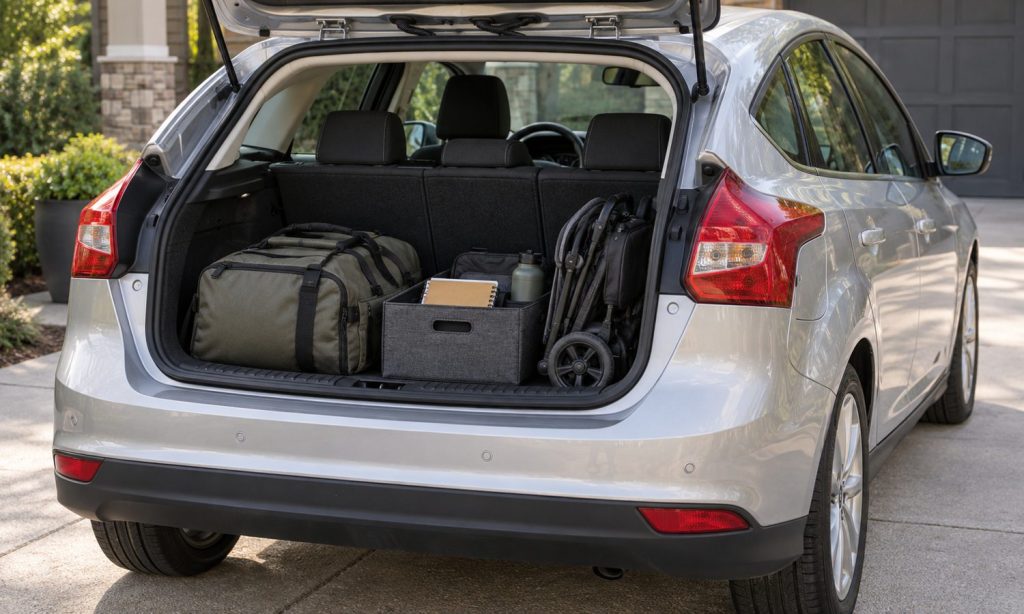
Travel capacity is about the items that fit together, not just a volume figure. Try the layout with your suitcase, emergency supplies, and any mobility equipment. Keep essential items accessible without unloading everything, and confirm that doors or the hatch close normally without compressing bags against glass or interior trim.
An accessory that allows the rear seats to fold independently may be more useful than a larger one-piece organizer. Check whether it blocks the spare-wheel access area or other equipment supplied with your particular car. Test access while parked before loading for a trip, especially when luggage will cover the cargo floor.
Electrical convenience also needs a fit check. Match a device’s power requirements to the outlet and adapter instructions, and keep cables away from pedals, seat tracks, and controls. Do not assume multiple sockets increase the vehicle outlet’s allowable load. Plan charging and navigation before driving so convenience does not create more tasks behind the wheel.
For family use: restraint compatibility comes first
Family accessories must work around the passenger-restraint system. Check the vehicle and child-seat instructions before adding seat protectors, padding, organizers, or anything that changes the child-seat installation. An accessory marketed for families is not automatically approved for use with a particular restraint.
Keep buckles, belt paths, tether routing, and seat adjustment usable. Do not attach objects where they could interfere with airbags or create a hard obstacle near an occupant. If an accessory changes how a child seat sits, obtain guidance from its manufacturer or a qualified child-passenger-safety technician before use.
For everyday practicality, look for simple removal, accessible fasteners, and cleaning instructions you can follow. Evaluate whether a child can reach an item appropriately while the car is parked, but do not build a setup that depends on the driver reaching into the rear seat while moving. Plan stops when passengers need assistance.
Judge floor protection and upholstery protection separately
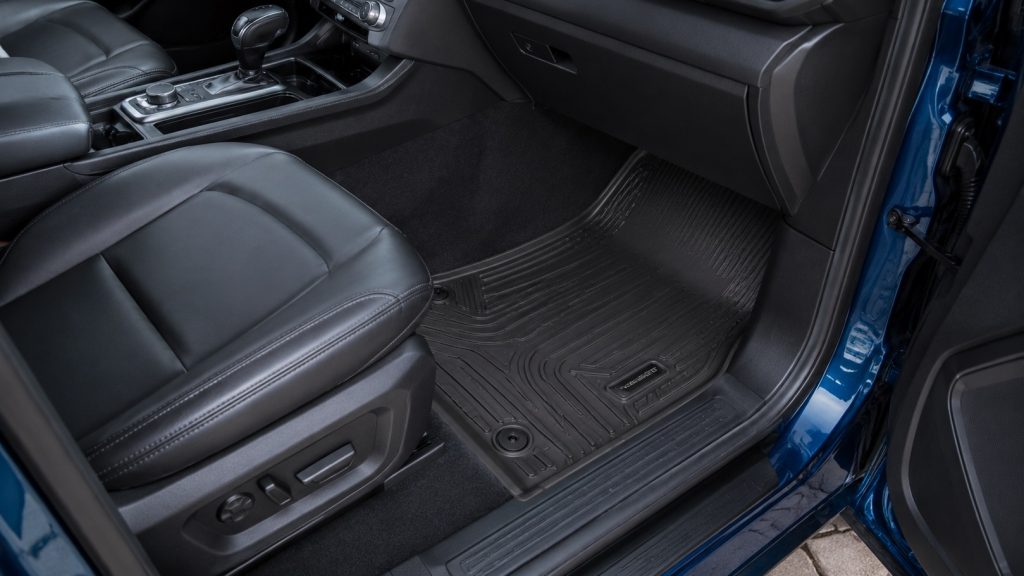
Floor protection needs secure retention and clear pedal movement. Use the correct fit and retention arrangement for your Focus, and do not stack a second driver’s mat over an existing one. Check the installed position after cleaning or adjustment. A tall edge or loose corner is a fit problem, not a harmless inconvenience.
Upholstery protection introduces different questions. Confirm compatibility with seat-mounted airbags, passenger-sensing equipment, heated seats, and the precise seat design. A cover that stretches over a seat is not proof of safe fit. Material thickness, seams, straps, and openings must all be appropriate for the application.
Evaluate cleaning claims at the component level. A washable cover may contain inserts that must be removed first, while a wipe-clean surface may have absorbent seams or backing. Read the actual care instructions before choosing a material. Consider where the item will dry and how the car will be used during that time.
Assess phone placement from the driver’s seat
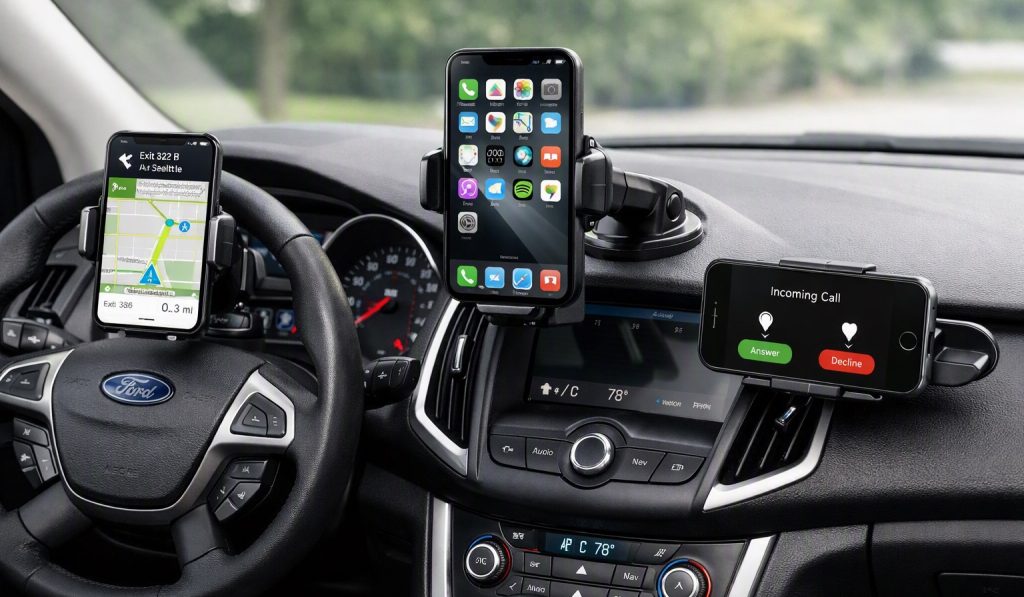
For a phone holder, verify the phone and case dimensions, attachment surface, adjustment range, and retention method. Sit in your normal driving position and check visibility of the road, instruments, and mirrors. Confirm the mount leaves airbag deployment areas and necessary controls clear.
Test the parked setup with the charging cable attached and the steering wheel and seat in their normal positions. If more than one person drives, repeat the check for each driver. Set the route before moving; a mount does not make messaging, menu browsing, or prolonged screen attention safe.
Use a simple acceptance check
Before keeping an accessory, confirm that its label and included hardware match the version you verified. Install only as instructed, then check doors, seats, storage lids, controls, and restraint access. Reject a setup that requires force, missing fasteners, or an improvised mounting point to fit.
Finally, review the loaded vehicle’s limits using its labels and manual. Accessories themselves add weight, and available space does not establish carrying capacity. Keep a short record of part numbers, care instructions, and any installation limits. Recheck attachment after removal, cleaning, or changes in your normal cargo.
Related guidance: phone-mount visibility checks in another Ford cabin.
Frequently Asked Questions
Should work accessories stay installed on family trips?
Only if they remain appropriate for the passenger and cargo arrangement. Remove unused equipment when it consumes necessary space or interferes with restraints. Recheck the setup after converting between work and family use rather than assuming the original installation still suits the trip.
Is a universal accessory always a poor fit?
No. Some adjustable accessories can meet a clearly defined need. What matters is verified dimensions, appropriate attachment, and unobstructed vehicle operation. A vehicle-specific label also needs checking against the exact year, body style, and installed equipment.
Does water resistance mean an accessory contains every spill?
No. Seams, openings, edges, and the way the item sits can affect containment. Check the manufacturer’s stated limits and inspect the surrounding upholstery after a spill. Remove moisture promptly instead of assuming the surface appearance proves the area underneath is dry.
Can one organizer suit every Focus body style?
Do not assume so. Cargo openings, floor shape, seat positions, and access requirements may differ. Compare dimensions and application information for your actual car. A photograph showing an empty cargo area does not establish useful fit with your normal luggage.
Which feature should I give up first when space is tight?
Remove features that do not solve a frequent, identified problem. Extra compartments, rigid walls, and duplicate charging points can consume useful room. Keep safe fit and access as requirements; reduce convenience features rather than compromising controls, restraints, or visibility.
Final Words
The accessory features that matter most in a Ford Focus are those that suit your actual work, travel, and family routines while preserving safe vehicle operation. Verify fit, attachment, cleaning, and access before judging convenience extras. For a 2015 model, revisit the phone-holder fit and placement checks when assessing navigation storage. Keep only the features that remain useful once the car is loaded and occupied.
Reference
2015 Ford Focus Owner’s Manual: loading, restraints, and floor mats.
NHTSA: Car Seats and Booster Seats.
Transport Canada: third-party accessories for children’s restraints.