
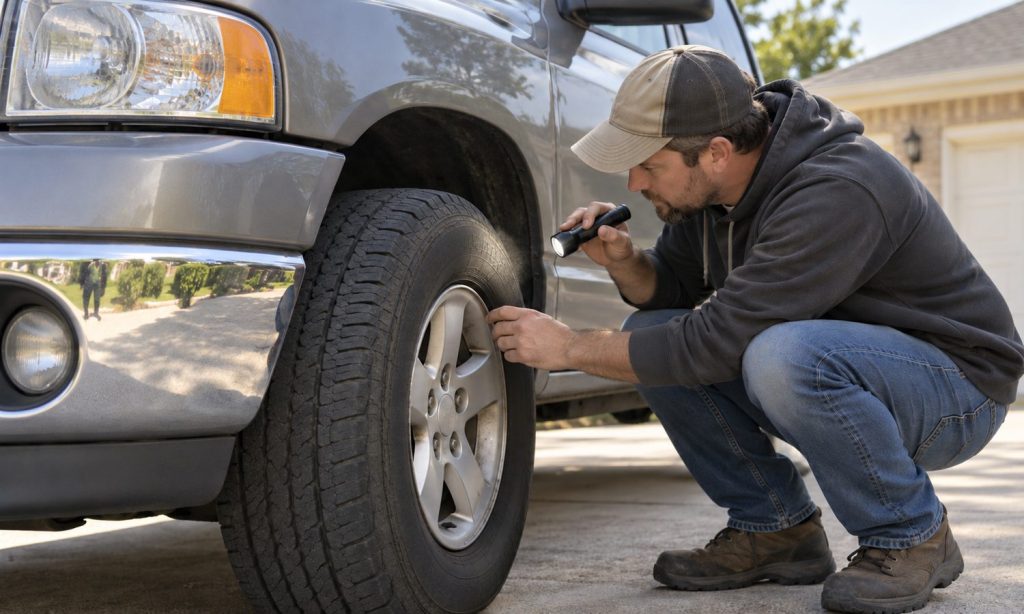
Knowing when to replace tires on Dodge Ram 1500 means checking tread, age, and damage before selecting the next set. For a 2005 truck, fitment deserves particular attention because its wheels, suspension, or tires may have changed during previous ownership. A currently installed tire is evidence of what is fitted, not proof that it is correct. Start with the truck’s labels and documentation, inspect each tire, and record any uneven wear or pressure loss. Then have uncertain conditions assessed before ordering replacements. This guide explains the warning signs and the details an installer needs, without assuming one size or pressure applies to every Ram 1500. The related guide to tires for a 2005 Dodge Ram 1500 can help organize questions, but every application still needs verification.
Decide whether the current tires can remain in service
Assess tread depth, manufacturing age, and physical condition independently. A tire with plenty of tread can still be unsuitable because of damage or aging. Conversely, recent purchase does not make worn tread acceptable. Include the spare in the inspection rather than discovering its condition during a roadside problem.
NHTSA advises replacement when tread reaches 2/32 inch. Treat that as a replacement threshold, not a guarantee of good wet-weather performance until the limit. Your driving conditions and the applicable tire guidance can justify earlier action. If you have an upcoming loaded or wet-weather trip, evaluate the tires beforehand rather than postponing the decision until after travel.
Measure tread across the tire
Use a tread-depth gauge in the main grooves at several positions around each tire. Avoid placing the probe directly on a raised wear bar. Compare the inner, middle, and outer areas where safely accessible. Record the shallowest measurement and the pattern of wear; averaging deep and shallow areas can conceal a problem.
Inspect treadwear indicators as a second check. When surrounding tread is level with those bars, replacement is due. A quick glance at the outer shoulder may miss an inner edge that is badly worn. If access is restricted, have a shop inspect the complete tire instead of reaching under an unsupported vehicle.
Do not overlook the reason for uneven wear
A worn shoulder, repeated high and low patches, or feathered tread can warrant checks beyond the tire itself. Inflation, alignment, wheel balance, and worn steering or suspension components may contribute. Describe any pulling, vibration, noise, recent impact, or change in load to the technician. A photograph alone cannot establish which component is responsible.
Replacing tires without addressing the cause may allow the pattern to return. Ask for the findings to be recorded with the estimate. Rotation can manage normal wear under the correct schedule, but it cannot repair damage or restore tread that is already gone.
Check age without confusing it with mileage
Locate the full DOT tire identification number. The last four digits on modern tires identify the production week and year; 1820, for example, means week eighteen of 2020. The complete code may face inward. Have it checked safely if it is not visible from outside. Do not infer age from how clean the sidewall looks.
Follow the vehicle and tire manufacturers’ replacement guidance. NHTSA notes that some manufacturers recommend replacement within six to ten years regardless of tread. This range describes differing manufacturer guidance, not a universal permission to keep every tire for ten years. Heat, storage, use, and damage matter, and earlier replacement may be necessary.
A 2005 vehicle should not be assumed to have original tires, nor should you assume all four tires were replaced together. Record each date separately. If the truck’s history is uncertain, ask a professional to assess the set and spare before relying on them for towing or a long journey.
Damage and pressure loss need prompt attention
Bulges, exposed cords, separation, deep cuts, and significant sidewall damage are reasons to stop relying on the tire. Arrange professional assessment and assistance when continuing to drive could be unsafe. A tire that has been run flat or severely underinflated may have internal damage even if it can be inflated again.
Repeated pressure loss deserves diagnosis rather than repeated topping-up. The cause may involve a puncture, valve, wheel, or bead area. Tell the shop when the loss began and whether the tire was driven while low. Do not remove an embedded nail simply to see whether air escapes.
Not all punctures are repairable. Industry guidance excludes shoulder and sidewall damage from ordinary puncture repair, and internal condition must also be checked. An external plug is not proof that a tire is suitable for continued use. Have the tire removed and evaluated by a qualified professional using the applicable repair standards.
Fitment details for a 2005 Ram 1500
Before ordering, assemble the model year, cab and bed configuration, drivetrain, trim, original wheel information, and current modifications. Read the vehicle’s tire and certification labels. If information is missing or conflicts with the installed equipment, resolve it through the correct Dodge documentation or a qualified service provider.
Compare the full tire specification, including size, load index, speed rating, and construction. USTMA advises matching the vehicle or tire manufacturer’s recommended size and service ratings. A wheel diameter alone is insufficient. Two tires that mount on the same nominal wheel diameter can differ materially in width, overall diameter, and load capability.
Document aftermarket wheels, lift or leveling components, spacers, and any clearance problems. These changes make copying the original specification less straightforward, but they do not justify guessing. Have wheel compatibility, clearance, and vehicle-system implications reviewed together. Do not assume a more aggressive tread or higher load designation increases the truck’s payload rating.
Prepare for the installation appointment
Bring the label photos, date-code notes, tread readings, and symptom history. Ask the installer to inspect wheels and valves, explain matching requirements, and identify whether replacement should involve one tire, an axle pair, or the complete set. That decision depends on condition and application, not just the lowest purchase cost.
Request the correct cold-pressure guidance for the verified setup and follow the year-specific maintenance instructions afterward. Keep the invoice and specifications with the truck’s records. If new vibration, pulling, or pressure loss appears after installation, have it checked promptly instead of assuming it is normal break-in behavior.
Related guidance: a related tire replacement checklist for another truck; Ram 1500 tire load-range considerations.
Frequently Asked Questions
Use these answers to frame the discussion with the installer, especially when the truck’s modification history is incomplete.
Can I copy the size already on the truck?
Only after confirming it is appropriate. Previous owners may have changed the setup. Compare the installed specification with the vehicle documents and have any departure assessed.
Does a tire fit if it clears the fender while parked?
Static clearance is only one check. Steering and suspension movement, wheel specifications, and loading also matter. A parked photograph cannot establish complete compatibility.
Is one worn tire enough reason to replace all four?
Not automatically, but matching requirements and the other tires’ condition may influence the decision. Ask the installer to explain the required replacement arrangement for your truck.
Can I keep an old tire as an emergency spare?
Only if it remains suitable under the applicable age, condition, size, and use guidance. An unsafe tire does not become acceptable because it is labeled a spare.
Will more air solve a load-rating mismatch?
No. Pressure cannot convert an unsuitable tire into an approved fitment or increase the vehicle’s rated capacity. Resolve the specification mismatch before using the truck.
Final Words
Replace Ram 1500 tires when wear, age guidance, or damage calls for action, and investigate abnormal wear before fitting another set. For a 2005 truck, verify its current configuration rather than trusting inherited tire choices. Use the 2005 Ram 1500 tire fitment guide as related reading while confirming every specification with authoritative vehicle information and your installer.
References
These resources cover replacement, repairability, and access to vehicle-specific information.

Pingback: Ford Transit 250 Tire Load Range for Work Use
Pingback: Read Ford Transit 350 XLT Tire Size and Ratings