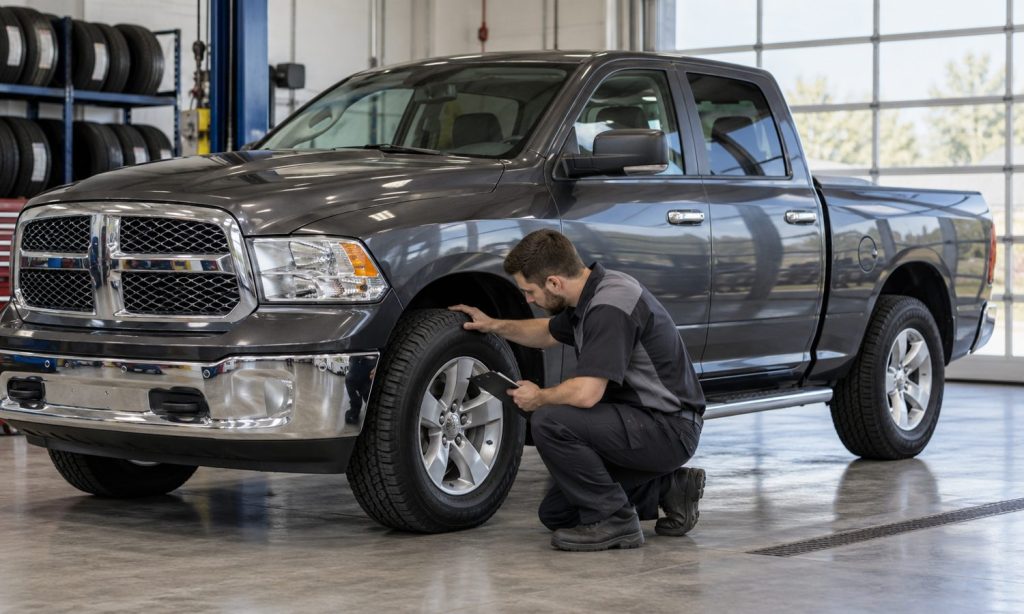
How tire rotation patterns affect tire life on Dodge Ram 1500 comes down to sharing the work among compatible wheel positions. Front and rear tires experience different steering, loading, and driving forces, so an approved rotation schedule can help the set wear more evenly. Rotation does not repair damage, correct alignment, or guarantee a particular mileage. For a 2016 Ram 1500, start with the correct owner’s manual and identify the tires actually installed before choosing a pattern. Directional tread, different sizes, aftermarket wheels, and spare-tire restrictions can change what is allowed. This guide explains how to make those checks and what to ask at a service appointment. If you are also comparing tires for a 2016 Dodge Ram 1500, confirm the full specification before planning future rotations.
Why changing positions can help
A tire stays exposed to the demands of its wheel position until it is moved. Steering, load distribution, acceleration, braking, road conditions, and inflation can all influence wear. An approved rotation changes those exposures so one position does not always carry the same share of the work.
The benefit is more even wear, not new tread. Once rubber has worn away, rotation cannot restore it. If one tire has substantially less usable tread, damage, or an unsuitable specification, inspection and possibly replacement take priority. Do not move a problem tire merely to make its symptoms less noticeable from the driver’s seat.
Identify the complete setup first
Write down the truck’s year, drivetrain, trim, wheel specifications, and any changes from the original setup. Inspect the size and markings on each tire. Matching wheel diameter does not prove that the front and rear assemblies are interchangeable; width, offset, and other application details may differ.
Find the exact maintenance instructions through Mopar’s owner-manual resources. Do not substitute a Ram 2500, dual-rear-wheel truck, or newer-generation diagram for your Ram 1500. A familiar-looking diagram is useful only when its vehicle and tire assumptions match. If the installed equipment differs from stock, have a tire professional determine the permitted arrangement.
Understand the pattern before authorizing service
Pattern names describe where complete assemblies move, but their suitability depends on the application. A rearward-cross pattern moves rear tires straight forward and crosses the front tires to the rear. This is a common pattern for appropriate rear-drive or four-wheel-drive applications, not a blanket instruction for every Ram tire setup.
A straight front-to-rear arrangement keeps each assembly on the same side. It can suit certain directional applications when front and rear fitment is interchangeable. Other arrangements may have limited options or no approved rotation. Confirm the manufacturer’s actual diagram instead of choosing by drivetrain alone.
Directional and asymmetric markings are different
A directional tire has an approved rolling direction, usually shown by a sidewall arrow. Crossing a complete directional assembly to the opposite side can reverse that direction. Have a professional confirm permitted movement rather than treating the arrow as optional.
An asymmetric tire may carry inside and outside markings. Those describe which side of the tire faces outward after mounting; they are not automatically a directional arrow. A tire can have more than one requirement, so inspect all markings and follow its instructions. Do not infer the rule solely from the tread’s appearance.
Different sizes and spare tires need special attention
If front and rear tires or wheels differ, moving them between axles may be prohibited. A modified truck needs a complete compatibility check even when the tires look similar. Do not try to solve a restricted rotation pattern by mixing incompatible assemblies or changing wheel positions experimentally.
A matching full-size spare may be eligible for a manufacturer-approved rotation scheme, but size alone is insufficient. Tire type, condition, wheel fitment, and the vehicle instructions must agree. A temporary or limited-use spare does not belong in a routine four-tire pattern. Ask the shop to document whether the spare is included.
Follow the schedule and inspect earlier when needed
Use the rotation interval specified for the vehicle and tires. Avoid applying an oil-change maximum automatically to tire rotation, especially when service schedules or operating conditions differ. Keep dated mileage records so a missed rotation is visible rather than estimated from memory.
Inspect sooner when you notice abnormal wear, pulling, vibration, or a change after an impact. The correct response may be diagnosis before rotation. USTMA emphasizes consulting vehicle and tire recommendations; its general fallback interval is not a replacement for an applicable Ram schedule.
Towing, repeated heavy loads, frequent tight maneuvering, and rough roads make condition tracking particularly useful. They do not justify exceeding the truck’s ratings or improvising pressure settings. Tell the technician about actual use so the inspection reflects the loads and conditions the tires experience.
What rotation cannot fix
Persistent shoulder wear can involve inflation or alignment. Scalloping or vibration can involve balance, vehicle components, or tire condition. These clues overlap, so no single pattern proves a particular fault. Have unusual wear investigated rather than expecting a change of position to repair the cause.
Age and structural damage remain separate replacement questions. A bulge, exposed cord, deep cut, or suspected separation should not be treated as a rotation problem. Likewise, a tire that repeatedly loses pressure requires assessment. Do not continue a planned trip merely because the tires were recently rotated.
Checks to request at the appointment
Ask the shop to record tread depths, inspect accessible sidewalls, confirm tire markings, and verify the permitted pattern. Explain any recent vibration, impact, repair, or change in load. Ask whether the current wheel and tire arrangement agrees with the vehicle requirements before work begins.
- Confirm the correct pattern for the exact installed assemblies.
- Identify abnormal wear that needs diagnosis before rotation.
- Set pressures for the new positions using approved guidance.
- Follow vehicle-specific wheel-fastener and monitoring-system procedures.
- Record mileage, tire positions, findings, and the next service point.
Wheel removal and vehicle lifting require the correct equipment, supports, lifting points, and service information. This overview is not a lifting procedure. If you lack those resources, use a qualified shop. After service, have new pulling, vibration, or warning messages checked promptly rather than assuming every change is normal.
Related guidance: a related tire-rotation pattern guide for a Ford Escape; Ram 1500 tire load-range considerations.
Frequently Asked Questions
These answers clarify the decisions that should be settled before moving the wheels.
Does four-wheel drive mean all four tires wear identically?
No. Position, steering, load, use, and alignment can still produce different wear. Follow the approved schedule and inspect the set instead of assuming drivetrain type eliminates the need.
Can rotation cure a noisy tire?
It may change where a sound is heard, but that does not establish a repair. New or worsening noise should be evaluated for tire condition, irregular wear, and other causes.
Should directional tires be cross-rotated?
Do not cross complete assemblies if doing so reverses the required rolling direction. Follow the tire maker’s instructions and get professional advice when the setup is unclear.
Is a five-tire rotation always better?
No. It is appropriate only when the spare and vehicle are approved for it. A mismatched or temporary spare must not be added just to spread mileage across more tires.
Can I rotate tires with very different tread depths?
Have the set assessed first. Remaining tread, condition, and drivetrain requirements may make replacement or another corrective action necessary before a routine rotation.
Final Words
A correct Ram 1500 rotation pattern can support even wear when the assemblies are compatible and the underlying vehicle condition is sound. Verify markings, follow the applicable schedule, and investigate abnormal wear before moving it elsewhere. The 2016 Ram 1500 tire guide provides related fitment context; use the exact owner and tire instructions for the final maintenance plan.
References
Consult these resources together with the manual for your particular Ram and the instructions for its installed tires.