
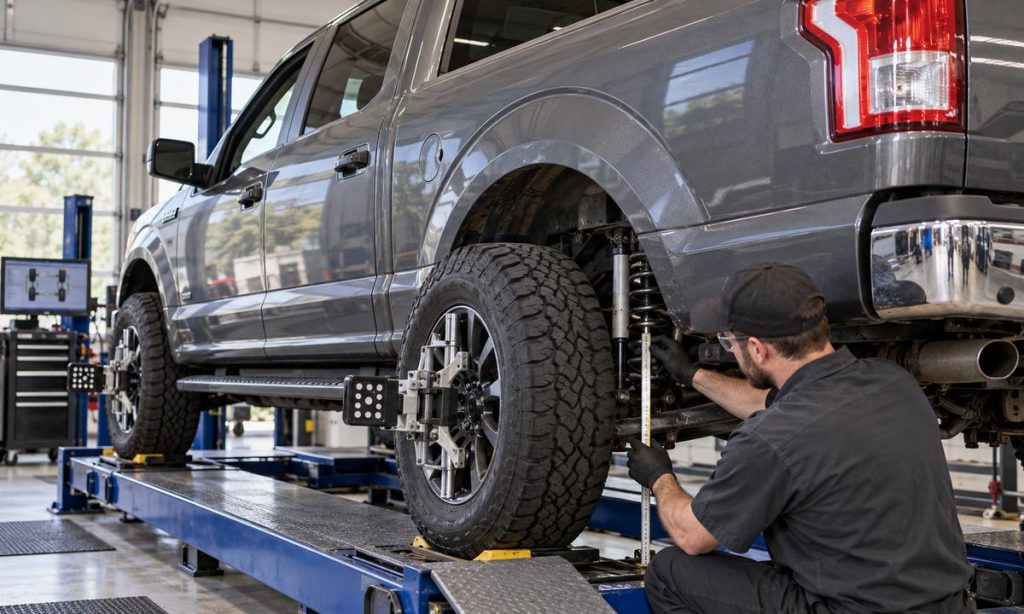
How to match replacement shocks to the ride height and use of a Ford F-150 begins with identifying the truck’s exact suspension, not choosing a shock by model name alone. Year, cab, drivetrain, trim, axle, front suspension, factory package, and any leveling or lift parts can change fitment and available suspension travel. A stock-height truck, a leveled 4×4, and a truck with a rear lift may require different shock lengths or mounting details. Your intended use—daily driving, towing within ratings, rough roads, or off-road travel—also affects the kind of control you need. Ford cautions that suspension modifications can change ride, handling, and component wear. Verify the complete setup using vehicle-specific documentation and a qualified suspension professional.
Identify the F-150 before comparing shocks
Record the model year, cab and bed, two- or four-wheel drive, trim, engine or payload package where relevant, and the axle position being serviced. Front and rear shocks are not interchangeable. Depending on generation, a front strut or coil-over assembly may include or interact with a spring; that differs from a separate rear shock. Use the vehicle identification number and build information when checking factory parts references. Two trucks with the same year and trim can have different suspension equipment.
Inspect for modifications before ordering: leveling spacers, lift springs, drop brackets, control arms, leaf springs, lowering parts, replacement wheels, or added accessories. Identify the manufacturer and part number of the modification if possible. A nominal “two-inch lift” does not by itself tell you shock length or suspension travel. Front and rear ride heights may differ, and product descriptions can use different reference points. Measure the truck on level ground at the locations specified by the kit maker, with normal load and tire pressure, then compare with the original specification if available.
Match shock length to suspension travel
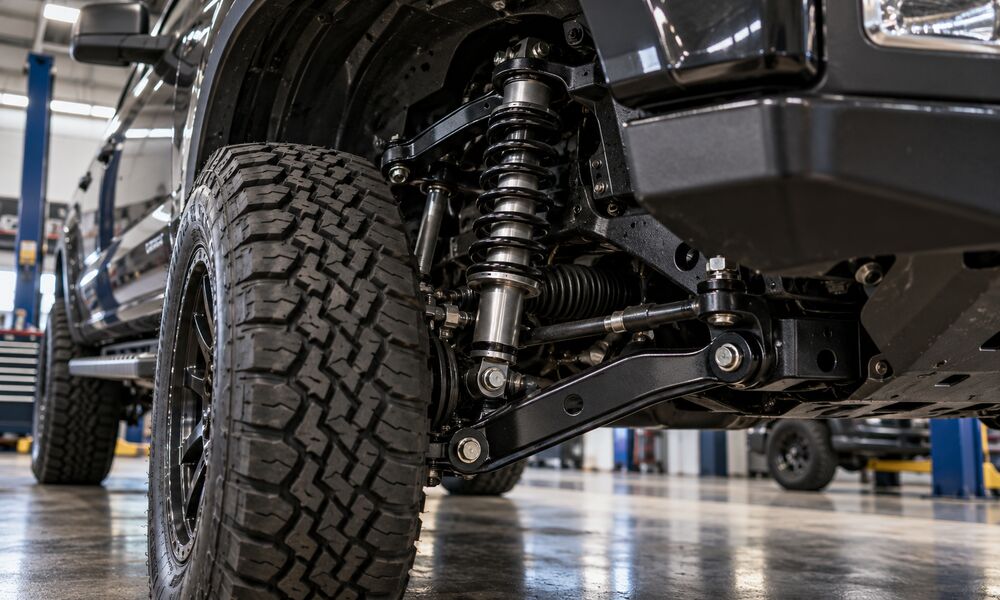
A shock must operate through the suspension’s usable travel without topping out at full extension or bottoming out before the suspension reaches its designed compression limit. Too short a unit can limit droop and stress mounts; too long a unit may bottom internally, contact nearby parts, or allow suspension to exceed intended travel. Length alone is not enough: check compressed and extended dimensions, mounting style, bushing or eyelet size, and clearance through steering and suspension movement. Confirm the shock is designed for the exact front or rear position and the truck’s specific lift or lowering configuration.
Do not stack spacers or modify mounts to make an incompatible shock fit. A suspension lift may change control-arm angles, alignment, brake-hose slack, driveline angles, and other clearances. Ford Performance installation instructions warn that suspension changes affect vehicle reaction, ride, handling, and wear. The complete suspension system—not just the shock—must remain compatible and safely assembled.
Choose for how you use the truck
For a stock-height F-150 used mainly on paved roads, start by matching the original configuration and the vehicle’s intended ride and control. If the truck frequently carries cargo or tows within its ratings, consider how the shock is specified for that axle load and duty cycle, but do not treat a shock as a way to increase payload or towing capacity. Springs, tires, brakes, hitch, and axle ratings remain part of the system. If you tow, verify the manufacturer’s towing requirements and inspect for sag or sway rather than attempting to mask an overloaded setup with stiffer dampers.
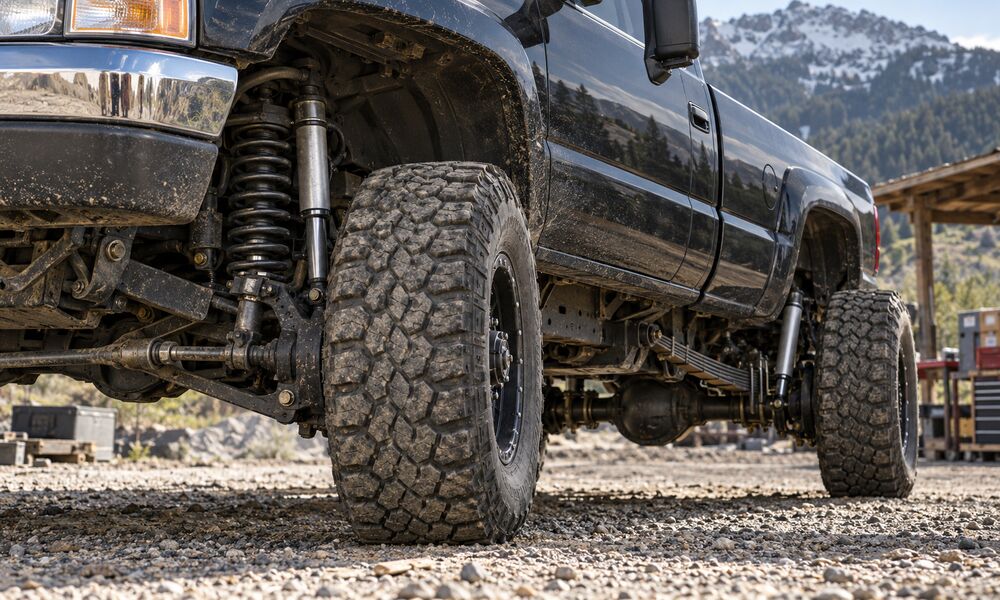
For rough roads or off-road use, look for verified fitment and adequate travel for the actual suspension height and use. More damping or a remote reservoir is not automatically better for every truck; the correct choice depends on vehicle mass, spring rate, tire size, terrain, speed, and load. Avoid claims that a shock alone will prevent rollover, fix poor handling, or make a modified vehicle safe. Review the site’s F-150 shock fitment example for a specific 2016 4×4, while checking your own truck’s details before using any listing as a comparison.
Check condition before replacing parts
A leaking damper, repeated bouncing, nose dive, uneven tire wear, clunks, or reduced control can justify inspection, but none proves the shock is the only cause. Worn bushings, springs, ball joints, tie rods, wheel bearings, tires, alignment, and loose mounts can create similar symptoms. Compare left and right sides, inspect mounts and fasteners, and have a qualified technician diagnose uncertain or safety-related faults. Replace parts in pairs on the same axle when the vehicle or part maker requires it, and follow service information for that F-150 generation.
Suspension work can involve heavy components, stored spring energy, and lifting a vehicle. Do not work under a vehicle supported only by a jack. Use properly rated lifting equipment and correct support points, and leave spring or strut work to a trained technician if you lack the tools and procedure. Ford’s owner manual cautions against unapproved changes to suspension and steering because they can affect predictable performance.
Questions to ask before ordering
- Does the part fit my exact model year, cab, drivetrain, trim, axle, and front or rear position?
- Is it intended for stock ride height, a specific lift or leveling kit, or a lowered setup?
- Are compressed and extended lengths compatible with suspension travel?
- Do mounts, hardware, spring assemblies, and nearby components match?
- Will accessories, cargo, or towing use change application requirements?
- Does the kit maker require alignment or inspection after installation?
If the truck shows repeated bouncing, clunks, leakage, or uneven wear, the published guide to signs that F-150 4×4 shocks or struts need inspection can help frame the diagnostic discussion. For a use-specific comparison, see off-road shock options for Ford F-150; confirm fitment against your height and suspension travel.
Frequently Asked Questions
Can I use stock-height shocks with a leveling kit?
Do not assume so. A leveling kit can alter the suspension’s operating position and travel. Follow the kit manufacturer’s verified shock requirements for your exact F-150 and inspect for clearance and travel limits.
Does a taller lift always need longer shocks?
Not necessarily. The suspension design and kit determine usable travel and required dimensions. Match compressed and extended length and mount compatibility, not just advertised lift height.
Will heavy-duty shocks increase towing capacity?
No. Shocks do not raise the truck’s GVWR, axle, tire, hitch, or trailer ratings. Keep all loads within limits for your specific truck.
Should front shocks and rear shocks be the same?
They are position-specific and may use different designs and mounts. Confirm the part is listed for the front or rear of your exact configuration.
What if my truck has unknown suspension modifications?
Identify the installed parts before buying. A suspension shop can measure ride height, travel, and clearances and determine the correct application safely.
Final Words
To match replacement shocks to a Ford F-150, verify the truck’s exact configuration, current ride height, suspension modifications, and intended use. Confirm mounting and compressed/extended travel requirements with the truck and kit documentation. If suspension history is unknown or fit is uncertain, have a qualified shop inspect it before ordering or installation.
References
- Ford Performance F-150 Suspension Installation Instructions (notes suspension modifications can affect ride, handling, and component wear).
- Ford F-150 Owner’s Manual: Suspension and Steering Modification Guidance (verify the manual for your year).
Pingback: Ceramic vs. Semi-Metallic Pads for Dodge Dakota 4x4
Pingback: Uneven Tire Wear After F-150 4x4 Suspension Work: Checks