
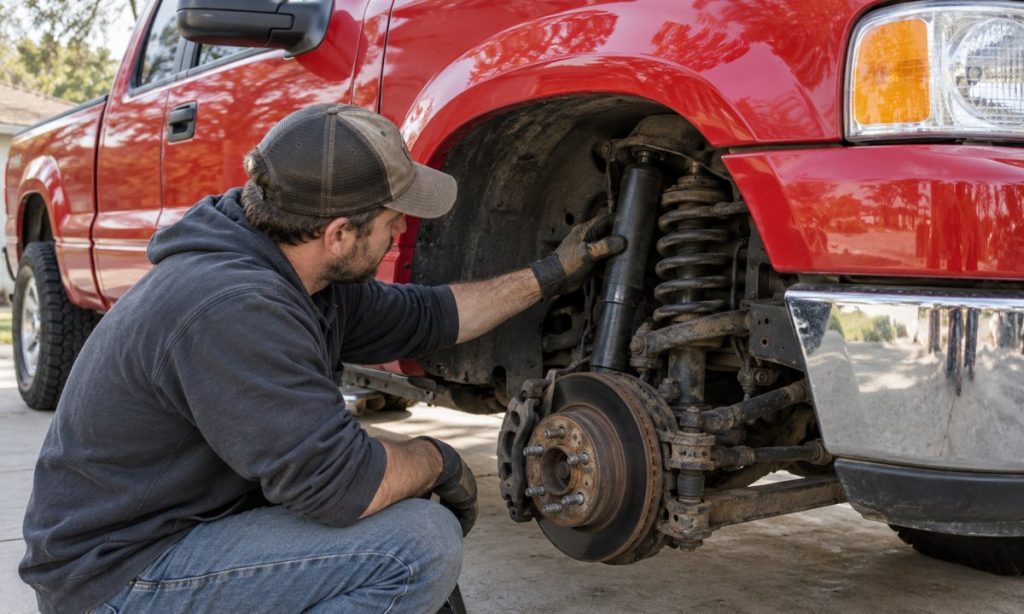
Signs the shocks or struts on Ford F-150 4×4 need inspection often appear as changes in how the truck settles, steers, or wears its tires. Repeated bouncing after a bump, fluid that runs down a shock body, new clunks, or scalloped tire wear deserve attention, but none proves a shock is the only cause. Check the truck on level ground and note the conditions when the symptom occurs; avoid crawling under a vehicle supported only by a jack. A 4×4 F-150’s suspension varies by model year, trim, cab, and modifications, so use the correct Ford owner information and ask a qualified technician to inspect uncertain or worsening symptoms. If inspection confirms replacement is needed on a 2002 F-150, use the published 2002 F-150 4×4 shocks guide as a separate fitment reference and verify the exact truck configuration.
Why shocks and struts need attention
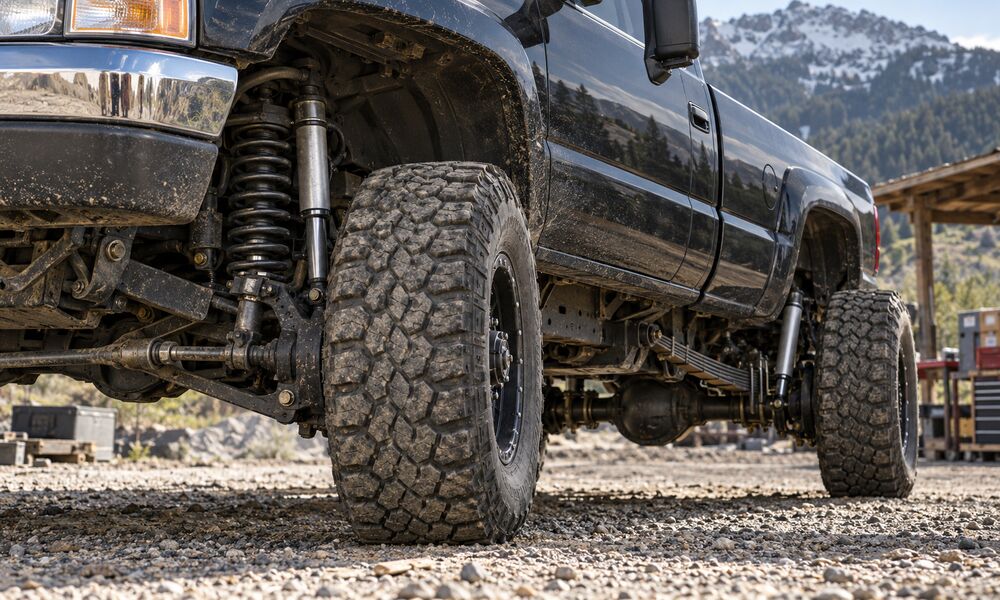
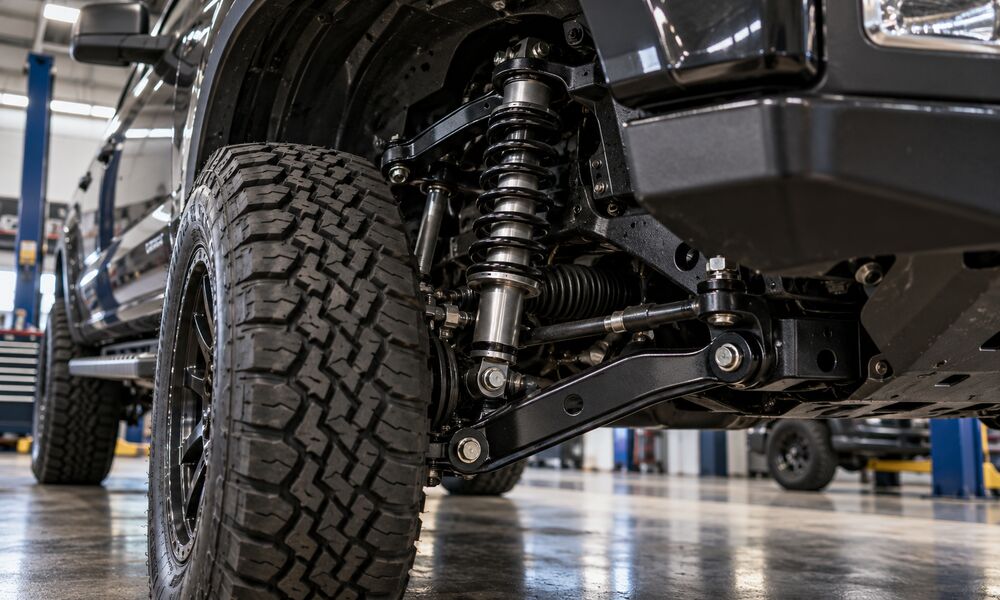
Shock absorbers control suspension movement after the tires pass bumps and dips. The spring supports vehicle weight; the shock or strut helps damp the spring’s motion. A worn or damaged component can let the tire move more than intended, which may affect ride control and tire contact. The exact layout differs among F-150 generations and 4×4 packages. Do not assume every truck uses the same front suspension arrangement or that “4×4” alone identifies the correct component.
Ford’s general shock and strut service guidance lists frequent bouncing, reduced handling or braking, unusual noise or vibration, fluid leakage, tire wear, and visible damage as reasons to arrange an inspection. These are warning signs, not a remote diagnosis. The Ford owner-manual portal lets you select the year-specific manual; use it for your truck’s maintenance and safety instructions.
Changes in ride and handling
Notice whether the truck continues to bounce or float after a road dip, driveway ramp, or isolated bump. One sharp movement is not enough to condemn a shock, and an unloaded pickup can feel different from a truck carrying cargo. Look for a pattern: repeated oscillation, a rear end that feels unsettled over successive bumps, or more body motion than you remember under comparable conditions. Record speed, load, road surface, and whether the issue is at the front or rear.
Extra pitching, rolling, or swaying during normal turns, lane changes, or braking can also justify a suspension check. Braking distance and stability depend on several systems, including tires, brakes, alignment, springs, and steering parts. A pull, vibration, or nose dive should therefore be evaluated as a vehicle concern, rather than assumed to be a shock failure. If control changes suddenly or the truck feels unstable, reduce speed safely and arrange prompt inspection.
Fluid, dents, and damaged mounts
With the truck parked on level ground and the suspension cool, look from a safe position for a shock body that is visibly wet with oil, fluid that forms a trail or drip, a bent or dented housing, or damaged boots and bushings. A light film of residue can be difficult to interpret and may not mean the unit has failed. A technician can distinguish normal surface residue from active leakage and check the whole assembly.
Also pay attention to clunks, rattles, or squeaks from a wheel area, especially if they began after a pothole, curb strike, off-road impact, or suspension modification. Noise can come from loose hardware, bushings, ball joints, sway-bar links, springs, or other components. Do not tighten suspension fasteners by guesswork; many require vehicle-specific procedures and torque values.
Tire wear that calls for a closer look
Repeated high and low patches around a tire tread, feathering, or a wear pattern that returns soon after replacement merits a tire and suspension inspection. Shocks may contribute to irregular wear when they no longer control wheel movement, but tire pressure, wheel balance, alignment, worn joints, bent parts, and missed rotations can create similar signs. Check pressure against the door-jamb label when the tires are cold and inspect all four tires; do not treat a shock replacement as a substitute for measuring alignment or checking loose parts.
Compare left and right sides and note whether the front or rear tires are affected. NHTSA advises drivers to examine tires for irregular wear and physical damage. If a tire has a bulge, exposed cord, deep cut, or dangerously low tread, address that tire condition promptly. The tire symptom and the suspension diagnosis are related questions, but they are not interchangeable.
A safe driveway check
- Park on a level, firm surface, select Park, set the parking brake, and let hot components cool.
- Walk around the truck and compare its stance from side to side. A low corner can point to a spring, load, or other suspension issue as well as a damper problem.
- Look through the wheel openings for obvious wetness, dents, broken parts, or a visibly damaged mount. Keep hands and tools away from moving or loaded suspension parts.
- Inspect tire tread for irregular patches and check for recent pressure loss or damage.
- Write down noises, handling changes, road conditions, cargo, and recent impacts or repairs to share with a technician.
A bounce test performed by pushing on a body panel is not a reliable pass-or-fail test for every modern pickup, especially when suspension design, tires, and payload vary. Do not lift the truck unless you have the correct lifting points, equipment, and procedures. If inspection requires removing a wheel, working beneath the chassis, or unloading a spring, leave it to a trained professional with suitable supports and service information.
When to schedule service
Arrange an inspection when bouncing persists, handling feels worse, a shock is visibly damaged or actively leaking, a mount is loose, or irregular tire wear keeps returning. Seek prompt help after a hard impact, when the truck leans unexpectedly, or when steering and braking behavior changes. If you hear a severe clunk, see a broken suspension part, or cannot maintain control, avoid driving further and arrange roadside assistance.
Tell the shop the model year, cab and bed configuration, engine or package if known, tire size, lift or leveling changes, and whether the truck tows or carries heavy loads. Ask the technician to inspect related springs, mounts, joints, steering parts, tires, and alignment as appropriate. Replacement decisions should follow the inspection findings and the correct application information, not mileage alone or a single symptom. A written estimate can identify which components are worn and why each proposed repair is needed.
Document the timing of each symptom
Before a service appointment, note when bouncing, clunking, fluid leakage, steering instability, or irregular tire wear occurs; include speed, road conditions, load, tire pressure, and recent work. Those observations help a technician choose inspection steps, but they do not prove shocks are the cause or set a replacement interval. Seek prompt inspection if vehicle control changes, a mount is damaged, or the truck continues to feel unstable.
Frequently Asked Questions
Can a leaking shock be repaired by tightening a fitting?
A typical sealed shock is not serviced by tightening a fitting. Have active leakage checked against the manufacturer’s inspection procedure; do not puncture or disassemble a pressurized unit.
Does uneven tire wear always mean the shocks are bad?
No. Incorrect pressure, balance, alignment, tire condition, and worn steering or suspension joints can also cause irregular wear. Inspect the tire and suspension together.
Should I replace shocks because the truck has high mileage?
Mileage alone does not confirm failure. Use symptoms and a physical inspection, accounting for road conditions, towing, payload, age, and prior modifications.
Can I drive with a damaged shock absorber?
A damaged or actively leaking component should be assessed promptly. If handling is unstable, a part appears broken, or the truck cannot be controlled safely, stop driving and arrange assistance.
Are the inspection signs the same for every F-150 4×4?
General clues are similar, but suspension layouts and service instructions change by year, trim, and equipment. Use the correct owner information and confirm the truck’s configuration.
Final Words
Signs the shocks or struts on a Ford F-150 4×4 need inspection include repeated bouncing, unstable handling, unusual suspension noise, active fluid leakage, visible impact damage, and recurring irregular tire wear. Each is a clue that needs context because tires, springs, mounts, steering, and alignment can produce similar symptoms. Note what you observe, avoid unsafe under-vehicle checks, and have a qualified technician inspect worsening or safety-related changes. For a 2002 truck, the published 2002 F-150 4×4 shocks guide is a separate fitment resource; verify year, configuration, and condition before using any parts information.
References
- Ford: Shock and Strut Service — general warning signs and recommendation to arrange an inspection.
- Ford Owner Manuals — select the exact model year for applicable vehicle guidance.
- NHTSA Tire Safety — tire wear and physical-damage checks.
Pingback: Ceramic vs. Semi-Metallic Pads for Dodge Dakota 4x4