Uneven tire wear after suspension work on Nissan Titan can come from alignment angles that changed during the repair, a part installed out of position, worn components that remain, incorrect tire pressure, or a tire or wheel problem. The wear pattern can suggest where to investigate, but it rarely identifies one failed part by itself. Note which tire is affected, when the wear appeared, recent repairs, and the type of use, then check the truck’s exact year and configuration against Nissan service information.
Start by mapping the wear pattern
Measure tread depth at the inner, center, and outer ribs at several points around each tire. Record the values rather than judging from one glance. One-edge wear can point toward alignment, while cupping or scalloping may involve wheel balance, suspension damping, runout, or looseness. Feathered tread blocks may be associated with toe settings. These are clues for inspection, not a diagnosis; tire design and operating history can change the appearance.
Compare left and right tires on the same axle and note whether the front, rear, or both ends are involved. A pull, steering-wheel position change, vibration, or noise may add useful context. If a tire has bulges, exposed cords, a deep cut, rapid pressure loss, or severe localized damage, do not keep driving on it. Have it inspected by a tire professional and use the vehicle manual’s safety guidance.
Recheck the repair before assuming alignment
Confirm parts and installation
Review the repair invoice and identify which suspension parts were removed or replaced. Confirm that the replacement part matches the Titan’s year, drivetrain, cab, axle, and trim. Check that bushings, links, control arms, springs, shocks, and fasteners are installed in the correct position and tightened using the specified procedure. Some rubber-bushed joints must be tightened at normal ride height; the service manual determines when that applies. Do not crawl under a vehicle held only by a jack.
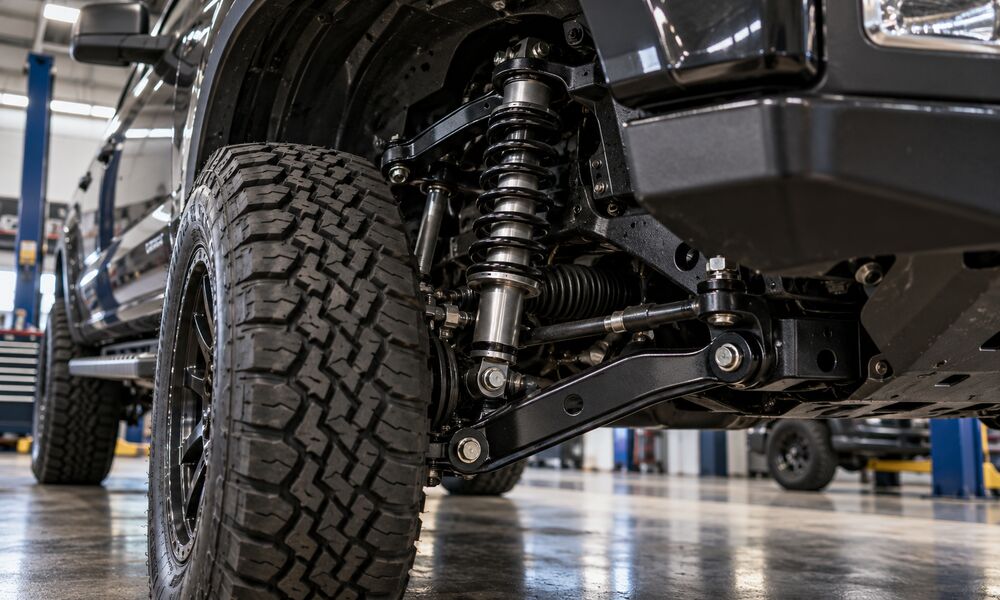
Look for loose hardware, a shifted spring, damaged dust boots, leaking dampers, a bent bracket, or contact between a tire and a suspension or body component. Compare ride height left to right on level ground and account for load, accessories, and tire pressure. A mismatched or incorrectly seated part can alter ride height and working geometry, making a prior alignment reading irrelevant.
Check alignment data, not just the steering wheel
Suspension work can affect toe, camber, and caster, depending on which components were disturbed and the design of the particular Titan. Ask for a before-and-after alignment printout and confirm the values are within the specification for the exact model year and trim. A centered steering wheel alone does not prove alignment is correct. If adjustment is unavailable or a value remains outside specification, the shop should investigate bent parts, ride height, bushings, or an incorrect repair component rather than forcing adjustment.
If the wear started soon after a repair, return to the shop with photos and tread measurements. Request a recheck of the installed parts and alignment. A second alignment without correcting a loose joint, incorrect ride height, or damaged component may only hide the symptom briefly.
Rule out tires, pressure, load, and balance
Set cold pressure using the driver-door tire and loading label and the owner’s manual for the exact truck and tire size. Do not use the maximum pressure printed on the tire sidewall as the routine target. Underinflation, overinflation, overloading, and uneven load distribution can change tread wear. If the Titan uses different tire sizes or pressures front and rear, follow its specific label. Nissan’s 2019 Titan owner manual is one year-specific reference; use the correct manual for your own model year.
A tire can have internal damage, irregular wear from before the suspension repair, or a force variation that creates vibration. Wheel balance issues commonly show up as speed-related vibration, though they do not explain every wear pattern. A technician may need to inspect the tire off the vehicle, check wheel runout, balance, and compare tread measurements. Michelin’s guidance on uneven tire wear can help describe patterns, but vehicle-specific diagnosis should use Nissan specifications.
Decide whether it is safe to drive
Mild wear that changes slowly may allow a short trip to a tire or alignment shop, but rapid wear, strong pulling, a loose steering feel, repeated clunking, tire contact, or visible tire damage calls for prompt inspection. Stop if the truck feels unstable or a tire appears unsafe. Have a qualified technician inspect the complete system after significant suspension work, especially if the repair involved ride-height changes, control arms, steering links, or a collision.
If the suspension has been modified, disclose the lift, leveling kit, wheel offset, tire size, and load before alignment. Replacement shocks are one part of the system; they do not by themselves correct alignment angles or compensate for worn joints. Our guides to matching Nissan Titan shocks to ride height and use and offroad shocks for Nissan Titan cover damper selection context. For a similar wear issue on another vehicle, see uneven tire wear after Toyota Pickup suspension work.
Routine tire checks help show whether the repair solved the cause. Our articles on rotation patterns and tire life, tire tread, age, and damage checks, and suspension shock inspection signs provide related maintenance background. Use the Titan’s own manual for its tire pressure and service intervals. For another suspension-fitment example, see our Toyota Pickup shock ride-height guide; its specifications do not transfer to the Titan.
Frequently Asked Questions
Should I get an alignment after suspension work on a Nissan Titan?
Check the service procedure for the parts changed. If the work can alter alignment geometry, obtain a measurement and verify it against the correct year-specific specification.
Can new shocks cause uneven tire wear?
Shocks alone do not set alignment, but incorrect fitment, ride height, worn joints, or installation problems can affect how the tire contacts the road.
What does wear on one edge of a tire mean?
It can be associated with alignment, pressure, load, or worn parts. Measure the tread and have the full system inspected instead of inferring one cause.
Can I keep driving if a tire is wearing unevenly?
It depends on severity and handling. Avoid driving on exposed cords, bulges, rapid pressure loss, or unstable handling; arrange prompt professional inspection.
Does tire rotation fix wear after suspension work?
Rotation can help manage normal wear when permitted by the vehicle and tire makers, but it does not fix an alignment, installation, or damaged-part problem.
Final Words
When uneven tire wear appears after Nissan Titan suspension work, document tread depth and handling symptoms, verify the installed parts and ride height, then check alignment and tire condition against the truck’s specifications. Correct the underlying fault before rotating or replacing tires. If wear is rapid, the truck pulls or feels unstable, or a tire is damaged, get professional help before continuing to drive.