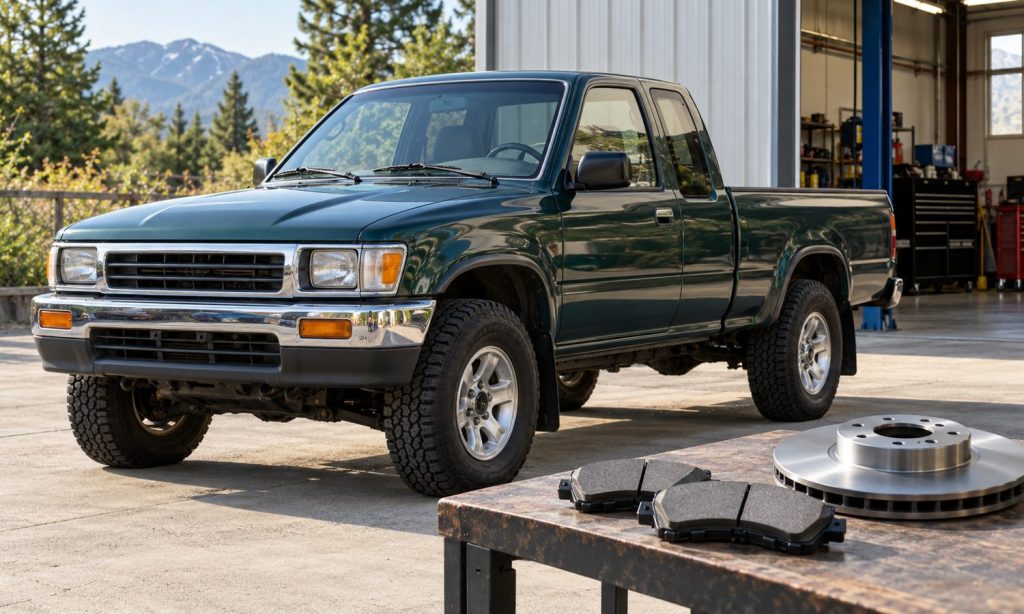
Ceramic vs. semi-metallic brake pads for Toyota Pickup 4×4 is a choice between application-matched friction materials and their tradeoffs, not a simple “best” label. Ceramic pads often appeal to drivers seeking lower visible dust and quiet everyday operation; semi-metallic formulations can suit applications needing a different heat and friction balance. Actual behavior varies by pad maker, vehicle, rotor, and use. Confirm what Toyota specifies for the exact year and braking system before comparing alternatives.
Start with fitment and the original specification
Toyota Pickup 4×4 covers multiple years and brake configurations. Identify the model year, cab, engine, axle, trim, and production details using the VIN and vehicle documents. Confirm front or rear position, rotor dimensions, caliper, hardware, and any applicable brake package. A pad that looks similar or fits a broad “Pickup” catalog range may not be right for your truck. Use a current manufacturer fitment catalog and compare its exact part number with Toyota service information.
Check the pad type and friction designation recommended for the specific application. Do not choose solely by material name, price, color, marketing claims, or a forum report from a different generation. Confirm whether new abutment clips, shims, or other hardware are included, and whether the pad maker requires a particular rotor finish or bedding procedure. If the truck has a brake conversion or nonstandard calipers, have a qualified brake professional identify the system before ordering.
How ceramic pads may suit everyday use
Ceramic compounds are often chosen for comfortable daily driving and lower visible brake dust than many metallic formulations. Some drivers also value quiet operation, but noise depends on the full pad design, shims, hardware, rotor surface, caliper condition, and installation. A ceramic label does not guarantee a silent stop or low rotor wear. Formula quality and vehicle-specific engineering matter as much as the broad compound category.
A light-duty daily route may make comfort and wheel cleanliness priorities. Even so, the pad must meet the braking demands and specification for the 4×4. Do not assume that an aftermarket ceramic pad is appropriate for heavy towing, steep descents, repeated hard stops, or a modified vehicle simply because it fits the caliper. Check the maker’s stated use and temperature range, and follow Toyota’s recommendations.
How semi-metallic pads may suit other demands
Semi-metallic formulas contain a greater proportion of metallic ingredients than many ceramic formulas, though exact compounds differ. Some applications emphasize heat handling and braking response under demanding use. Tradeoffs can include more visible dust, more noise, or different rotor wear, but these are not identical for every product. Compare the specific manufacturer’s test and fitment information rather than assuming all semi-metallic pads behave alike.
If the truck regularly carries heavy loads, descends long grades, or sees off-road use, discuss the vehicle’s operating conditions with the pad maker or a qualified brake technician. A compound choice does not increase the truck’s GVWR, axle rating, or towing capacity. A well-matched pad, serviceable rotor, correctly functioning caliper, and sound hydraulic system work together; changing only the pad material cannot fix a dragging caliper or failing brake hose.
Compare the decision factors
Dust and noise
Ask what type and amount of dust the maker reports and whether it is likely to be more visible on your wheel finish. Dust level is not a direct measure of stopping ability. Noise can result from pad vibration, glazing, rotor condition, loose or incorrect hardware, a sticking caliper, or poor installation. If a new setup squeals, grinds, or pulses, inspect it rather than assuming the noise is normal for one compound.
Heat, driving pattern, and maintenance
Frequent downhill braking, high payload, repeated stops, and off-road conditions can increase brake temperatures. Choose a pad whose application and use guidance match the truck, and inspect the rotor and rest of the brake system. Avoid dragging the brakes down a long grade; use the vehicle’s recommended lower gear and driving technique. After installation, use the product’s bedding procedure and allow components to cool as directed.
Cost, service life, and rotor compatibility
Compare complete installed cost, not pad price alone. Rotor condition, required hardware, labor, and follow-up inspection can change the total. Pad life depends on compound, driving, load, corrosion, and mechanical condition, so a material name alone cannot predict a mileage interval. Replace or machine rotors only within the maker’s service limits, and replace them in axle pairs when the service procedure requires it.
When to get professional inspection
A soft pedal, pulling, grinding, burning odor, brake-fluid leak, warning light, or new vibration during braking needs prompt inspection. Do not drive with exposed friction material or a damaged rotor. Brake work requires safe lifting, correct torque, clean friction surfaces, and the right hydraulic procedure. If you are unsure about the application or installation, use a qualified technician and Toyota service information.
For related reading, see our guides to bedding new brake pads on a Toyota Pickup 4×4, when to replace rotors with pads, and how towing weight affects truck brakes. The vehicle applications differ, but the checks show why pad selection must include rotor condition and use.
Our other brake guides include ceramic versus semi-metallic pads for Ford F-350, Ford F-150 4×4 pad fitment considerations, a model-year-specific F-150 brake-pad overview, and a Toyota brake pad and rotor comparison. None replaces the Toyota Pickup’s own specification.
Frequently Asked Questions
Are ceramic or semi-metallic pads better for a Toyota Pickup 4×4?
Neither material is universally better. Match the exact application and Toyota recommendation, then weigh use, comfort, dust, heat, rotor compatibility, and maker guidance.
Do ceramic pads make less dust?
Many ceramic formulations produce less visible dust than many metallic formulations, but results depend on the product and vehicle. Compare manufacturer data for the exact pad.
Are semi-metallic pads better for towing?
Some are designed for demanding conditions, but the pad must be approved for the truck. Confirm application and operating limits with the manufacturer or a brake professional.
Can I switch pad materials without changing rotors?
It depends on rotor condition, thickness, surface, and pad-maker requirements. Inspect and service the rotors according to Toyota and product instructions.
Do new pads need bedding in?
Follow the exact pad maker’s bedding procedure. It may specify a series of stops and a cool-down period; avoid improvising with a loaded truck.
Final Words
For ceramic vs. semi-metallic brake pads on Toyota Pickup 4×4, first confirm the exact year and brake hardware, then select a pad approved for that application. Ceramic may favor comfort and lower visible dust, while some semi-metallic formulas target different heat and friction demands; the exact product and use determine the outcome. Inspect the rotors and complete brake system, follow the bedding directions, and seek professional help for noise, pulling, vibration, or pedal changes.