To compare road noise and wet grip when choosing Ford Escape XLT tires, first verify the exact year, trim, wheel size, and tire specification. XLT badges span different generations and optional wheel packages. Then compare tires in the same approved size and load range using independent wet-braking results, manufacturer data, and consistent owner feedback about noise. No single sidewall grade tells you how quiet a tire will feel inside your Escape or how it will behave in every rain condition.
Confirm fitment before comparing comfort
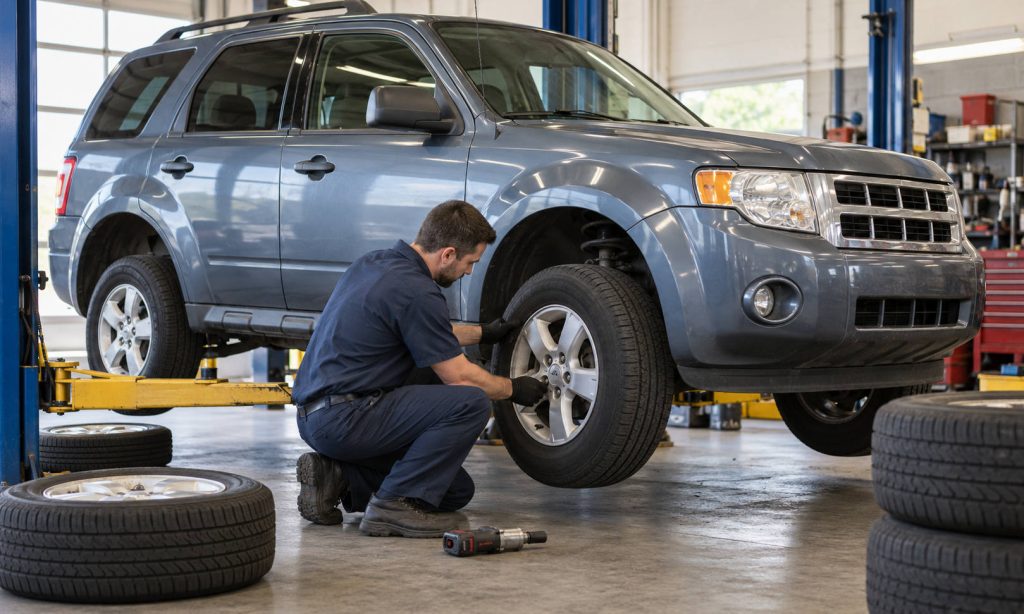
Read the tire and loading label on the driver’s door area and the owner’s manual. Record the full size, load index, speed rating, and any front/rear difference. Confirm the replacement tire is approved for the vehicle and wheel. A 2009 Escape XLT is useful as a specific example, but its fitment does not carry over to later XLT models or other wheel options. Our guide to tire rotation patterns for the 2009 Ford Escape XLT covers related maintenance; our tires for 2009 Ford Escape XLT overview adds a model-year example. Use your own door label for tire selection.
Keep size, load rating, and tire category constant while comparing. A touring all-season tire and a more aggressive all-terrain pattern can differ in tread noise, wet handling, ride comfort, and winter capability. Changing size or load class may affect clearance, speedometer accuracy, steering feel, and vehicle behavior. Ask a tire professional to confirm any non-original size, especially if wheels, suspension, or ride height have been changed.
How to compare wet grip
Use relevant wet-braking tests
Look for independent tests in the same tire size and category, and check whether they measured wet braking, handling, hydroplaning resistance, or all three. A tire’s wet stopping distance on one test surface does not predict every road, temperature, tread depth, or vehicle. Prefer results that show test method, tire size, conditions, and measured differences. Manufacturer claims can help explain design goals but should not be treated as direct comparisons unless the testing method and competitor tires are clear.
In the United States, NHTSA’s Uniform Tire Quality Grading includes a traction grade measured under controlled wet-braking conditions. It is not a complete measure of wet cornering, hydroplaning resistance, or road noise. NHTSA explains its tire safety ratings and advises checking tire pressure on the vehicle label. Treat the traction grade as one data point alongside test results and the tire maker’s fitment and use information.
Consider tread and weather conditions
Tread pattern, compound, drainage channels, and remaining tread depth all affect wet behavior. A tire that performs well when new can lose wet capability as it wears. Compare tires at similar tread depth where possible, and inspect wear indicators and age. Do not assume a higher treadwear number guarantees stronger wet grip; ratings describe different attributes. Maintain the pressure specified by Ford and inspect tires monthly and before long trips.
How to compare road noise
Tire noise depends on tread design, size, pressure, pavement texture, speed, vehicle insulation, and wear. A quiet tire on smooth asphalt may be louder on coarse pavement. In a test drive, use a familiar stretch of road at the same speeds, with the radio off and similar window and climate settings. Listen for hum, pattern tones, and changes as speed rises. Repeat on both smooth and rough pavement before deciding.
Owner reviews can reveal repeated patterns, such as humming at highway speed or quiet performance after break-in, but ratings are subjective. Check that feedback concerns the same tire model, size, and similar vehicle; a review from a different car or wheel package may not predict the Escape experience. Look for multiple detailed reports over time rather than relying on a single five-star or one-star comment. Also review the tire maker’s warranty and noise description without treating them as a standardized cabin decibel test.
Balance grip, comfort, and your use
If wet braking is the priority, give greater weight to comparable independent wet-stop and wet-handling tests, then check that the tire meets the Escape’s required load and speed ratings. If daily highway comfort matters most, compare repeated noise feedback and try a same-size test drive when possible. If the vehicle sees snow or unpaved roads, include seasonal capability, traction markings, and the maker’s guidance; all-season does not mean all-weather in every climate.
Do not choose solely by tread appearance, price, or a mileage warranty. A warranty is not a promise that every driver will achieve a particular life. Tire performance involves tradeoffs among wet grip, wear, noise, rolling resistance, and ride. The U.S. Tire Manufacturers Association explains basic tire care and tread checks. If a tire loses pressure, vibrates, or wears unevenly, have it inspected instead of trying to compensate with another model.
For other Escape tire context, see our articles on Ford Escape Titanium tire fitment and all-season tires for a 2016 Escape. The model years differ, so use them as comparison guides rather than fitment references. Our Ford Fusion tire rotation article, tire wear and age checks, and F-150 all-season tire comparison cover related decisions for different vehicles.
Make the comparison repeatable
Write down the exact tire model, size, tread depth, pressure, and conditions when evaluating noise or wet behavior. Compare two candidates at similar mileage and pressure on the same roads instead of relying on memory from different seasons. Cabin noise can rise as a tire wears or if alignment is out, so listen for a new hum and inspect tread before blaming the tire design. Wet-grip claims should be tied to a specific test result and size; a brand-level claim may describe a different tire. In the United States, the wet-traction UTQG grade is useful for controlled braking comparisons but does not rank cabin quietness. Some imported tires may show European label information, which measures external noise rather than cabin sound and may use a different test framework. Keep the categories separate: use standardized wet results for grip and a same-road drive or repeated comparable owner reports for comfort.
Frequently Asked Questions
Does the tire traction grade tell me how quiet a tire is?
No. The U.S. traction grade concerns controlled wet braking. It is not a cabin-noise score or a complete wet-handling rating.
Can I compare owner reviews for different tire sizes?
Use them cautiously. Tire size and vehicle can affect sound and handling, so prioritize feedback for the same model and a comparable size.
Will a deeper tread always grip better in rain?
Tread depth matters, but design, compound, pressure, wear, and road conditions also matter. Replace tires based on the legal and manufacturer guidance.
Should I choose the quietest tire if I drive in heavy rain?
Prioritize the required fitment and wet-performance evidence, then compare noise among tires that meet those needs.
Can I use a different size to improve comfort?
Only if an approved fitment is confirmed for your exact Escape and wheel. A size change can affect clearance and vehicle systems.
Final Words
Compare Ford Escape XLT tires in the correct approved size, using wet-braking evidence and noise feedback from comparable conditions. Confirm load and speed ratings, keep the vehicle placard pressure, and remember that tread depth and pavement affect results. A short, consistent test drive and repeated owner reports can help with comfort, while manufacturer and independent test information should guide wet-grip decisions.