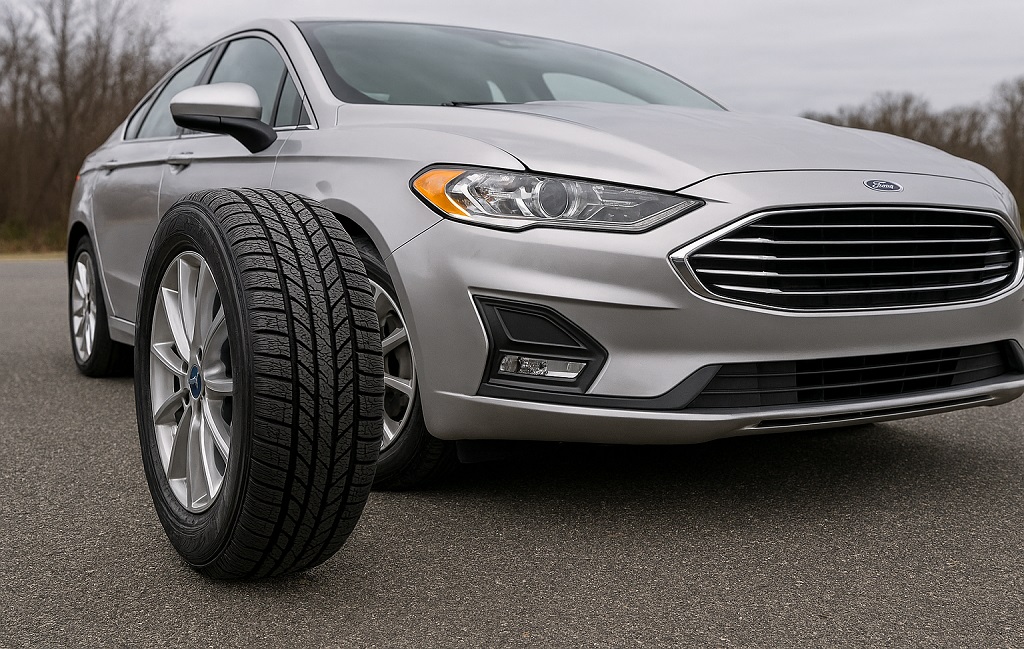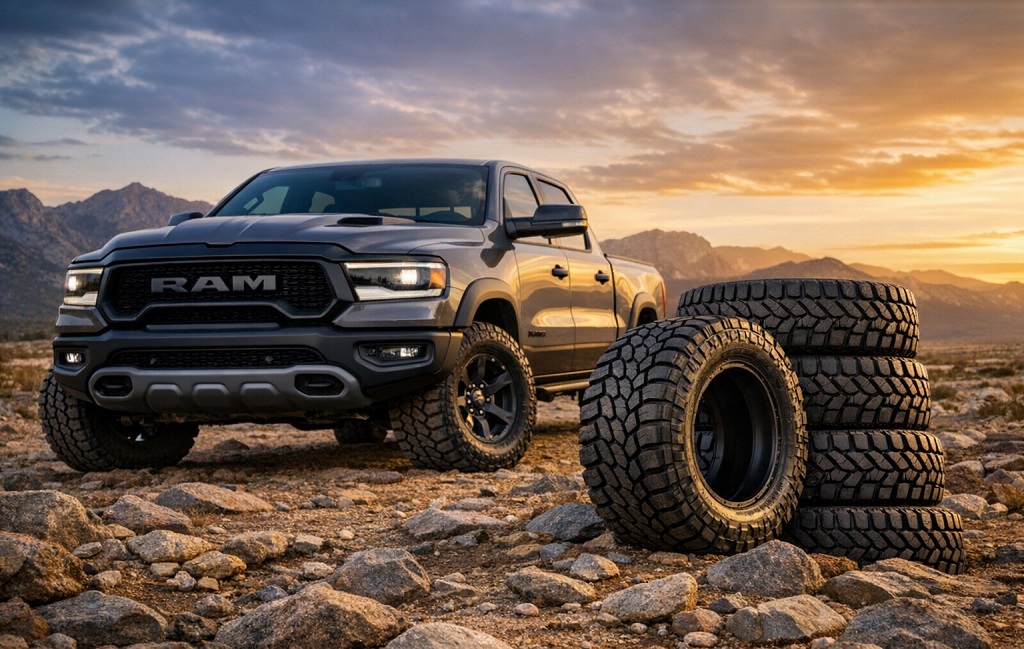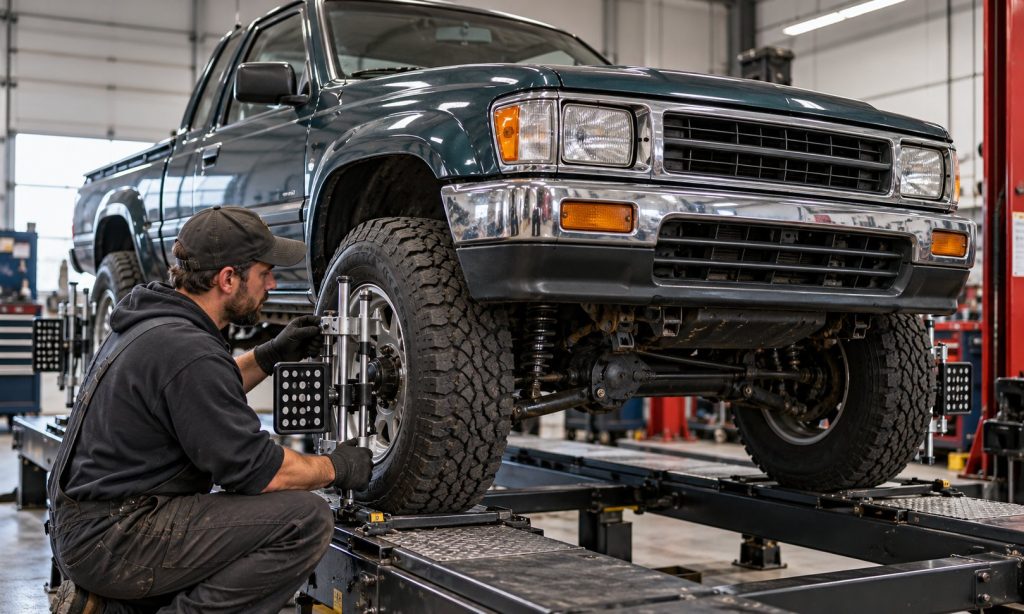
What tire load range does Ford F-250 need for its usual workload? There is no single load range that fits every F-250. The correct tire is the size and load specification approved for your truck’s model year, trim, wheel package, axle configuration, and market, as shown on its tire placard and in the owner’s manual. Then consider how you actually use it—empty commuting, payload, towing, or frequent heavy hauling—without exceeding the truck’s GVWR, axle ratings, or the tire and wheel limits. A higher load-range letter is not automatically a better choice, and a softer-riding tire is not acceptable if it lacks required capacity. If you are also considering an all-terrain tire for Ford F-250, verify its exact size and load rating separately from its tread category.
The short answer: begin with the placard
Check the tire and loading label on the truck and the correct owner’s manual before shopping. The label identifies the original tire size and recommended cold pressure for that specific vehicle. The manual adds guidance about tires, wheels, loading, and towing. F-250 configurations differ by year, trim, cab, engine, 4×2 or 4×4 drivetrain, single or dual rear wheels, and package. The tire specification for one truck may not apply to another with the same model name.
Do not choose a tire just because a seller or forum says “most F-250s use E.” Load Range E is common on many heavy-duty pickup fitments, but that generalization is not a compatibility check. A current Ford model page, for example, lists an LT tire with an E designation for certain configurations; that does not make it the answer for every year or wheel package. Confirm the actual designation and capacity required for your truck.
Load range and load index are related, but different
The letters C, D, E, and F on many light-truck tires identify standardized load-range categories, historically associated with different construction and inflation limits. The load index is a separate number in the tire size or service description that corresponds to a specific load capacity under defined conditions. The tire’s maximum load and inflation markings are also molded on its sidewall. These markings do not replace the vehicle’s placard, axle ratings, or the tire maker’s load-and-inflation information.
A tire’s rated capacity depends on its size and inflation pressure. Comparing only the letter can be misleading: two tires in different sizes or constructions may have different capacities, and a tire’s maximum sidewall pressure is not necessarily the truck’s correct everyday pressure. NHTSA says replacement tires should have at least the maximum load rating of the original tires. USTMA emphasizes following the vehicle’s tire placard and not exceeding the GVWR, GAWR, or component limits.
Match the tire to real loads without exceeding ratings
“Usual workload” is useful when you discuss a tire, but it does not authorize reducing the truck’s specified load capacity. Record what you carry and tow, including people, tools, cargo, hitch weight, and any accessories. Towing adds tongue or pin weight to the truck and can place substantial load on one axle. The trailer’s total weight alone does not tell you the load on each truck tire.
If capacity is close to a limit, weigh the truck in the configuration you use, ideally by axle, and compare the results with GVWR, front and rear GAWR, tire capacity, wheel ratings, and hitch limits. A scale reading is especially helpful for a slide-in camper, fifth wheel, gooseneck, plow, service body, or frequent bed payload. Keep within every applicable limit; a tire upgrade does not increase the truck’s legal or engineered ratings.
What to compare before changing load range
Use the exact tire size and service description when comparing candidates. Ask a qualified tire professional to confirm that the proposed tire meets or exceeds the truck’s original requirements and is approved for the wheel. Review these details together:
- Full tire size and load index, not only the load-range letter.
- Single or dual application and the tire’s rated capacity for that use.
- Required cold inflation pressure for the vehicle’s expected load.
- Wheel diameter, width, offset, and tire-maker approved rim-width range.
- Clearance at steering lock and through suspension travel, especially with modifications.
- Speed rating, construction, spare compatibility, and TPMS fitment.
- Any pressure or load instructions in Ford’s towing and payload guidance.
Do not lower pressure below Ford’s specification to soften the ride, or inflate to the sidewall maximum without checking the load and vehicle instructions. Ford owner documentation warns that incorrect tires or inflation can affect handling. If the ride feels harsh, discuss the truck’s actual loaded weight and the tire manufacturer’s load-and-inflation chart with a professional. Do not improvise a pressure adjustment.
Public owner discussions about E- versus D-range tires often describe a trade-off between a firmer empty-truck ride and capacity for heavier use. Those experiences are anecdotal and depend on the exact tire, pressure, wheel, suspension, and load. They are useful questions to bring to a tire professional, not a reason to fit a lower-capacity tire. Compare with the Ford F-250 tire inspection guide if you are also evaluating wear or damage.
Common mistakes with F-250 tire load range
One mistake is assuming every F-250 needs the same letter because the truck is heavy duty. Another is choosing the highest load range available without checking the exact tire size, wheel compatibility, pressure requirements, or ride trade-offs. A higher range does not automatically add legal payload or increase the truck’s ratings.
Do not copy an inflation number from a forum, another F-250, or the sidewall maximum. Do not mix different sizes, constructions, or load ratings on an axle unless Ford’s instructions and a qualified professional explicitly permit it. Also avoid selecting a tire solely because its tread looks aggressive. Load rating and tread category answer different questions.
Frequently Asked Questions
Does every Ford F-250 need Load Range E tires?
No universal rule covers every model year and configuration. Check the tire placard, owner’s manual, and exact tire application. Many heavy-duty fitments use LT tires, but confirm your truck’s required size and capacity.
Is Load Range E the same as a load index?
No. Load range is a lettered category; load index is a numerical rating tied to a tire’s capacity. Compare both with the tire size, application, and manufacturer data.
Can I use a higher load range for towing?
Only if that tire is approved for the wheel and vehicle and satisfies all ratings. A higher range does not increase the F-250’s GVWR, axle ratings, hitch limit, or legal payload.
Can a lower load range improve an empty truck’s ride?
Do not downrate the truck’s required tire capacity to change ride quality. Ask a qualified professional to compare approved options and proper inflation for the load you carry.
Should I inflate to the tire’s maximum sidewall pressure?
Not automatically. Use Ford’s placard and manual, plus the tire manufacturer’s load guidance when applicable. The sidewall maximum is not a universal everyday setting.
Final Words
The right tire load range for a Ford F-250 is the approved tire specification for your exact truck, confirmed against its placard, manual, wheels, and actual loading. Choose a tire with enough capacity for the truck’s ratings and expected use, while following correct cold-pressure guidance. Do not select a lower rating for comfort or assume a higher rating raises payload. If towing or hauling brings the truck near a limit, use actual axle weights and get the fitment checked by a qualified tire professional. This Ford F-250 all-terrain tire guide can help you consider tread category, but load compatibility must be verified separately.