
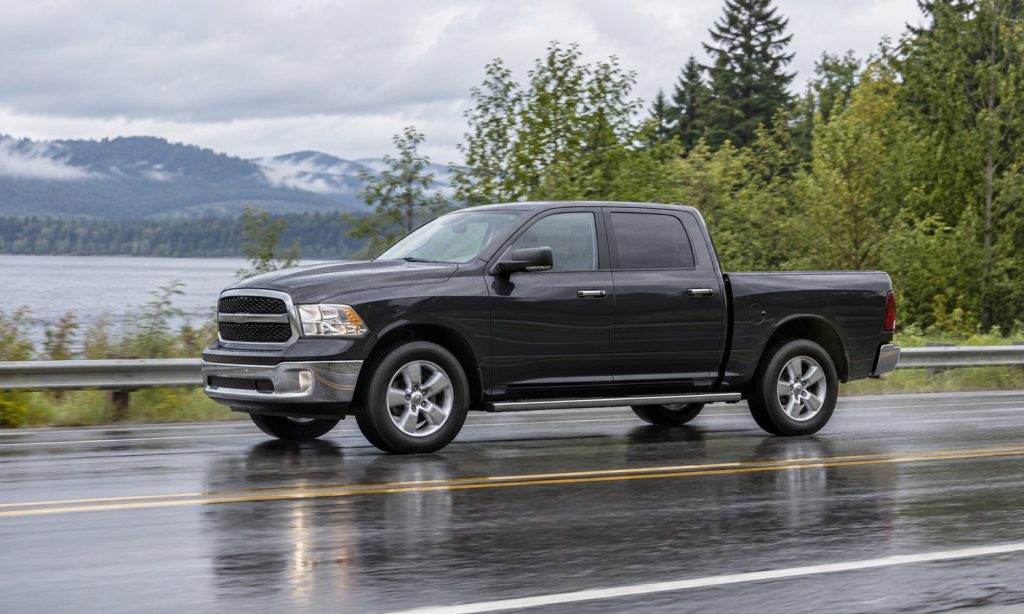
How to compare road noise and wet grip when choosing Dodge Ram 1500 tires starts with making sure you are comparing tires that actually fit your truck. Ram 1500 model year, trim, wheel package, drivetrain, and load requirements affect which sizes and ratings are appropriate. Check the door placard and owner’s manual first, then compare evidence for the exact tire size and variant. Road noise is a comfort issue that depends on the vehicle, pavement, speed, tread wear, and cabin condition; wet grip includes several different behaviors, not one score. A tire that is quiet on a smooth highway is not automatically the strongest wet stopper. If your truck is a 2016 model, use a specific fitment resource such as this guide to tires for 2016 Dodge Ram 1500, then compare noise and wet-road evidence separately.
Confirm fitment before comparing performance
Write down the Ram’s year, trim, cab, drivetrain, wheel size, and original tire designation. Check for suspension changes, non-factory wheels, spacers, or a different tire size. A tire must meet the vehicle’s size, load, and speed requirements and fit the approved wheel. Do not compare one candidate’s wet behavior with another’s noise if they differ in size, construction, inflation, or load rating. Those differences can change the result.
Check the candidate’s complete model and size, because manufacturers may sell variants within one product family. A tread name or broad category such as highway-terrain or all-terrain does not establish how noisy that exact tire will be in your truck or how it will stop on wet pavement. Other model-year guides for 2005 Dodge Ram 1500 tires, 2008 Ram 1500 tires, and 2014 Ram 1500 tires illustrate why fitment information is year-specific.
How to compare wet grip evidence
Start with independent test results for the same or closely matched size, vehicle class, and test conditions. Look for wet braking distance, wet handling, and hydroplaning resistance as separate measurements. A tire can perform differently across those tests. Give more weight to controlled comparisons that identify vehicle, size, pressure, surface, speed, temperature, and test method. A manufacturer’s description of a tread feature is not independent proof of shorter wet stops.
The UTQG traction grade is a useful sidewall clue, but it is limited. NHTSA says grades reflect a tire’s ability to stop on wet pavement in controlled straight-ahead tests on specified surfaces. The grade does not measure cornering grip or hydroplaning, and it is not a complete wet-performance ranking for every tire size or vehicle. Use it as one data point, not as the whole comparison.
Anecdotal owner reports can flag questions worth checking. In Ram-owner discussions, some drivers describe differences in road hum after moving from highway tread to a more open tread, while wet-road reports vary with the exact tire and conditions. These are individual experiences, not controlled tests. They do not establish that one category is always louder or better in rain.
For your truck, compare candidate tires on safe, familiar roads only after installation and break-in, with correct cold pressure and similar load. Do not perform emergency stops or aggressive maneuvers in traffic to test a tire. If you have access to comparable professional testing, use it instead of trying to reproduce a test on public roads.
How to assess road noise
Road noise can come from the tread, but also from wheel bearings, brakes, alignment, uneven wear, loose trim, wind, or pavement. Tire tread sound may change with road texture and speed. This makes a single online comment or quick drive on a different road a weak comparison. SAE guidance on tire noise evaluation recognizes that subjective assessments in a vehicle remain relevant alongside objective measurements.
When you review comparisons, note whether the test used the same vehicle and route, steady speed, similar weather, a calibrated sound meter, and a clear method for separating tire noise from wind and engine sound. An interior sound reading is more useful when the vehicle cabin and road surface are held constant. Numbers collected in different vehicles or environments are not directly interchangeable.
Use owner reviews as a second perspective. Look for repeated comments tied to the exact tire size and model, and note whether the tires were new or worn. “Quiet” and “loud” are subjective labels. A report that mentions highway speed, pavement type, load, and the previous tire gives more context than a one-word rating. For additional Ram tire context, see how rotation patterns affect Ram 1500 tire life; uneven wear can alter noise over time.
Build a fair comparison table
A simple worksheet prevents one appealing feature from overshadowing the rest. Compare the candidates in the same approved size and use the same categories:
| Question | What to record |
|---|---|
| Fitment | Exact size, load index, speed rating, wheel compatibility, and approved application |
| Wet braking | Test distance or result, test surface, speed, vehicle, and tire size |
| Wet handling | Controlled test notes on steering response and cornering, separate from braking |
| Hydroplaning | Evidence on water evacuation, test depth, speed, and conditions |
| Noise | Interior or exterior measurement, road surface, speed, and cabin/vehicle setup |
| Use limits | Load, pressure, season, tread condition, and any vehicle-specific restrictions |
If comparable independent tests are unavailable, say so in your own notes and rely on verified specifications rather than guessing a winner. A rating on one attribute should not be treated as a substitute for another. Wet braking, cornering, hydroplaning resistance, and cabin noise do not collapse into a single all-purpose score.
Keep pressure, load, and condition consistent
Use the cold pressure on the Ram’s placard or the applicable manual instructions. Do not inflate to the tire sidewall maximum simply to change handling, and do not lower pressure to quiet the tread. Pressure that is too high or low can affect performance and wear. Keep the truck’s load consistent when evaluating ride and noise; cargo, trailer tongue weight, and passengers can change how the tire behaves.
A new humming sound after a tire change may be related to tread, but noise that is sudden, pulsing, changes while cornering, or arrives with vibration deserves inspection. A worn bearing, brake issue, imbalance, or irregular wear can sound like tire noise. Do not diagnose by sound alone. If you tow or carry heavy cargo, verify tire capacity and pressure using the vehicle’s instructions; related guidance covers Dodge Ram 1500 tire pressure under load and Ram 1500 tire load range.
Frequently Asked Questions
Does a higher UTQG traction grade mean a quieter tire?
No. UTQG traction grades address controlled straight-ahead wet braking, not cabin noise. Compare noise and wet-grip evidence separately.
Can I judge wet grip by the tread pattern?
Not reliably. Tread appearance alone does not establish braking, cornering, or hydroplaning performance. Use controlled test evidence for the exact size where available.
Are online owner reviews useful for road noise?
They can reveal recurring impressions, especially when the reviewer identifies the tire size, truck, road, and speed. Treat them as anecdotal rather than a controlled comparison.
Should I use the sidewall maximum pressure to compare tires?
No. Follow the Ram’s placard or manual for cold pressure, and apply load-specific guidance only as directed by the vehicle and tire manufacturers.
What if the new tires are much louder than expected?
Have the installation, balance, wear, and nearby wheel or brake components checked. A new noise is not always a normal tread characteristic.
Final Words
Compare road noise and wet grip on a Dodge Ram 1500 using like-for-like fitments and evidence that separates wet braking, handling, hydroplaning, and sound. Treat UTQG traction grades as limited straight-ahead wet-braking information, and treat owner feedback as anecdotal. Verify size, load, and pressure first, then use comparable independent testing and repeatable observations. For a 2016 truck, the 2016 Dodge Ram 1500 tire guide is a fitment starting point, not a noise or wet-grip test.
Pingback: Best Tires for Lexus NX 300 F Sport: 7 Picks