How long does it take to detail a car? The short answer depends on what you mean by “detail.” A quick interior refresh may take a couple of hours, while a thorough inside-and-out service can occupy most of a day. Paint correction, heavy soil, pet hair, or a large vehicle can extend the work considerably. For a shop appointment, the time your vehicle stays there can also include scheduling, inspection, drying, and quality checks. This guide explains the main time ranges, what adds hours, and what to ask before booking. Treat the estimates as planning guidance, not promises: detailers use different service names, and the vehicle’s condition matters as much as its size. Exact timing comes from the written service scope.
Typical car detailing time ranges
A maintenance wash and interior tidy may take about one to three hours. A more complete interior or exterior detail commonly takes three to six hours. A thorough full detail can take roughly four to eight hours, and unusually dirty vehicles may need longer or a second appointment. Paint correction is a separate, labor-intensive service. Depending on the paint condition and correction goal, it may add several hours or extend the job into multiple days. Ask whether the quote includes correction, protective coatings, engine-bay cleaning, or stain extraction; those are not automatically part of every “full detail.”
What changes the time?
Vehicle size and layout
A compact car has less glass, carpet, trim, and painted surface than a three-row SUV or pickup. A minivan’s many interior surfaces can take longer than its exterior size suggests. Tight wheels, roof racks, running boards, and complex trim add detail work. A large vehicle may therefore take longer even when it is in good condition.
Condition and contamination
Routine dust and light road film are quicker to remove than embedded dirt, dried mud, salt, tree sap, or heavy brake dust. Pet hair and spilled drinks can make interior cleaning much slower. A stain may require repeated extraction and drying, and some stains cannot be removed completely without risking fabric damage. The detailer should inspect the vehicle before giving a firm estimate.
Service scope
A wash, vacuum, and wipe-down is not the same job as deep-cleaning carpets, conditioning leather, cleaning wheel wells, polishing paint, and applying a coating. Paint correction requires careful inspection, test sections, and controlled polishing. Protective products may need application and curing time according to their labels. Ask for an itemized scope so the quoted duration matches the work you expect.
How the work is usually divided
Exterior cleaning
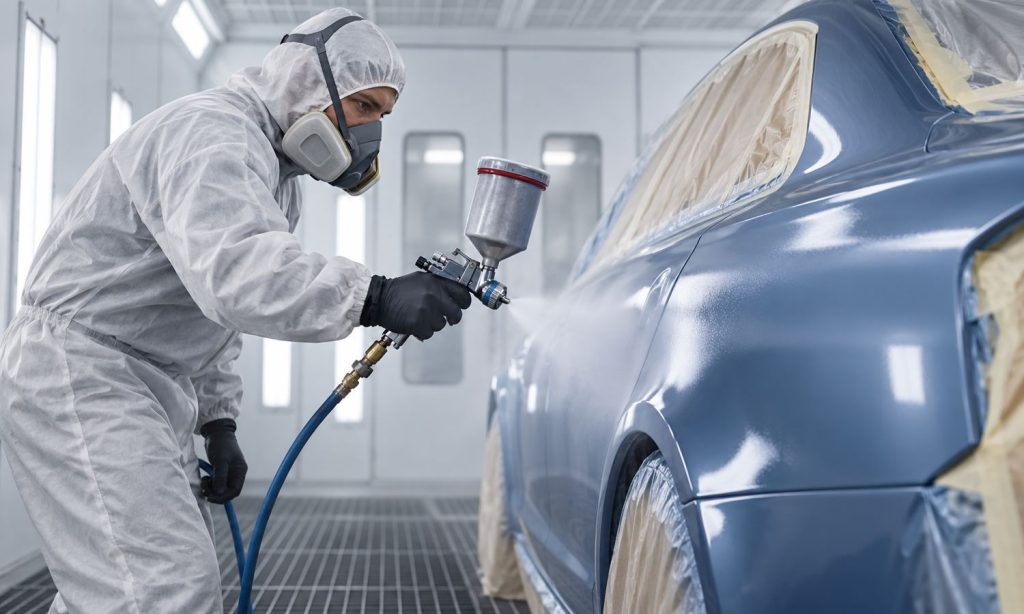
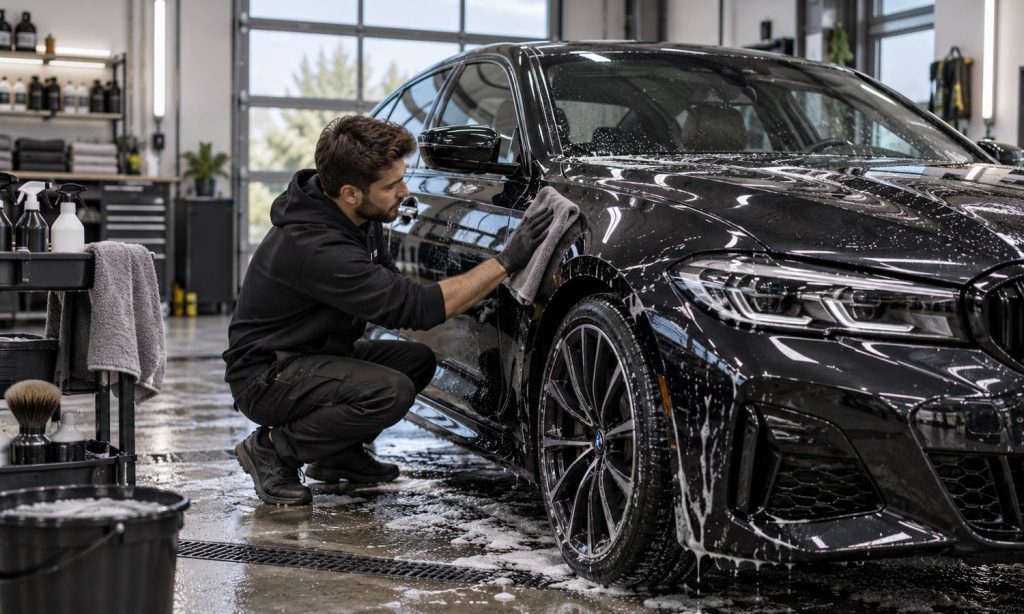
The exterior process may include a pre-rinse, hand wash, wheel cleaning, drying, and spot treatment for bonded contamination. If polishing is included, the detailer must first inspect the paint and choose an appropriate process. Extra polishing passes take time and remove some clear coat, so correction should be limited to what is needed. Wax or sealant application adds time, as does careful work around badges and trim.
Interior cleaning
Interior work often starts with removing loose items and trash, then vacuuming seats, carpets, mats, and crevices. The detailer may wipe hard surfaces, clean glass, and spot-treat upholstery. Deep extraction adds setup, cleaning, and drying time. Leather, delicate screens, aftermarket electronics, and child-seat hardware need surface-appropriate care. If you need a child seat cleaned, check its manufacturer instructions rather than applying an unapproved chemical.
DIY detail versus a shop appointment
A careful DIY detail can take a half day or longer, especially if you are learning the process or working in a driveway with limited supplies. You can split interior and exterior work across separate sessions. A professional may work faster because of experience and equipment, but a busy shop may keep the car for a full day or longer. Confirm drop-off and pickup times, whether the vehicle must remain overnight, and whether drying or product-curing time affects pickup.
How to get a useful time estimate
- Describe the vehicle size, interior material, and any heavy soil, pet hair, salt, or stains.
- Ask exactly which interior and exterior tasks are included.
- Ask whether polishing, paint correction, or a coating is separate.
- Request a range after an inspection, and ask what could extend it.
- Remove personal items before drop-off, but do not hide damage or spills.
Regular light cleaning can make future details easier, but it does not eliminate the need for condition-based work. Avoid rushing polishing or using aggressive cleaners simply to finish faster. The safest process is the one matched to the vehicle’s surfaces and the detailer’s stated scope.
How to plan a detailing appointment
A useful car detailing time estimate starts with a clear service list. Ask whether the package covers a hand wash, wheel faces, door jambs, interior vacuuming, glass, upholstery spot treatment, and protection. Shops may use “mini detail,” “full detail,” and “deep clean” differently, so compare the actual tasks rather than the package name. A car detailing quote should also say how the shop handles stains, pet hair, and bonded paint contamination.
Separate active work from shop turnaround
The technician’s active labor is only one part of the schedule. Drop-off, inspection, product drying, and a final walkaround can make the car detailing appointment last longer than the hands-on cleaning. If the shop has several vehicles booked, your car may wait between steps. Ask for the expected pickup window and whether a call or text will confirm that the vehicle is ready.
When paint correction is included
Polishing is often the largest source of extra car detailing time. A careful technician washes and decontaminates the surface, checks paint condition, tests a small area, and then chooses a pad and polish. One-step enhancement is different from multi-step defect removal. Deep scratches may remain because removing too much clear coat can shorten paint life. Ask what result is realistic and whether a coating is priced separately.
Prepare the car and protect delicate items
Remove loose belongings, child seats, and removable cargo before drop-off if practical. Tell the detailer about aftermarket electronics, fragile trim, prior paint work, or areas that should not be polished. Do not leave valuables in the cabin. These steps help prevent delays and let the detailer focus on the agreed work. A clean handoff can make a car detailing booking more predictable, but it does not replace an inspection.
For a DIY job, split the work into manageable sessions and allow ventilation and drying time. Work in shade when possible, use products as labeled, and test cleaners on an inconspicuous area. Stop if a surface reacts badly. A realistic car detailing plan accounts for setup, cleanup, and your experience level, not only the minutes spent washing.
How to compare detail packages
Ask for the package checklist in writing. One shop may include a quick vacuum and wipe-down while another includes deeper carpet and upholstery work under a similar name. For car detailing, clarify whether wheel barrels, door jambs, interior glass, cargo areas, and floor mats are included. Ask how stains, pet hair, and embedded debris affect the quote. This makes a car detailing estimate easier to compare with another shop’s offer.
When time estimates are most uncertain
An online booking form cannot see the condition of your seats or paint. If you need a firm car detailing time, send clear photos or request an in-person inspection. Be specific about spills, smoke, pet hair, salt, sap, and prior coating products. A shop may adjust the plan after seeing the vehicle. That is more reliable than choosing a package based only on a short description.
For a first visit, reserve extra time around pickup rather than scheduling another appointment immediately afterward. Ask if the shop can call when finished. If you use a rideshare or need a loaner, check availability before drop-off. Your car detailing time includes the practical handoff, and planning a little flexibility prevents a late pickup from disrupting your day.
After the service, follow care instructions for any coating, sealant, or interior protectant. Keep the invoice so you know which products were applied. Routine washing with compatible products can help preserve the result and make future detailing quicker. A realistic schedule is based on the condition you want maintained, not a fixed interval that suits every driver.
Signs a quote needs clarification
Before approving car detailing, confirm whether the quote can change after inspection and how the shop will contact you. Ask whether a stain-removal attempt is included even if the stain remains, and whether a fee applies to unusually heavy pet hair or sand. Clarify the difference between a maintenance detail and a restoration service. The same car detailing label can cover very different labor, so a written task list protects both sides from a mismatch.
At pickup, walk around the vehicle in good light and check the areas listed on the work order. Point out a concern calmly while the vehicle and technician are available. Ask which products were applied and what care they need. Keep the receipt with the date, mileage, and notes about any remaining stain or defect. A reliable record helps you plan the next car detailing visit around your actual needs rather than a generic interval.
If a shop promises same-day work, ask what happens if the inspection reveals extra contamination or drying takes longer. It is better to adjust the schedule than rush a process that involves wet upholstery or paint protection. The best appointment length is the one that fits the agreed scope and leaves time for a final check.
How to keep a detail looking fresh
After car detailing, use gentle maintenance habits rather than waiting until the vehicle is heavily soiled. Remove trash, vacuum loose debris, and wipe spills before they set. Wash the exterior with automotive soap and clean wash media. Avoid automatic brush washes if you want to preserve a delicate finish or coating. A consistent routine can reduce the amount of labor needed at the next appointment.
Choose a schedule based on use
A commuter parked outdoors may collect more road film, pollen, and bird droppings than a garage-kept weekend car. Families, pet owners, and people who travel on salted roads may need more frequent interior attention. There is no universal car detailing interval. Watch how quickly surfaces become dirty and book work before contamination becomes difficult to remove. If you have a coating, follow its maintenance guidance.
Keep a short record of services, products, and any areas the detailer could not fully restore. This prevents repeating an unsuitable stain treatment or polishing the same panel unnecessarily. When booking the next visit, share what has changed since the last service. A realistic car detailing plan is based on condition, use, and goals, not simply the calendar.
Frequently Asked Questions
How long does a full car detail take?
Plan on roughly four to eight hours for a thorough full detail. Heavy contamination, a large vehicle, extraction, or paint correction can increase that time.
Can a detailer finish my car in one day?
Often, yes, for a standard service. Ask the shop because coatings, correction, drying, or its appointment schedule may require overnight time.
Why does paint correction take so long?
The technician inspects the paint, tests a small area, and polishes carefully to reduce visible defects. The time depends on the paint condition and the agreed correction level.
Does a bigger car take longer to detail?
Usually. More surface area and interior space mean more washing, vacuuming, and wiping. Layout and condition can matter as much as vehicle length.
Should I leave my car overnight for detailing?
Ask the detailer. Some jobs fit within business hours; others need additional drying, curing, or work time. Follow the shop’s pickup instructions.
Final Words
How long does it take to detail a car? A basic service may take a few hours, while a thorough detail often needs most of a day. Large vehicles, heavy soil, stain removal, and paint correction extend the schedule. Give the shop an accurate description, confirm the included services, and get a time range after inspection. That makes it easier to plan without expecting every vehicle or service package to follow the same clock.