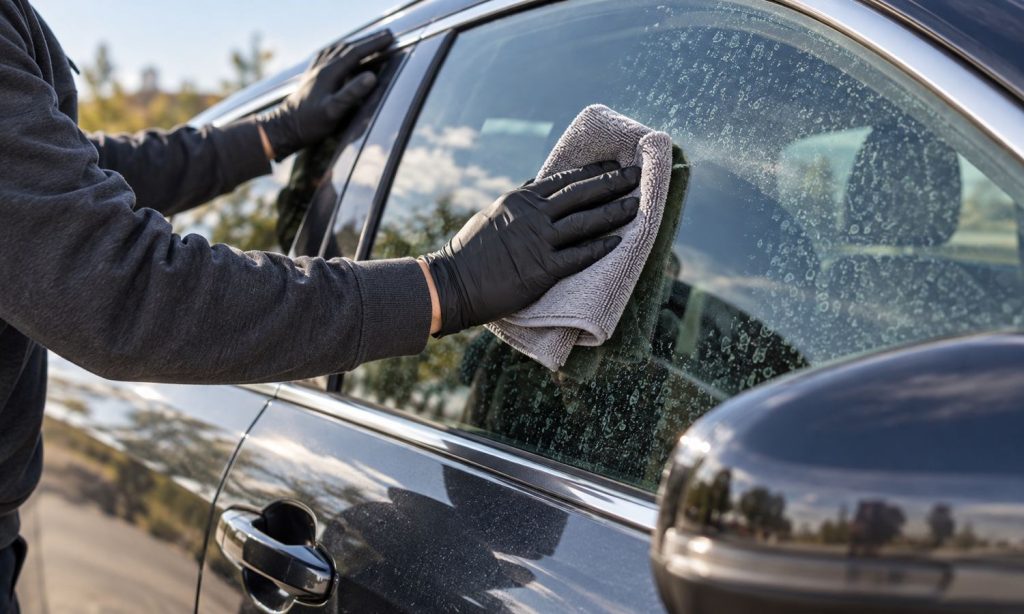
Water spots on car windows are usually mineral residue left behind after droplets evaporate. They can make glass look cloudy and become distracting when sunlight or headlights hit at an angle. Start with the gentlest method: wash the glass, use a clean microfiber towel, and try an automotive glass cleaner. If deposits remain, a product specifically labeled for glass mineral stains may help. The right method depends on whether the marks are on the outside or inside, and whether the window has tint, a coating, or another treatment. This guide shows a cautious sequence, explains when to stop, and covers prevention. Work in shade on cool glass, follow product labels, and keep cleaners away from paint, rubber, and interior surfaces unless the label permits contact.
First identify the spots
Run a clean, dry fingertip lightly across the glass. Raised, chalky deposits are often mineral residue. A uniform film on the inside may instead come from interior outgassing, smoke, or cleaning residue. Tree sap, road film, and hard-water deposits can look similar. If the mark does not change after cleaning, do not assume it is a removable water spot; it may be etched into the glass or associated with a coating. A glass professional can assess persistent defects.
Step-by-step removal
1. Work in a safe, cool location
Park in shade and let hot glass cool. Bright sun and heat can make cleaners evaporate quickly, leaving streaks. Keep the vehicle secure and avoid cleaning where traffic or weather creates a hazard. Use separate towels for glass and paint so grit from the body does not scratch the window.
2. Wash away loose dirt
Rinse the exterior glass and surrounding area. Wash with a mild automotive wash solution, then rinse thoroughly. This removes grit before you rub the surface. On interior glass, wipe away dust first with a clean, dry microfiber cloth.
3. Use glass cleaner and light pressure
Apply an automotive glass cleaner to the towel or glass as directed. Wipe in overlapping passes, then buff with a second clean towel. Check from different angles. Repeat once if the deposits are improving. Do not use paper towels, scouring pads, razor blades, or abrasive household powders; they can scratch glass, damage films, or leave lint.
4. Escalate only with a glass-safe product
If mineral spots remain, choose a cleaner labeled for automotive glass and hard-water deposits. Read the restrictions first, especially if the glass has a hydrophobic coating, aftermarket tint, or sensor-related treatment. Test a small inconspicuous area. Apply only the amount and dwell time stated on the label, keep it off paint and trim, and rinse or wipe it away as directed. Stop if the surface looks hazy or the product affects a coating.
Should you use vinegar or baking soda?
A diluted vinegar solution may loosen some mineral residue, but it can harm certain finishes and leave odor or streaks. If you use it, first confirm it is safe for every nearby surface and test a small area. Do not use a gritty baking-soda paste or abrasive scrubber on automotive glass. Household remedies are not automatically safer than products designed for vehicle surfaces.
When spots do not come off
Minerals can etch glass after prolonged exposure, especially when deposits repeatedly dry in place. If careful cleaning does not improve the marks, avoid stronger chemicals and aggressive polishing. A glass shop can determine whether the damage is on the surface, within a coating, or etched into the glass. If spotting affects the driver’s view, address it promptly and do not drive with visibility impaired.
Preventing new water spots
- Dry glass after washing with a clean, soft microfiber towel.
- Avoid washing in direct sun or on hot windows.
- Do not let sprinkler or hard water repeatedly dry on the vehicle.
- Keep towels clean and separate from dirty paintwork.
- Follow the manufacturer’s care instructions for glass coatings and tint.
Prevention is usually easier than removing old deposits. Regular gentle cleaning helps, but repeated scrubbing is not a substitute for correcting the source of hard-water exposure.
Identify the kind of water spot first
Water spots on glass are often mineral residue, but a mark can also be oily film, road grime, washer-fluid residue, or etching in the glass. A water spot may feel slightly rough, while etched damage can remain after cleaning. Start by washing the window with automotive glass cleaner and a clean microfiber towel. Work on cool glass in the shade, and use a separate towel for the final wipe.
Use a gentle cleaning sequence
- Rinse loose grit away so it cannot scratch the glass.
- Apply a glass-safe cleaner according to its label.
- Wipe with light pressure using a clean microfiber towel.
- Turn to a dry towel and buff the area without grinding residue into the surface.
- Inspect from several angles before repeating.
If the first pass does not remove the water spots, repeat the wash rather than increasing pressure. For persistent mineral deposits, use a product specifically labeled for automotive glass and follow its directions. Keep acidic cleaners, household abrasives, and polishing compounds away from paint, rubber, tint film, and trim unless the product expressly approves those surfaces. Protect nearby paint and rinse any accidental overspray promptly.
Avoid common mistakes on tinted windows
Many vehicles have aftermarket tint film on the inside of the glass. A cleaner that is safe for exterior glass may be unsuitable for film. Check the tint installer’s care advice and use an ammonia-free product if required by the film manufacturer. Do not scrape tinted glass with a razor blade. If you are unsure which side has a deposit, clean a small area gently on each side with separate towels.
If spots remain after safe cleaning, a glass professional can assess whether they are mineral buildup or permanent etching. Avoid aggressive home remedies that promise to remove every mark. Prevent future water spots by drying glass after washing, avoiding sprinkler overspray, and using clean drying towels. These steps reduce fresh deposits but cannot reverse etched glass.
Protect the glass while you clean
Glass can scratch when grit is trapped under a towel, even though it feels harder than paint. Before removing water spots, rinse thoroughly and use a dedicated clean towel. Do not reuse a towel that has touched wheels, lower body panels, or gritty trim. Fold the microfiber into clean sections and replace it when it becomes soiled. This simple process reduces the chance of adding scratches while treating the spots.
Products and tools to avoid
Avoid steel wool, scouring pads, powdered cleanser, and unapproved razor blades. Some detailing products use polishing abrasives; those should be labeled for automotive glass and used with the right technique. Keep them away from plastic lenses, window tint, and painted surfaces. If a product label is unclear, test only on a small exterior glass area and contact the manufacturer for guidance.
Water spots can reappear when sprinklers or hard water repeatedly dry on the glass. Park away from irrigation when possible and dry windows after washing. A glass treatment may help water sheet or bead, but it does not prevent every deposit and must be compatible with wipers and sensors. If water spots remain visible after careful cleaning, have a glass professional inspect the surface instead of applying stronger chemicals.
Before a long drive, check that the windshield is clear from the driver’s position at sunrise and at night. Streaks and residue can scatter headlight glare. Clean both sides of the glass with separate towels and a suitable product. If the marks are pitting or etched damage, replacement or professional restoration may be the only safe solution.
Prevent new mineral deposits
When you wash at home, use clean water and dry the windows before droplets evaporate. Avoid washing in direct sun or near sprinklers that leave mineral-heavy water behind. Rinse wash tools frequently because grit can scratch glass. If you use a water-repellent treatment, follow its label and keep it off wiper blades and any camera or sensor area unless approved.
If water spots return quickly, consider whether the water source or parking location is the cause. A final rinse with filtered or deionized water may reduce mineral residue, but it is not required for ordinary care. Do not leave chemical residue on trim or paint. For a leased vehicle or a car with specialized coatings, check the product maker’s maintenance instructions first.
Persistent haze that affects visibility deserves prompt attention. A professional can determine whether it is mineral buildup, wiper transfer, pitting, or etched glass. Avoid repeated aggressive polishing because it may distort the surface or damage coatings. Safe cleaning is gradual: rinse, use a glass-approved cleaner, inspect, and stop when the residue is gone.
How to tell when glass needs more than cleaning
Look at the glass from inside and outside in diffuse light. If water spots disappear when wet but return as the surface dries, mineral residue may remain. If a mark stays visible and seems within the glass, it may be etching or pitting. Check whether the wiper blades leave streaks and whether the haze is on the interior. A professional glass shop can assess damage that ordinary cleaner does not remove.
Keep the windshield clear for safe driving
Do not apply abrasive products where a camera, rain sensor, or head-up display is mounted unless the vehicle maker allows it. Some windshields have acoustic or infrared coatings. Use wiper blades that fit the vehicle and replace them if they chatter or leave persistent streaks. Before a trip, make sure nighttime glare is not worsened by residue.
The safest way to prevent new water spots is to dry the glass and avoid sprinkler exposure. If deposits keep returning, review the water source and parking location instead of escalating to a stronger cleaner. A few deliberate cleaning steps protect glass better than repeated scrubbing.
Know when to stop cleaning
If water spots remain after a gentle wash and glass-safe cleaner, stop before trying a harsher chemical. The marks may be etched into the glass rather than sitting on top. A glass professional can distinguish mineral deposits from pitting, wiper damage, or a coating issue. Avoid abrasive pads and unapproved razor blades, especially near tint, cameras, or sensors.
To prevent recurrence, dry windows before droplets evaporate and park away from sprinklers when possible. Persistent windshield haze can affect visibility at night, so get it assessed rather than polishing repeatedly.
For stubborn water spots, avoid treating the entire window with an aggressive compound. Start with a small exterior area and stop if the surface changes or the product label excludes coated glass. Professional inspection is the safer next step.
Frequently Asked Questions
What causes water spots on car windows?
They commonly form when water evaporates and leaves dissolved minerals behind. Sprinklers, hard water, and rain that dries on a hot surface can contribute.
Can vinegar remove water spots from car glass?
It may loosen some mineral residue, but it can affect nearby finishes or coatings. Test carefully and follow surface-specific instructions.
Can I use a razor blade on a car window?
Avoid it unless the vehicle or glass manufacturer specifically permits that method. Blades can scratch glass or damage tint and coatings.
Why are the spots still visible after cleaning?
They may be etched into the glass, or the mark may be another type of residue. A glass professional can identify persistent defects.
How can I stop water spots from returning?
Dry the glass after washing, avoid sprinkler overspray, and do not let water dry on hot windows. Keep your towels clean.
Final Words
Remove water spots from car windows with a gradual approach: wash first, use automotive glass cleaner, and only then consider a glass-safe mineral remover. Avoid abrasive materials and unverified chemical mixes. If the marks persist or interfere with visibility, stop and have the glass assessed.