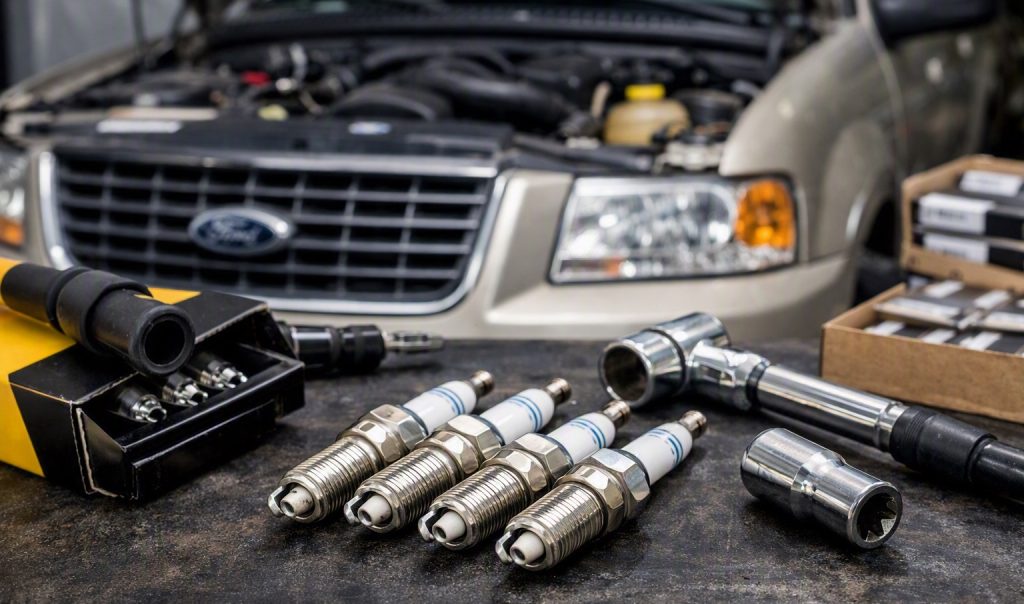
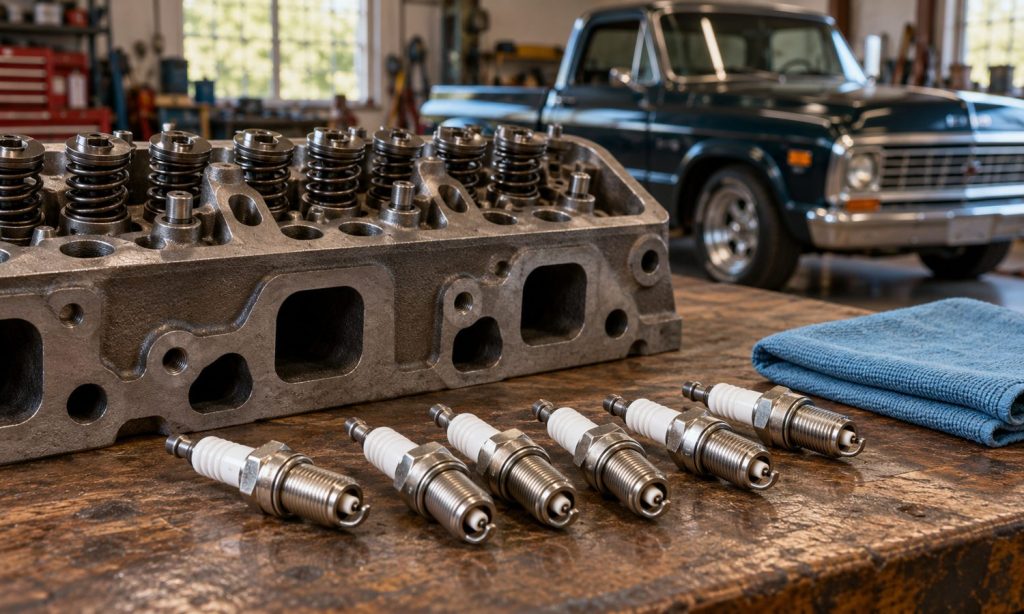
Choosing spark plugs by engine type and driving conditions for a Ford 302 Windsor starts with identifying the engine that is actually installed. A stock engine, a rebuilt small-block with different cylinder heads, and a modified engine can require different plugs despite sharing the 302 name. Confirm the head specification, thread and seat design, reach, heat range, gap, and ignition requirements before considering electrode material or service life. Ordinary commuting or occasional towing does not automatically justify changing the specified heat range. For a preliminary application overview, the existing Ford 302 Windsor spark-plug fitment guide highlights the details to verify. This article explains how those details fit together and when the engine builder or a qualified technician should determine the specification.
Identify stock equipment and later modifications
Record the vehicle year and VIN, then check whether the engine and cylinder heads remain original. Decades of rebuilds and component swaps can make a vehicle-based catalog incomplete. Keep casting or manufacturer identification, build receipts, and the engine builder’s specification together. Do not assume the plug currently installed is correct simply because the engine runs.
For an unmodified engine, use the applicable Ford service specification and a verified current manufacturer cross-reference. For replacement heads or a crate engine, use the instructions for the exact installed assembly. A Ford performance cylinder-head instruction sheet is evidence for that head, not a universal specification for every production Windsor.
Check physical fit before material or brand
Thread diameter and pitch, threaded reach, seat style, and firing-end projection all matter. A plug that screws into the hole is not necessarily suitable. A mismatch can prevent correct seating or put the firing end in an unintended position. Compare the complete specification, including any restrictions from the cylinder-head manufacturer.
Hex size and external clearance matter too. Headers and altered head designs can affect access and plug-wire boot clearance. Have the installer verify that the correct plug and boot can be fitted without contact with hot or moving components. Do not choose a different reach or seat just to make a socket fit more easily.
Understand what heat range controls
Heat range describes how the spark plug transfers heat away from its firing end. It does not describe spark strength or directly set engine coolant temperature. A colder plug transfers firing-end heat away more readily; a hotter plug retains more heat at that end. The correct choice keeps operation within the range intended for the engine.
Going too cold can contribute to fouling under unsuitable conditions, while an excessively hot firing end can create serious combustion problems. A colder plug is therefore not an automatic performance upgrade. Also, numbering systems differ between manufacturers. Do not translate a heat-range number directly across brands without a documented application cross-reference.
Use driving conditions as evidence, not a shortcut
Frequent short trips and extended low-load operation can make fouling concerns more noticeable, but repeated deposits also warrant checks of mixture control, ignition, oil consumption, and engine condition. Do not install a hotter plug simply to hide a recurring symptom. Identify the cause and confirm that the present plug is correctly specified first.
Sustained heavy load or a substantially modified engine can change firing-end heat demands. Compression changes, forced induction, or other major modifications need the engine builder’s guidance and suitable testing. “I drive hard” is not enough information to choose a colder plug. The specification should reflect the engine combination, calibration, fuel, and operating conditions together.
Match gap to the ignition application
Do not assume every new plug arrives at the correct gap for your engine. Check the specified gap and the plug manufacturer’s instructions for measuring or adjusting it. Fine-wire electrodes can be damaged by inappropriate tools or force, so follow the permitted method and adjustment limits for that design.
A larger gap is not automatically better. The ignition system must fire reliably under the engine’s operating conditions, and modifications can change that requirement. If the vehicle has a changed distributor, coil, ignition control, or engine calibration, have the builder reconcile those parts with the plug specification. Avoid copying a gap from a different 302 combination.
Treat electrode material as one part of the specification
Nickel-alloy, platinum, and iridium descriptions concern electrode construction, but material alone does not establish compatibility. Differences can affect wear characteristics and intended service life, yet a long-life design with the wrong seat, reach, or heat range remains unsuitable. Confirm a complete approved application before considering how often the plugs may need service.
Be wary of guaranteed horsepower, fuel-economy, or misfire-cure claims based only on electrode material. Restoring a worn or incorrect ignition component can improve a fault, but that does not prove an advantage on a healthy engine. Inspection and diagnosis should support the reason for changing parts.
Check related ignition parts and installation requirements
If the engine uses plug wires, verify their condition, terminal connections, and routing. The Ford 302 ignition-wire fitment overview explains the separate application questions. New plugs do not repair a damaged wire or incorrect routing, and an engine modification may change clearance around the boots.
Use the tightening procedure specified for the head and plug combination. Seat design, head material, and thread condition matter. Do not apply a generic torque number or anti-seize rule to every installation; resolve any conflicting instructions with the relevant manufacturer. If a plug binds, threads are damaged, or the installed head cannot be identified, stop and obtain qualified help.
For a contrasting Ford application, the Ford F150 4.6 spark-plug guide shows why the engine code matters when checking plug specifications; its fitment does not apply to a 302 Windsor.
Frequently Asked Questions
Can I order plugs using only “5.0 Ford”?
No. That description spans different engine families and applications. Identify the Windsor engine, its vehicle context, and the installed heads. Verify the complete plug specification rather than using displacement alone.
Should all eight plugs have the same specification?
Use the complete matched specification required for the engine. Do not mix heat ranges, reaches, or electrode designs as an experiment. Any unusual engine-builder instruction should be documented for that particular combination.
Can I reuse the old plug number after a head swap?
Only after the new head’s requirements confirm it. A head swap can change the seat, reach, or other fitment details. The previous plug number is a record of the old setup, not proof of current suitability.
Does dark coloring always mean the plug is too cold?
No. Deposits can have several causes, including mixture, oil, ignition, and operating conditions. A technician should evaluate the pattern and engine behavior. Appearance alone is not enough to choose a different heat range.
Should I change heat range for summer and winter?
Do not make seasonal changes without an application-specific reason. Begin with the specified plug and correct engine operation. A modified engine with special requirements should follow its builder’s documented guidance.
Final Words
Choose a 302 Windsor plug by the actual heads, ignition, and engine specification, then consider how the vehicle is used. The 302 Windsor plug application overview can help organize the fitment questions, but verified technical requirements should determine the final match. Treat unexplained fouling or misfire as a diagnostic issue before changing heat range.
Reference
Ford M-6049-Z2 cylinder-head instructions; Ford M-6007-X302 engine guide. These illustrate assembly-specific requirements and do not apply to every Windsor engine.