
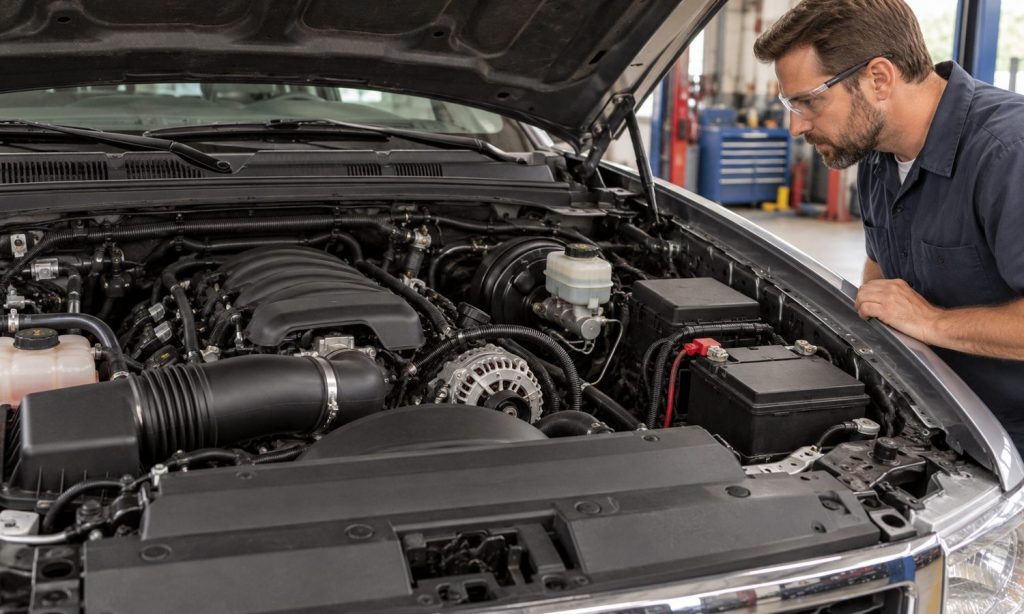
To diagnose a slow-start or weak-battery problem on a Ford 5.4L Triton, first identify the vehicle and describe the starting behavior. “5.4 Triton” names an engine family, not one battery, starter circuit, or owner’s manual. An F150, Expedition, or van can have different equipment and service requirements even when the engine displacement is the same. Next, separate sluggish engine rotation from normal-speed cranking that takes too long to produce a running engine. A weak battery can slow the starter, but cable resistance and other faults can do the same. Spark plugs belong to the ignition system and should not be treated as the automatic answer to slow rotation. A methodical diagnosis begins with battery condition, safe connection checks, and measurements matched to the vehicle.
Identify the vehicle before using specifications
Record the VIN, model, year, engine version, and relevant modifications. If the engine was replaced, include the available engine and wiring information. Do not use a battery size, starter part number, or fuse location selected only from the words 5.4 Triton. The correct service information must match the vehicle’s actual configuration.
Gather the recent history as well: battery replacement, charging problems, engine work, accessory wiring, and changes in daily use. A symptom that began after a repair gives the technician a useful place to verify connections and workmanship. It does not prove the new part or the repair caused the fault.
Choose the correct symptom branch
If you hear the engine rotate slowly and unevenly compared with its normal sound, describe it as slow cranking. If you hear a click but no engine rotation, describe a click/no-crank event. If the engine rotates normally for an unusually long time before starting, describe extended cranking. These descriptions are more useful than simply calling the battery weak.
Note whether the event occurs after overnight parking, only when cold, after a hot shutdown, or after a long period unused. Include whether lights dim, instrument displays reset, or security messages appear. Avoid repeatedly reproducing the fault until the battery is exhausted; the resulting low charge can make the original symptom harder to distinguish.
Inspect safely and stop for obvious hazards
With the vehicle secured and the engine off, look at accessible battery cables, insulation, and the battery case. Visible corrosion, a loose connection, or damaged wiring deserves attention. A leaking, swollen, unusually hot, or possibly frozen battery should be handled by a qualified professional rather than subjected to a home charging or jump-start attempt.
Battery acid and explosive gas require appropriate precautions. Keep ignition sources away and use suitable eye protection. Do not lay tools on the battery, bridge starter terminals, or work near rotating belts. If checking a starter requires going underneath the vehicle, use a professional with the correct support equipment and service procedure.
Establish battery condition before condemning the starter
Ask for a test that matches the battery’s technology and stated rating. A simple voltage reading helps describe its present electrical state, but cannot by itself establish how well it delivers starting current. Recent charging and temperature affect interpretation. A battery marked for charging and retesting needs that follow-up before the result becomes a sound replacement decision.
If a correctly performed test finds inadequate capacity, verify the replacement requirements for the vehicle. Include physical fit, terminal arrangement, hold-down, required rating, and any setup procedure. A higher advertised rating does not excuse incorrect fit or unsafe cable routing. Retain the test printout and installed part information in the service record.
Measure the supply and ground paths
A healthy battery still needs an effective path to the starter and back through the ground circuit. Resistance at cables or connections can reduce available current. A qualified technician can measure voltage drop while the starting circuit is loaded, using the correct limits and safe access points. A cable that looks clean from above may still have a concealed connection problem.
When the battery and main cables pass, continue with the vehicle-specific starter and control-circuit tests. Current draw and actual cranking behavior help separate a starter concern from other electrical or mechanical causes. Do not assume a single click proves a failed starter, or replace several components at once without recording the measurements that justify each change.
Investigate recurring discharge separately
If charging restores normal starts but the problem returns, establish why charge is being lost. Review parking duration, short trips, lights, and accessories. Have charging-system operation checked under the specified conditions. Never disconnect the battery while the engine runs as an alternator test; use the proper diagnostic procedure.
A key-off electrical-draw test may be needed when a verified battery repeatedly discharges during parking. The technician must account for the vehicle’s normal shutdown behavior and any added equipment. A dash camera, audio installation, trailer connection, or other accessory is a possible investigation point, not proof of the cause. Keep a record of what remained connected during each parked period.
Consider ignition only on the appropriate path
Normal-speed cranking with delayed starting calls for a broader engine diagnosis. Fuel delivery, ignition operation, control inputs, and mechanical condition may need evaluation. Stored codes and symptom timing guide the tests but do not automatically identify a failed component. Describe rough running after the engine starts separately from the cranking speed itself.
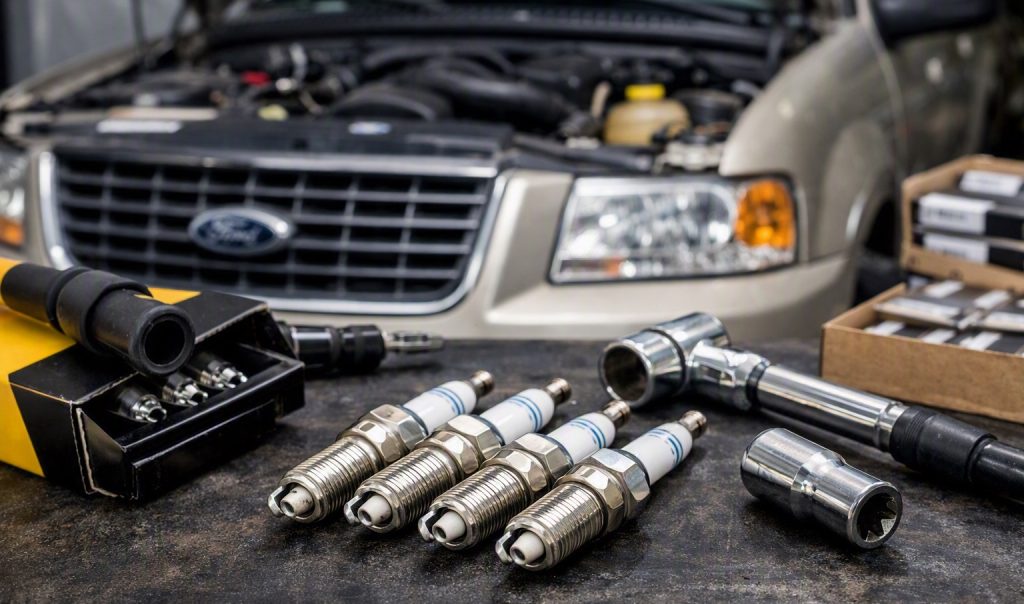
When testing or scheduled maintenance establishes a need for plug service, confirm the exact engine and cylinder-head application. The Ford 5.4 Triton spark-plug fitment guide explains why the engine name alone is insufficient. Do not remove plugs as a first response to a weak-battery complaint or assume every 5.4L uses the same plug design and installation procedure.
Related guidance: a related slow-start diagnostic guide for a different Ford engine; battery fitment considerations for another Ford truck.
Frequently Asked Questions
Can a battery be new and still need testing?
Yes. A new battery can be undercharged, incorrectly specified, or affected by another fault. Its age does not rule out a problem. Test it and verify the installation before moving farther through the diagnosis.
Does a hot-only starting problem prove heat damaged the starter?
No. Temperature dependence is a diagnostic clue, not a component verdict. Have the shop reproduce the hot condition and test the battery, circuit, and starter as directed while the symptom is present.
Should I use a larger battery to hide sluggish cranking?
No. Establish the cause and use the specified application. Extra battery capability cannot repair a high-resistance cable, incorrect connection, or mechanical problem, and an unsuitable case can create installation hazards.
Can a security problem cause no cranking?
Starting authorization behavior varies by vehicle. Record any security indicator or message and follow the correct manual. Do not bypass the system or assume that every no-crank event is battery-related.
What information should I give the repair shop?
Provide the vehicle identity, exact symptom, temperature, parking duration, recent work, and battery test results. Explain whether assistance changed the behavior. These details help the shop reproduce the complaint and avoid unrelated parts replacement.
Final Words
A 5.4L Triton starting complaint needs vehicle-specific testing. Separate slow rotation from delayed firing, verify battery condition, and measure the starting circuit before replacing parts. Investigate recurring discharge and temperature-dependent symptoms on their own evidence, and reserve ignition service for a diagnosis or maintenance requirement that supports it.
Reference
CCOHS: vehicle lead-acid battery safety; 2008 Ford F150 Owner’s Guide — an example of model-specific starting and battery information; use the correct manual for your vehicle.
Pingback: Dodge Ram 2500 Battery Drain: Accessory Checks
Pingback: How to Choose Spark Plugs for a Ford 5.4 Triton