To clean a car after body repair, first get the repairer’s instructions for the actual work, then use only the wash method they have cleared. A repaired panel, replaced glass and untouched factory paint can have different care requirements. There is no single waiting period that approves washing, waxing and ceramic coating together. Ask which panels were painted, when they were finished, and what cleaning restrictions still apply. Once a gentle wash is permitted, rinse away loose grit, use compatible supplies and avoid scrubbing a blemish you cannot identify. Photograph suspected defects before trying to remove them. This guide separates routine dirt from concerns that belong with the body shop, explains a controlled first wash, and lists the questions to resolve before booking a detail.
Confirm the repair scope before choosing a wash
Start with the invoice and pickup instructions. Was the work a paintless dent repair, a refinished bumper, blended adjacent panels, or a more extensive collision repair? Do not assume the visible replacement panel is the only surface with new coating. Ask the shop to identify the affected areas and the finish system used. If glass, protective film, decals or trim were replaced, request their separate care restrictions as well.
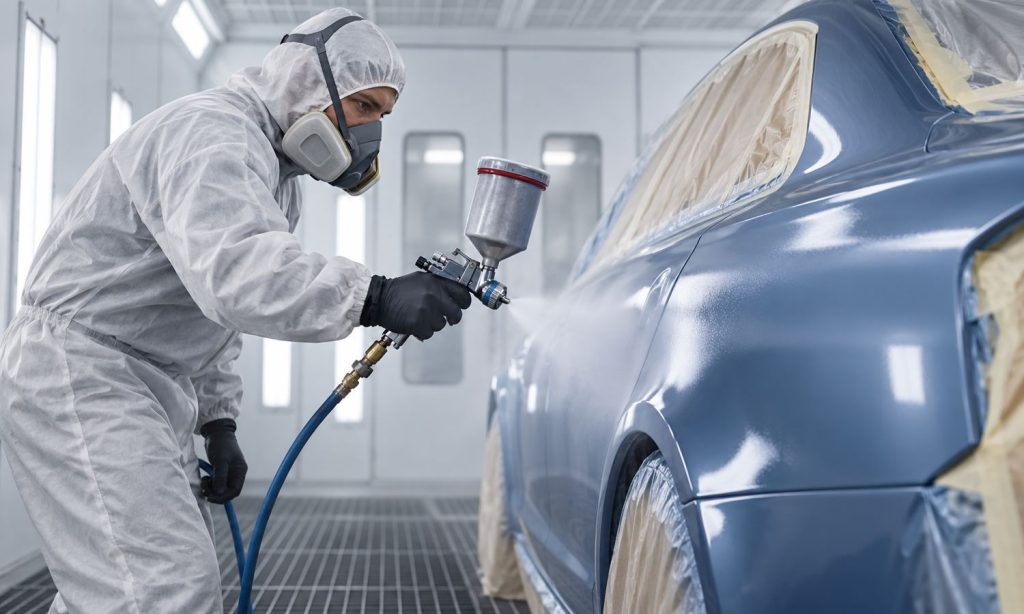
Write down what is permitted now and what must wait: plain-water rinsing, contact washing, a commercial wash, polishing and protective coatings are separate questions. Confirm whether a stated waiting period starts from painting or pickup. Different panels may have been completed on different dates. Our guide to the stages of a car paint job helps frame the scheduling questions, but cannot determine when your particular finish is ready.
Inspect first: ordinary dirt or a repair concern?
View the car in good light before getting it wet. Take an overall photograph and close-ups of anything you want reviewed. Note the panel, location, date and whether the mark was visible at pickup. Check for obvious overspray, masking residue, loose trim, peeling, bubbles or a warning light. These observations identify questions for the shop; they do not establish what caused a problem or who is responsible.
Loose dust and road film belong in an approved cleaning routine. A rough patch, sticky finish or suspected overspray needs identification before correction. Do not rub with a fingernail, scrape with a blade, or test several chemicals to see what works. Ask the repairer to assess an uncertain mark. A photograph cannot reliably tell you whether it is contamination, a coating defect or something else.
Prepare for the first approved hand wash
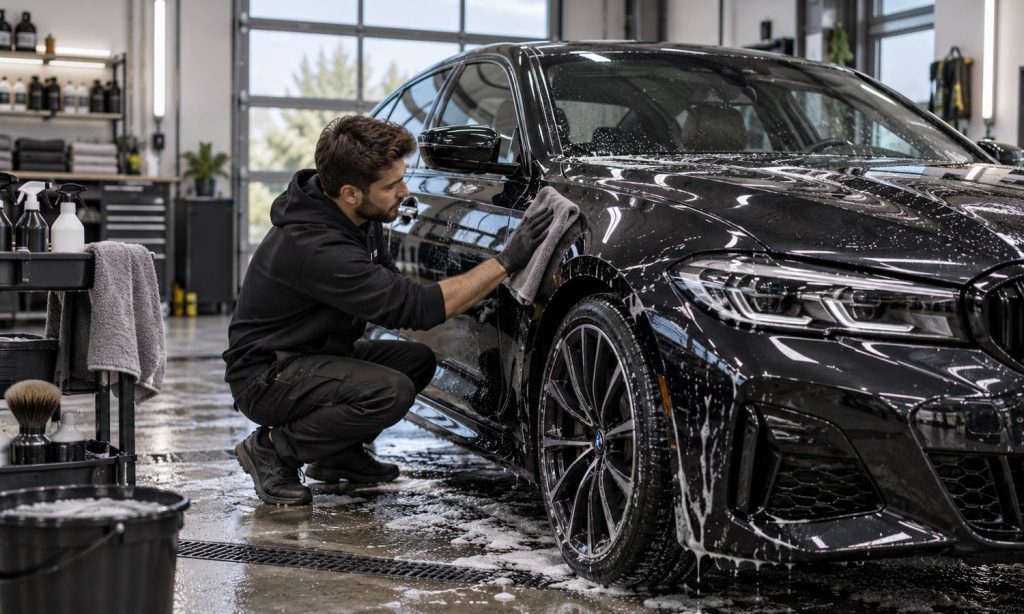
Choose a shaded place and wait until the body panels are cool. Gather clean water, a nonabrasive automotive wash product compatible with the repair instructions, a soft clean mitt and suitable drying towels. Read the actual wash label, including dilution and surface exclusions. An ordinary maintenance shampoo and a wash that deposits wax or sealant are different choices; ask before using any added protection on new paint.
Keep wheel-cleaning supplies separate from body supplies. Do not reuse a gritty towel or a mitt that has fallen on the ground. Plan where the rinse water will go, and follow local washing and runoff requirements. If water could freeze on the vehicle or walking surface, postpone the job or ask the repairer for another option. See our cold-weather car-washing considerations when deciding whether the conditions are suitable.
A controlled cleaning sequence
1. Rinse without trying to strip the surface
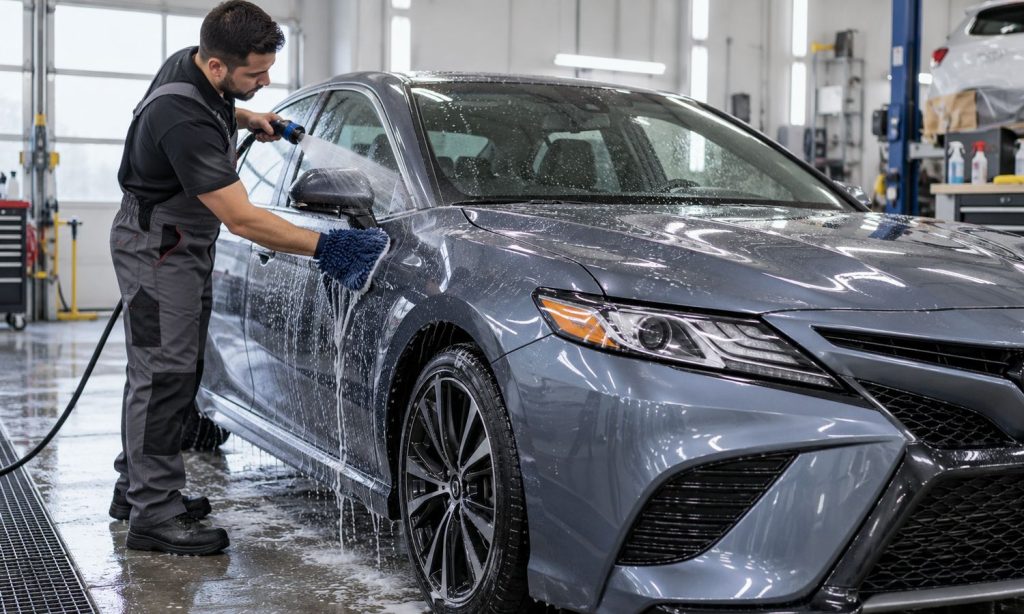
After the shop permits it, use a gentle rinse to carry away loose debris before contact washing. Do not wipe a dusty panel dry. Avoid directing a concentrated jet into newly repaired edges, trim or gaps. No universal pressure, nozzle distance or water temperature is suitable for every repair. A washer’s general operating instructions do not by themselves approve its use on fresh refinish coatings.
2. Wash small areas with clean tools
Work from the upper body downward with light pressure and frequent mitt rinsing. Keep the wash solution from drying on the surface and rinse each area thoroughly. Change dirty water and keep lower-panel or wheel grit away from the upper body. If a spot resists the approved wash, leave it for the shop instead of increasing pressure or reaching for an abrasive pad.
3. Dry gently, then inspect again
Use the drying method the repairer allows, with a clean soft towel where contact drying is permitted. Avoid repeated buffing of one area. If the finish feels sticky, catches fibers or changes appearance while you work, stop and contact the shop. Photograph a concern after drying without applying polish to make it disappear. Good cleaning technique cannot confirm that an underlying repair is satisfactory.
Handle droppings, sap and stubborn residue promptly
Do not treat a “wait before washing” instruction as permission to ignore contamination. Bird droppings, sap and fluid spills can damage paint. Contact the repairer promptly for a method appropriate to the finish’s current condition, especially if the surface has not yet been cleared for washing. Tell them what landed on the car and when. Ask whether they want you to rinse it or bring the vehicle back.
For anything stuck to a newly refinished panel, avoid improvised solvent, scraping, clay-bar treatment or machine polishing. Do not transfer a tar-removal method from old factory paint to the repair without confirmation. If the approved gentle method does not remove the deposit, stop. Keep the product container and a note of any cleaning already attempted so the shop has useful information for its inspection.
Washing approval is not coating approval
Ask separately about wax, sealant, ceramic coating, paint-protection film and polishing. A finish that can be handled or washed has not automatically met every later process requirement. Do not impose a fixed online countdown on an unidentified paint system. The refinisher should confirm the applicable materials and care stage; the coating or film installer should also confirm the requirements of the planned application.
Tell a detailer exactly which panels were repaired and provide the care instructions before accepting a service package. A “full detail” may include correction or protection you have not cleared with the body shop. Agree on exclusions in writing. Our explanation of car-detailing scope and timing can help you discuss the appointment without assuming every process belongs in the first wash.
Keep matte finishes and repaired glass separate
If the repair has a matte or satin appearance, ask for its specific maintenance sheet. Rubbing, polishing or applying a gloss-oriented product may change the appearance; a glossy-finish routine should not be assumed suitable. Likewise, any remaining factory coating on another panel does not establish what is safe on the new repair. Ask how to handle the boundary between treated and refinished areas.
For replaced glass or freshly attached trim, confirm any adhesive-related washing restriction independently of paint care. Clean other surfaces only with methods allowed by the vehicle and repair instructions. Keep liquid away from exposed electrical parts and do not disassemble trim to chase dust. If a warning light or malfunction appeared after the repair, refer it to the shop rather than treating washing as a diagnostic test.
Document follow-up instead of attempting a correction
Save the estimate, supplements, final invoice, photographs and written care instructions together. Ask who handles a return inspection and what any repair warranty covers. A new mark after washing does not alone prove the wash caused it, and a reassuring photograph does not rule out a defect. Give the repairer the timeline and the exact products and methods used. Request an inspection before authorizing further polishing or refinishing.
Frequently Asked Questions
Can I use a touchless wash as soon as I collect the car?
Not without confirmation. “Touchless” describes the absence of brushes, not an approval of its chemistry, pressure or drying process for the repair. Ask the shop about that wash method specifically; permission for a gentle hand wash is a different instruction.
What if the shop did not give me a care sheet?
Contact the service adviser or refinisher and request written guidance tied to the work on your invoice. Ask which panels were painted and when, then resolve rinsing, washing and protection separately. Do not fill the gap with a generic number of days.
Do new swirl marks prove that washing damaged the repair?
No. Their appearance alone does not establish their origin or when they became visible. Record the wash method and products, photograph the areas and ask the repairer to inspect them before attempting correction.
Should I clean body-shop residue from the interior myself?
First identify the material and affected surface with the shop. Ordinary dust and suspected overspray need different handling. Do not flood switches or scrape trim; ask the repairer to address residue that might require specialist removal.
Does rain mean the finish is ready for wax?
No. Rain exposure and the requirements for wax, polish, film or a coating are different matters. Obtain clearance for each planned process from the repairer and applicable product instructions rather than judging readiness from appearance alone.
Final Words
Clean a car after body repair with a plan tied to the actual work. Identify the refinished areas, obtain written care instructions, and separate permission to wash from permission to polish or protect. Once washing is allowed, use clean tools and a gentle compatible process. Leave uncertain residue and suspected defects for the repairer, and keep clear records of the finish’s condition and any cleaning performed.