Before using an accessory in a Ford Ranger, confirm it fits the truck’s exact year, cab, bed, trim, drivetrain, and factory equipment, then check what the installation could affect. A part that fits one Ranger may not fit another with a different seat layout, bed length, rail system, camera, sensor, or wiring package. Use the VIN, Ford owner’s manual, and accessory maker’s installation instructions. After installation, verify clearance, secure mounting, electrical function, visibility, and any changed vehicle behavior before regular driving.
Confirm the accessory matches the exact Ranger
Write down the model year, cab style, bed length, trim, and any factory options that touch the installation area. Compare the maker’s application notes and measurements with the actual truck. For a tonneau cover for a 2019 Ford Ranger, for example, bed length, cab configuration, rail caps, tie-downs, and the cover’s mounting system can determine whether the part fits. Do not assume a 2019 listing applies to a different model year or every 2019 configuration.
Check whether the accessory replaces, covers, or blocks factory equipment. Look for backup cameras, parking sensors, blind-spot indicators, lights, bed outlets, tie-down points, cargo hooks, seat controls, airbag labels, and wiring harnesses. If the truck has a lift, bedliner, aftermarket bumper, different wheels, or prior body repair, tell the supplier and compare the accessory against those modifications too.
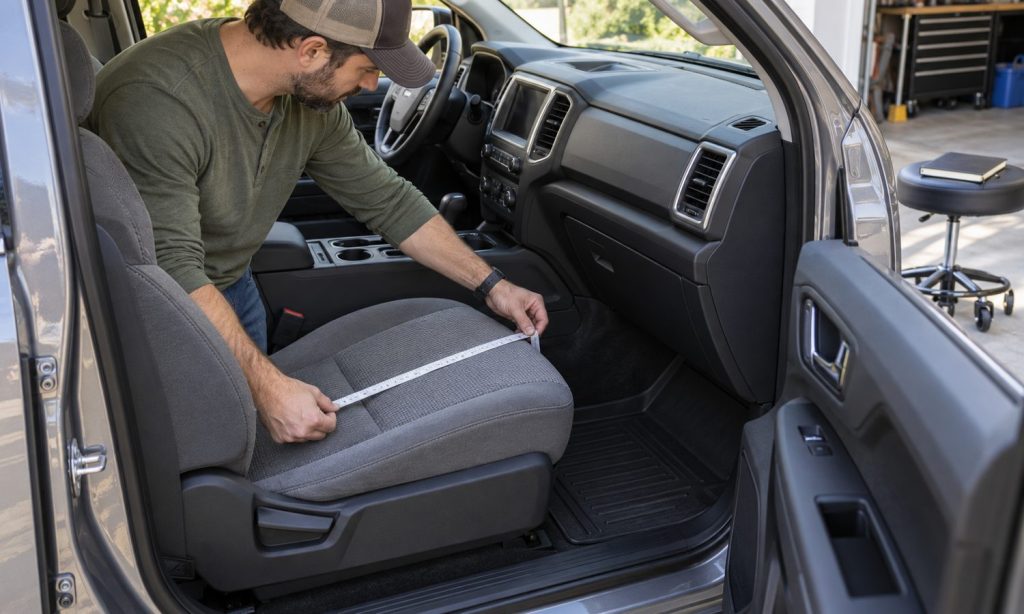
Our Ford Ranger measurement guide for custom-fit interior accessories covers a related fitment process. For background on accessory materials and use, see the Ford Ranger accessory-material guide.
Check loads, clearances, and safety systems
- Load limits: Confirm the accessory’s rated capacity and how its weight affects payload, axle loading, and vehicle limits. A roof rack or bed platform must be used within the Ranger manual’s limits.
- Moving clearances: Open and close doors, hood, tailgate, tonneau panels, and windows. Check that suspension travel, steering, seat movement, and cargo access remain unobstructed.
- Driver view: Make sure the accessory does not block mirrors, the windshield, lamps, cameras, sensors, or license plates.
- Airbags and restraints: Keep seat covers, organizers, mounts, and wiring clear of airbag deployment zones, seat belts, and child-restraint anchors. Follow the vehicle and accessory instructions.
- Heat and weather: Keep components away from exhaust heat and verify seals and drainage where an accessory meets the body or bed.
- Fasteners: Use the specified hardware and torque procedure. Avoid drilling or cutting unless the accessory maker and Ford instructions permit it.
The 2019 Ranger owner’s manual includes vehicle-specific guidance for roof racks and load carriers and directs owners to follow the rack maker’s fitting instructions. Do not transfer a roof-load limit from another year, market, or cab style. If the accessory maker’s rating conflicts with Ford’s limit, follow the more restrictive applicable requirement and ask the manufacturers to clarify the fit.
Review electrical accessories carefully
For lights, cameras, chargers, alarms, or powered bed accessories, verify voltage, current draw, fuse rating, grounding, and whether the circuit is constant or ignition-switched. Use the accessory’s approved wiring harness and specified fuse protection. Avoid cutting factory wiring or tapping safety-critical circuits. Keep wires away from sharp edges, moving parts, water paths, hot surfaces, and seat or airbag components. If the installation requires programming or connects to vehicle networks, ask a qualified installer which functions may be affected.
Before driving, test the accessory and the systems around it. Confirm lamps illuminate and aim correctly, sensors and cameras still work, doors and tailgate latch, and no warning lights appear. For bed-mounted accessories, check that cargo remains secured and cannot shift into the cab. For roof-mounted items, account for added height and wind exposure. Recheck fasteners, seals, and wiring after the first trip and at the intervals in the instructions.
Install and test before regular use
Read both the vehicle and accessory instructions before starting. Lay out the parts, confirm the hardware count, and identify any steps requiring a second person or a professional installer. Protect paint and trim during fitment. Do not force a bracket that does not align or enlarge a hole to make a mismatched part fit; stop and recheck the application and installation orientation.
After installation, perform a stationary check, then a cautious low-speed drive in a safe area. Listen for movement, rubbing, rattling, or wind noise and check whether the truck pulls or feels different. Reinspect bolts, clamps, seals, wiring, and clearances afterward.
For accessories that attach to body panels or bed rails, inspect the contact points for trapped debris, paint abrasion, water entry, or corrosion after use in rain or off-road conditions. A rubber pad or seal should sit as designed and must not cover a drain path. If drilling is part of an approved installation, protect exposed metal as instructed and confirm there is no hidden wiring or component behind the panel before making the opening.
If the accessory contacts a tire, blocks a lamp, triggers a safety warning, or affects control of the vehicle, stop using it until corrected.
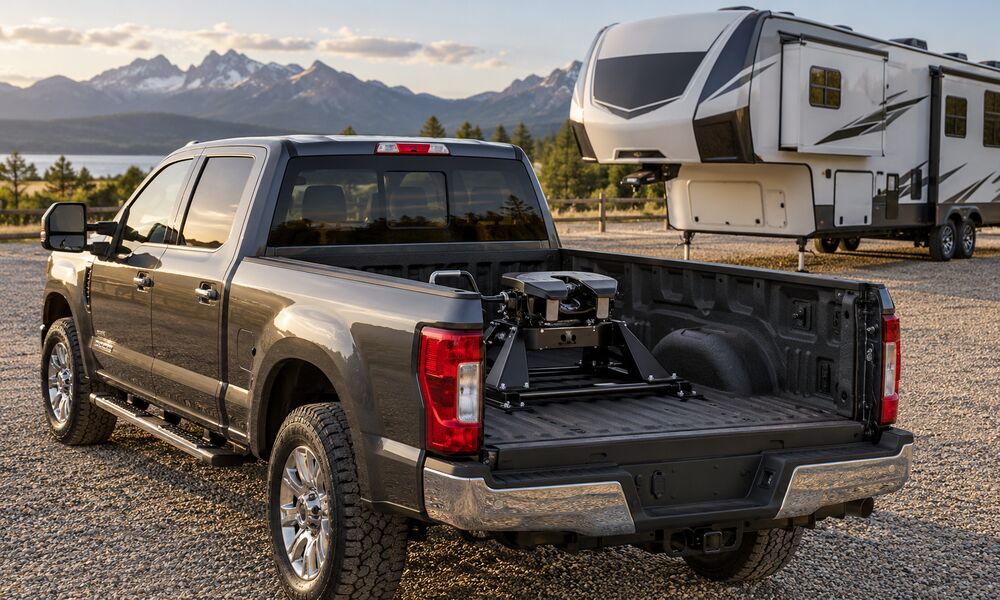
For a model-specific bed accessory example, review the 2019 Ford Ranger tonneau-cover overview and the 2020 Ranger tonneau-cover guide. Their model-year details are not interchangeable. For installation checks on another Ford vehicle, see the Transit Connect accessory fitment guide. Related work-and-travel context appears in the F-250 accessory feature guide and the Ford Focus accessory guide.
Frequently asked questions
Can I use a tonneau cover listed for any 2019 Ford Ranger?
Not without checking the exact bed length, cab, rail system, bedliner, and cover mounting requirements. Use the part maker’s fitment guide and compare it with your truck.
Does an accessory’s weight count against payload?
Yes. The accessory and its cargo contribute to the truck’s load. Follow Ford’s vehicle limits and the accessory’s own capacity, and account for how weight is distributed.
Can I tap accessory wiring into any fuse?
No. Use only approved circuits, harnesses, and fuse protection. Avoid safety-related wiring and follow the Ford and accessory instructions or use a qualified installer.
What should I test after installing an accessory?
Check attachment security, moving clearance, lights, sensors, cameras, visibility, latches, wiring, seals, and any affected warning indicators. Reinspect after the first drive.
What if the accessory does not line up with the mounting points?
Stop and verify the application, orientation, hardware, and truck configuration. Do not force or modify the part unless the manufacturer’s instructions explicitly allow it.
Final Words
Before using a Ford Ranger accessory, match it to the exact year and truck configuration, confirm load and clearance limits, protect safety systems and wiring, and follow both sets of installation instructions. Test affected features while stationary and recheck the hardware after a cautious first drive. If a part does not fit or interferes with a vehicle system, stop and resolve the mismatch before use.