Before changing ignition parts on a Ford 460, identify the vehicle’s year, model, emissions configuration, and ignition system. The 460 V8 appeared in different applications, and components that look similar can have different electrical connectors, distributor parts, wire routing, or calibration. Begin with the vehicle identification and service information, then test the symptom before ordering a coil, distributor component, plugs, or spark plug wires for Ford 460. Replacing parts by engine name alone can leave a misfire unresolved or create a new installation problem.
Identify the ignition system and exact application
Record the VIN, model year, vehicle model, transmission, and any engine or ignition modifications. Check the emissions label and the correct owner or service manual. Depending on year and application, a Ford 460 may use different distributor and ignition-control arrangements. Confirm whether the vehicle has the original system, and note any changes to the distributor, ignition module, coil, wiring harness, or carburetion.
Use Ford or Motorcraft application information to confirm the part number for that exact vehicle. A listing for “460” may include several years, truck models, or system versions; verify connector shape, terminal count, mounting, wire lengths, boot angles, and any included components. A part number on the installed component is a useful cross-check, but it may be a non-original or superseded part. Resolve any disagreement with the VIN-specific catalog or a qualified parts supplier.
Check the symptom before replacing parts
Describe what happens and when: cold start, warm idle, acceleration, steady cruise, or after rain. Note whether the problem is a single-cylinder misfire, a no-start, backfire, rough idle, or loss of power. Look for stored diagnostic information if the vehicle supports it, and inspect the battery and charging system if cranking is slow. A weak electrical supply, damaged connector, fuel problem, vacuum leak, or mechanical fault can mimic an ignition failure.
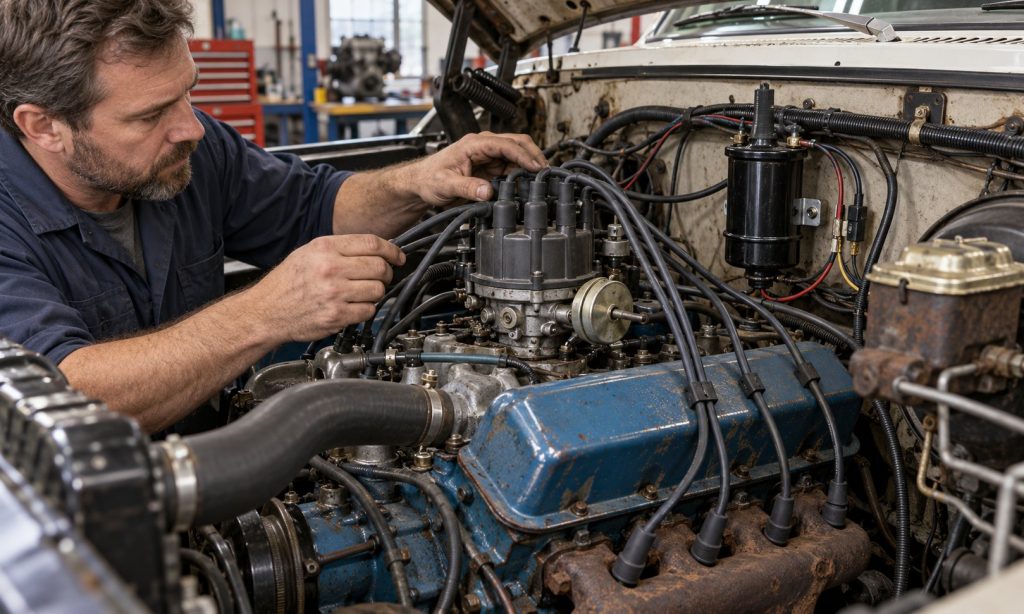
With the engine off and cool, inspect accessible wires and connectors for cracked insulation, heat damage, oil contamination, loose terminals, corrosion, or signs of arcing. Check that plug wires follow the correct routing and are fully seated at both ends. Do not pull on a wire itself or touch ignition components while the engine is running. If a component is hot, damaged, or difficult to access, let a qualified technician perform the inspection.
Replacing a distributor, module, coil, or wiring without confirming the cause can add cost and make diagnosis harder. For a related checklist, see what to check before changing ignition parts on a Ford Fusion. It covers the general verification process; the Ford 460’s service information controls the actual tests and specifications.
What to verify for each part
- Spark plug wires: Confirm the set is listed for the exact year and ignition layout. Compare wire lengths, boot styles, resistance or suppression design, routing clips, and cylinder order against the service diagram.
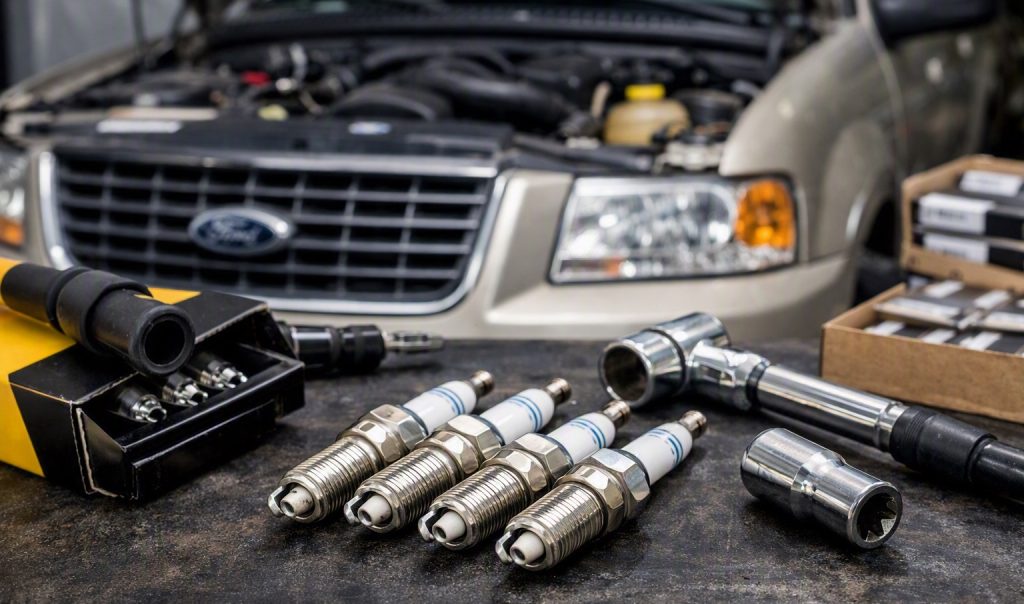
- Spark plugs: Match thread, reach, seat, heat range, electrode type, and specified gap to the vehicle’s manual and emissions label. Do not transfer a specification from another Ford V8.
- Ignition coil: Verify primary and secondary connector details, mounting, and the catalog application. Test the circuit before replacing the coil because power, ground, or control faults can produce similar symptoms.
- Distributor parts: Confirm cap, rotor, pickup or module type, shaft compatibility, and timing procedure. Marking and installation steps are vehicle-specific; distributor removal can affect ignition timing.
- Ignition module and wiring: Match connector and calibration details. Inspect grounds, harness damage, and terminal tension; a replacement module is not a fix for a bad circuit.
Use the correct service procedure for testing and installation. Avoid changing timing, emissions-related components, or wiring configuration based on generic advice. The 1996 F-250 460 service information, for example, describes a distributor ignition system and specific replacement-part cautions; that example does not establish the setup for every Ford 460. If your vehicle’s documentation differs, follow its own specification.
After the repair
Route wires away from exhaust heat, moving parts, and sharp edges, and secure them with the intended separators. Check that connectors lock in place and that the engine bay contains no tools or loose hardware. Start the vehicle only after reassembly, and observe from a safe position for rough running, warning lights, smoke, or unusual noise. If the engine still misfires or backfires, stop and continue diagnosis rather than swapping more parts. Record the mileage, exact parts changed, and conditions when the symptom occurred so the technician has a useful baseline if it returns.
When you’re comparing a wire set, our Ford 460 spark-plug-wire overview can help you understand catalog details, but verify its application against your year and ignition setup. For broader ignition context, see the Ford 302 Windsor plug-selection guide, the 302 Windsor spark-plug comparison, and the 5.4 Triton spark-plug overview. Those applications are different and their part numbers should not be transferred to a 460.
For additional model-specific examples, review the 2010 F-150 5.4L spark-plug guide and the 5.4 Triton slow-start diagnosis article. They address related ignition and starting questions while reinforcing the need to confirm the exact engine and symptom.
Frequently asked questions
Does every Ford 460 use the same spark plug wires?
No. Year, vehicle, distributor and ignition configuration, and any modifications can affect the correct wire set. Verify the application using the VIN and service information.
Can a bad coil cause a Ford 460 misfire?
It can, but a misfire may also involve plugs, wires, distributor components, electrical connections, fuel delivery, air leaks, or engine condition. Test the system before replacing a part.
Can I use a 302 or 5.4 Triton plug specification on a 460?
No. Those are different engines. Use the exact Ford specification for the 460 application and do not transfer gap, heat range, or part numbers from another engine.
Should I replace the distributor when changing plug wires?
Not automatically. Inspect the cap, rotor, shaft, and related components and follow the service procedure. Replace only parts that fail inspection or testing.
Can I change the ignition timing after replacing parts?
Only if the vehicle’s service procedure calls for it and you have the correct tools and specifications. Distributor work can affect timing, so consult a qualified technician if unsure.
Final Words
Before changing ignition parts on a Ford 460, confirm the exact vehicle and ignition configuration, test the reported symptom, and verify each replacement by VIN-specific catalog and service information. Inspect wiring and connectors before ordering, and follow the model-specific procedure for distributor and timing work. If the cause remains unclear or the engine continues to misfire, have the system diagnosed before installing additional parts.