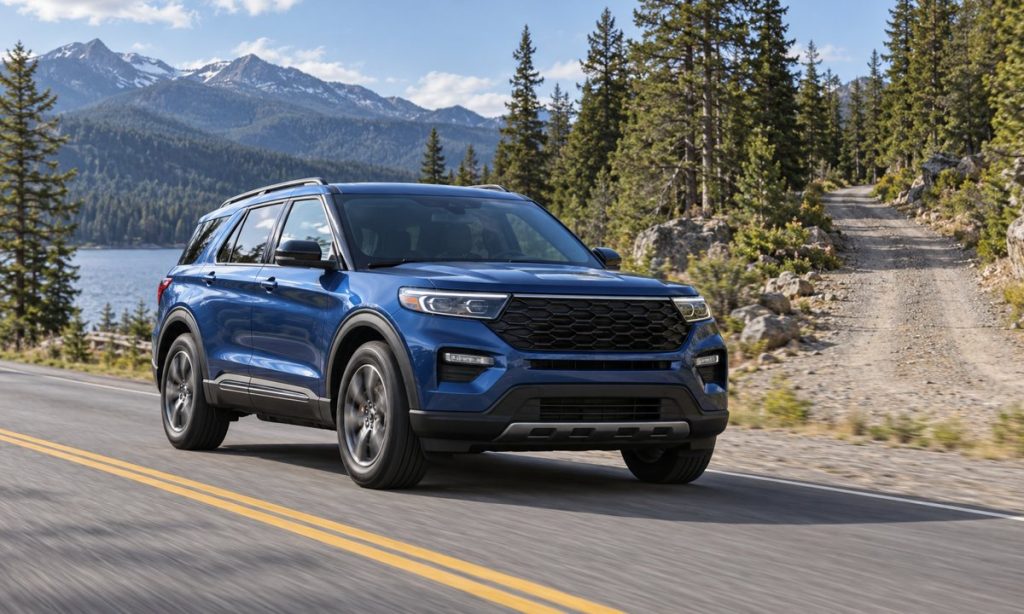
Winter tire sizing and fitment questions for Ford Explorer XLT start with the exact model year, trim, drivetrain, wheel, and tire placard. “XLT” appears across multiple Explorer generations, and factory tire sizes, wheel offsets, chain clearances, and AWD requirements can vary. A winter tire must fit the approved wheel and preserve the required load capability; a tire that is close in diameter or listed for another Explorer is not automatically safe.
Confirm the original fitment
Read the tire and loading label on the driver’s door area and the owner’s manual. Record full size, load index, speed rating, cold pressure, and whether front and rear specifications differ. Check the VIN and model year, then confirm that the winter tire maker lists the exact application. If you use a second wheel set, verify wheel diameter, width, bolt pattern, offset, brake clearance, TPMS compatibility, and the tire’s approved rim range.
Do not choose a smaller wheel simply because a seller calls it a winter package. Ford may limit winter tire or chain combinations to particular wheel and tire sizes. The 2016 Explorer owner manual, for example, lists a specific compatible wheel and tire combination for approved snow-chain use. That detail is an example for its year and configuration only; check your own manual before using chains or cables.
Choose a winter tire that matches conditions
Dedicated winter tires are designed for cold-weather traction and can outperform all-season tires in deep snow. Consider how often you encounter snow, ice, slush, and cold wet pavement. Look for the tire maker’s winter markings and product guidance, and compare independent winter tests in the correct size. A winter tire is not a substitute for safe speed, following distance, or suitable driving technique.
For an AWD Explorer, follow Ford’s instructions about matching size and rolling circumference across all wheels. Driveline systems can be sensitive to tire differences, so avoid mixing winter and non-winter tires or significantly different tread depths unless the vehicle maker specifically permits it. If one tire is damaged, ask Ford or a tire specialist whether a single replacement can be matched safely or whether multiple tires need replacement.
Check load, speed, and pressure
Preserve load capacity
The winter tire’s load index and construction must meet the vehicle’s requirement. Do not use a lower load rating because winter tires are available at a discount. The Tire and Loading Information label and owner’s manual set the starting point; the tire maker can verify load capability at the stated cold pressure. A higher load index alone does not confirm wheel compatibility or correct fitment.
Understand speed rating
Winter tires can have a lower speed symbol than the original equipment tire, but do not assume an alternate rating is allowed. Confirm Ford’s guidance and the tire manufacturer’s limit for the selected size. Never exceed the tire’s speed rating, and account for a dashboard reminder if the tire maker or shop provides one. A speed symbol is a tested capability under defined conditions, not a recommended travel speed.
Set cold pressure and monitor sensors
Use the pressure specified on the Explorer’s label for the installed tire and load condition. Cold weather lowers tire pressure; check it with a gauge regularly and before longer trips. The maximum pressure on the sidewall is not the vehicle’s normal target. If installing a wheel set with TPMS sensors, confirm sensor compatibility and have the system relearned according to Ford’s procedure.
Confirm snow-chain and clearance rules
Snow chains or cables can contact brakes, suspension, fenders, and bodywork if their size or placement is wrong. Use them only if the exact Explorer manual approves them for your wheel and tire combination, and follow Ford and the chain maker’s restrictions for axle position, clearance, fitment, and speed. If the manual says chains are incompatible with your factory wheel and tire setup, do not rely on a thinner cable or online comment as a workaround.
If you change wheel diameter or tire width, get written fitment confirmation before purchasing. Check clearance at full steering lock and suspension travel through a qualified installer. A tire that clears while parked can rub when the suspension compresses, the vehicle is loaded, or the steering is turned. Do not alter fender liners or suspension components without understanding the vehicle and local requirements.
Plan the seasonal changeover
Install winter tires before regular winter conditions arrive, and store the off-season set cool, dry, and away from sunlight or chemicals. Mark positions before removal and follow Ford’s rotation pattern and directionality rules. Check tread depth and sidewalls before each season. At spring changeover, inspect the winter set for cuts, uneven wear, embedded objects, or damage and store it properly.
For additional Explorer tire context, see our guides to tires for a 2016 Ford Explorer XLT and all-terrain versus highway tires for Explorer XLT. Winter and all-season choices are different, so confirm seasonal performance and exact fitment for your vehicle. Our winter tire sizing guide for Transit 350 XLT and Dodge Grand Caravan snow tire overview discuss related cold-weather fitment questions for other vehicles.
Other tire-selection references include all-season tires for a 2016 Escape, Ford C-Max replacement tire considerations, and tread and damage checks for F-250 tires. They are not Explorer fitment guides; use your Explorer’s own placard and manual.
Frequently Asked Questions
Do I need four winter tires on an AWD Explorer?
Follow Ford and tire-maker guidance for the exact drivetrain. Matching size and tread across all wheel positions is important, particularly for AWD systems.
Can I use chains on any Explorer XLT tire size?
No. Check the exact year’s owner manual for approved chain or cable combinations and restrictions.
Can winter tires have a lower speed rating?
Only if Ford and the tire manufacturer permit the chosen fitment. Observe the tire’s marked speed limit and any required notification.
Should winter tires use more pressure in cold weather?
Set cold inflation to Ford’s specification and check it as temperatures change. Do not guess based on the sidewall maximum.
Can I use a smaller wheel for winter tires?
Only if that wheel and tire combination is approved for your exact Explorer and clears the brakes and suspension.
Final Words
For winter tire sizing and fitment on Ford Explorer XLT, verify the year-specific size, load, speed symbol, wheel, TPMS, AWD matching requirements, and chain clearance before ordering. Install a matched set as Ford directs, keep cold pressure at the placard specification, and follow the tire maker’s seasonal and speed guidance. When a listing or chain chart conflicts with the owner manual, confirm with Ford or a qualified tire professional.