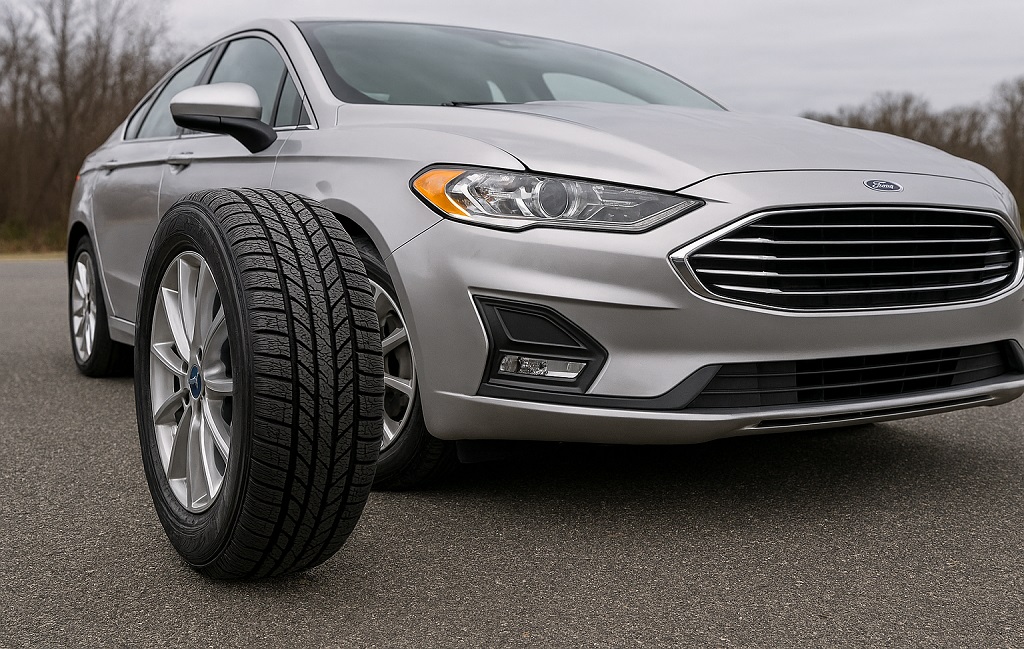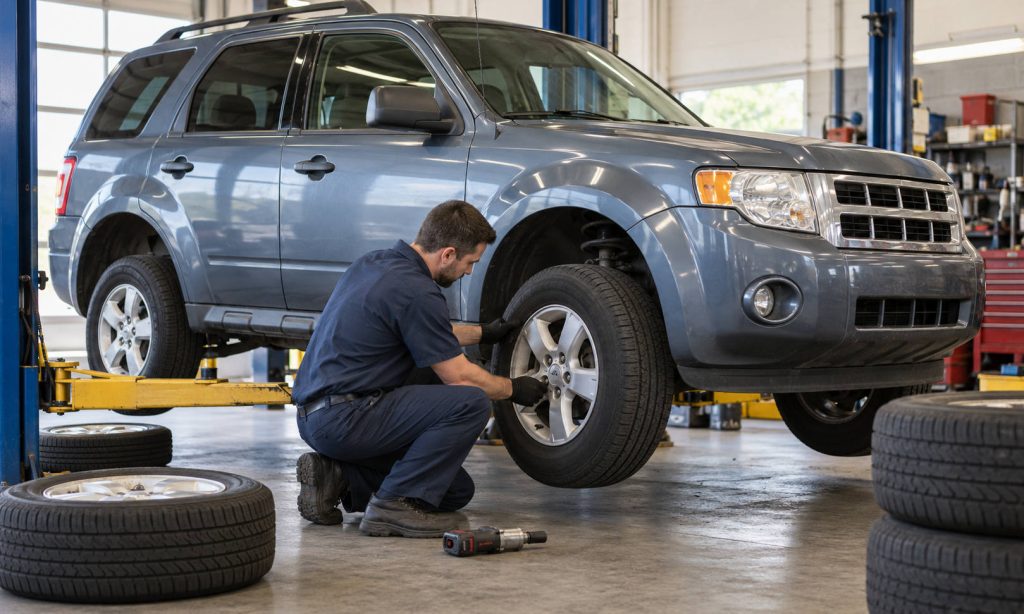
To compare road noise and wet grip when choosing Ford C-Max tires, begin with the exact model year, wheel size, and tire specification, then compare same-size tires using independent wet-braking results and repeatable noise feedback. Ford C-Max versions and market specifications vary. A tire that fits one year or trim may not fit another, and the same model can behave differently in another size. Treat quietness and wet performance as separate comparisons after confirming safe fitment.
Confirm size and service description first
Check the tire and loading label on the driver’s door area and the owner’s manual for the exact C-Max year. Record tire size, load index, speed symbol, and specified cold pressure. Verify whether the vehicle is a hybrid, plug-in hybrid, or another version because wheel and tire specifications can differ. Do not use a product page for a different market or model year as proof of fitment.
USTMA recommends replacement tires that match the size, load index, and speed rating specified by the vehicle or tire maker. Its replacement tire guidance is a useful starting point. If you are considering an alternate size, get confirmation from Ford or a qualified tire professional; clearance, handling, speedometer readings, and pressure requirements can change.
Compare wet grip with the right evidence
Look beyond one rating
In the United States, Uniform Tire Quality Grading traction grades reflect wet braking under controlled test conditions. The grade does not cover every wet-weather behavior, such as wet cornering, hydroplaning resistance, or performance at different temperatures. NHTSA explains the system in its TireWise tire safety guide. Use UTQG as one data point, not a full wet-performance score.
When independent tests are available, compare the same size and category and look for methods that report wet braking, handling, or resistance to standing water. Check the test date, tread depth, vehicle, pavement, and weather. Results from a larger wheel or another vehicle may not transfer directly to the C-Max. Manufacturer claims are informative when the test method and comparison are clear; general phrases such as “excellent wet traction” are not measured head-to-head evidence.
Consider tread depth, age, and pressure
Wet grip changes as a tire wears, and worn tread can be more vulnerable to water buildup. Check tread depth across each tire and look for uneven wear, damage, or aging. Maintain Ford’s cold-pressure recommendation rather than adjusting pressure to chase a handling feel. Underinflation and overinflation can affect performance, wear, and fuel economy. If pressure changes often or the vehicle vibrates, ask a tire professional to inspect it.
Compare noise in conditions you actually drive
Road noise depends on tread pattern, tire size, wear, pavement texture, speed, pressure, vehicle insulation, and even the C-Max’s cabin configuration. An exterior pass-by noise figure is not the same as the sound heard in the cabin. Compare tires on the same route and at similar speeds, with the radio and climate fan low. Listen on both smooth and coarse asphalt, and note humming, tonal changes, or vibration.
Owner reviews can help reveal recurring noise patterns, but they are subjective. Prioritize feedback for the same tire model and similar size on a comparable C-Max. A single report may reflect worn suspension, uneven tire wear, incorrect pressure, or a different road surface. Look for repeated, detailed comments that mention mileage and conditions. If possible, arrange a test drive or ask a tire retailer whether a same-size demonstration is available.
Balance comfort, grip, and tire life
A quiet touring tire may suit long commutes, while a tire with stronger wet-test results may better match frequent rain exposure. Those goals can overlap, but no one label guarantees both. Consider treadwear warranty, rolling resistance, winter needs, replacement cost, and expected annual mileage. UTQG treadwear is a comparative grade under controlled testing, not a promise of a specific number of miles for your driving.
If you need snow capability, compare the tire’s seasonal markings and manufacturer guidance rather than assuming “all-season” means equivalent performance in all climates. If you use the C-Max for loaded trips, ensure the load index remains appropriate. Keep all four tires matched as Ford and the tire maker recommend, especially on hybrid drivetrains where mismatched circumferences may affect system operation.
For model-specific reading, our Ford C-Max replacement tire overview offers a starting point for fitment checks. Compare it with our guides to all-season tires for a 2016 Ford Escape, tires for a 2009 Ford Escape XLT, and all-season F-150 4×4 tires. Those applications differ and are not C-Max fitment references.
Related tire-care articles include tire rotation and life on a Ford Fusion, rotation patterns for a 2009 Escape XLT, and tread, age, and damage checks for Ford F-250 tires. For every C-Max, rely on its own manual and door label for pressure and approved fitment.
Keep the test conditions consistent
If possible, keep a short comparison note for each candidate: tire model and size, vehicle year, tread depth, cold pressure, road surface, speed range, weather, and whether the tires were new or partly worn. This helps separate a tire’s pattern noise from a worn wheel bearing, uneven tread, roof rack whistle, or rough pavement. A brief drive around the block may not reveal a steady highway hum, while a coarse road can make even a quiet tire sound louder. Ask whether a test report concerns the same size and whether its noise measurement is exterior pass-by or an in-cabin observation. These are different measures. When reviews conflict, look for multiple reports with the same C-Max generation, wheel package, and mileage instead of treating one comment as a definitive result. Wet grip should still be judged from controlled tests and safe real-world performance, not from a noise rating.
Frequently Asked Questions
Does a higher UTQG traction grade mean a quieter tire?
No. The U.S. traction grade measures wet braking under controlled conditions, not road or cabin noise.
Can road-noise reviews be compared across C-Max tire sizes?
Only cautiously. Size, pressure, wear, and vehicle version can change the sound. Prefer reports for the same tire model and similar C-Max setup.
Will a quiet tire always have good wet grip?
Not automatically. Compare wet-test evidence and fitment independently from noise feedback.
Can I use a different tire size to make my C-Max quieter?
Use only a size approved for your exact model. Consult Ford or a tire professional before changing size or wheel diameter.
Does treadwear grade tell me how long the tire will last?
It is a comparative grade under controlled tests, not a mileage guarantee. Driving and service conditions affect actual wear.
Final Words
Compare road noise and wet grip for Ford C-Max tires only after confirming the correct year-specific size and service description. Use same-size wet-test data for grip, repeated comparable owner feedback or a test drive for noise, and the vehicle label for pressure. Keep tread in safe condition and investigate vibration, unusual noise, or uneven wear before selecting replacements.