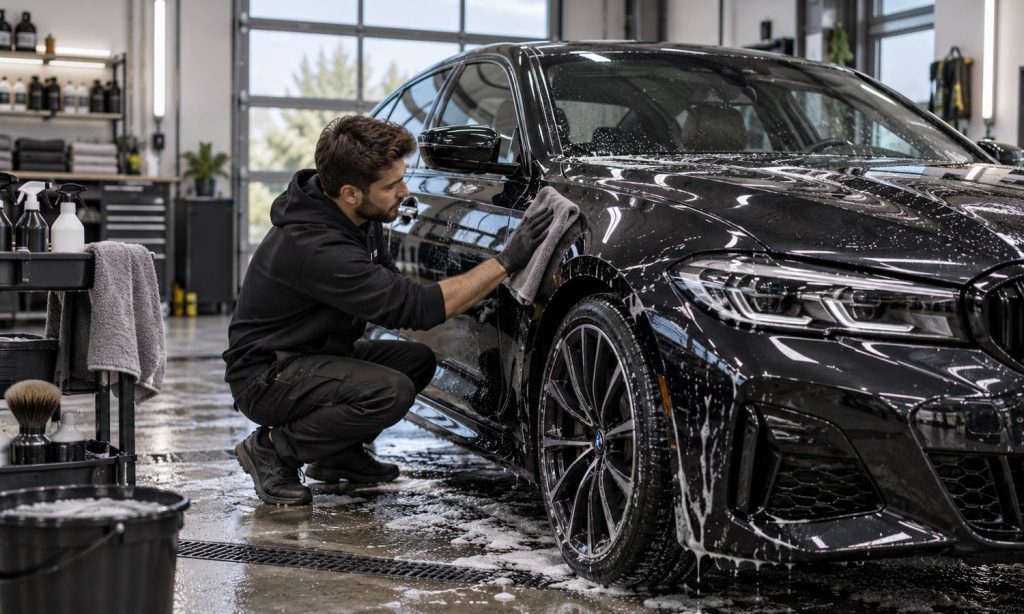
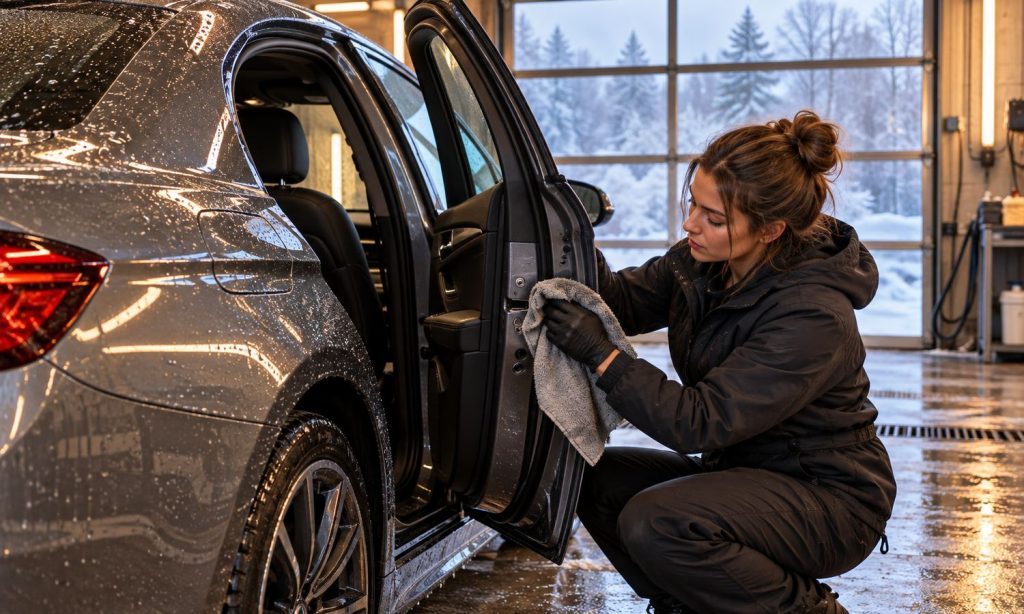
There is no universal temperature cutoff for washing every car. The main concern is water freezing on the vehicle, driveway, or road, and whether you can dry the car before that happens. Water freezes at 32°F under ordinary conditions, but surface temperatures, shade, wind, and local weather can differ from the air temperature. If temperatures are at or below freezing, or are expected to drop soon, washing at home can leave ice around door seals, mirrors, locks, and the ground. A heated, well-drained professional wash may manage cold weather differently, but conditions still matter. This guide explains how to judge the situation, reduce risk, and choose a safer alternative. Treat any temperature advice as a practical rule of thumb, not a guarantee that every surface will remain ice-free.
Why freezing conditions matter
Water can freeze on glass, handles, door seals, wipers, and pavement. Ice can make surfaces slippery and may prevent a door or fuel door from opening normally. Wet brakes may feel different briefly after washing, so drive cautiously and follow the vehicle manual. If water freezes where it can obstruct visibility or access, the wash can create a safety problem instead of solving one.
Decide based on temperature and drying time
Check both the current temperature and the forecast during the time you will wash and dry the vehicle. If the air is near freezing, a shaded panel or pavement may already be colder. Wind can speed evaporation but also cool wet surfaces. A sunny, sheltered location with enough time to dry the vehicle is more manageable than an exposed driveway as temperatures fall. Do not rely only on the thermometer beside your house.
If the temperature is below 32°F, or the forecast is expected to fall below freezing before you can dry the vehicle, postpone a home wash. This cautious threshold is based on the freezing point of water, not a tested universal automotive standard. Local conditions and surface temperatures can change the actual risk.
If you must clean the vehicle in cold weather
- Choose the warmest part of the day and a sheltered area with safe drainage.
- Use a self-service or professional wash only if its equipment and operating conditions are suitable.
- Wash small sections and dry them promptly with clean towels.
- Dry door jambs, handles, mirrors, fuel-door edges, and hatch openings.
- Do not leave water pooled around locks, seals, or wiper blades.
- Move the vehicle carefully and check that glass, lights, and mirrors are clear.
Do not pour hot water on frozen glass or seals. Sudden temperature changes can stress glass, and water can refreeze. If a door is frozen shut, do not yank it; use the manufacturer’s recommended method.
Safer alternatives to a full wash
If the car needs attention but conditions are unsafe, wait for a warmer window. You can remove loose debris from the interior or clear dry items without adding water. For road salt, a professional wash with a heated bay and proper drainage may be preferable when available. Follow the car wash’s instructions and local advice. Avoid wiping grit across paint with a dry cloth because it can scratch the finish.
Cold-weather cleaning and paint care
Cold weather does not create a special paint-washing threshold on its own; freezing water and product instructions are the practical concerns. Do not apply wax, sealant, or cleaning products outside their stated temperature range. If the car has fresh bodywork, ask the repair shop when washing and finishing products are permitted. See how to clean a car after body repair for steps that begin with the refinish shop’s care directions.
Choose a safe time and place to wash
The key risk in cold weather is water freezing on the car, pavement, locks, or door seals before you can dry it. Air temperature alone is not the whole story: wind, shade, sun, humidity, and whether the wash bay is heated all matter. If temperatures are near freezing and falling, postpone an outdoor wash or use a heated facility where you can dry the vehicle promptly.
Prepare before water touches the vehicle
Gather towels, a drying aid if appropriate, and a safe place to finish before starting. Work one section at a time and avoid leaving water pooled around mirrors, handles, fuel doors, and trunk seams. Never pour hot water on frozen glass; sudden temperature change can damage it. If the vehicle is already icy, use the defrost system and proper de-icer rather than scraping aggressively or forcing frozen doors.
Protect brakes and moving parts
After a wash in cold weather, dry door jambs and rubber seals, and check that doors, mirrors, and the fuel door move freely. Follow the vehicle manual for operating brakes after wet conditions; a short, safe drive may help dry brake surfaces, but avoid abrupt braking and slippery routes. Do not park with wet components in a place where they may freeze if you can avoid it.
Road salt and winter grime can still damage finishes, so skipping every winter wash is not ideal. Choose a milder part of the day, rinse the underside when a suitable facility is available, and dry carefully. If ice begins forming during the wash, stop and move to a warmer safe location instead of continuing.
Cold-weather washing checklist
Before washing in cold weather, check the forecast for temperatures during and after the job. Choose a heated bay if available and make sure you can dry the vehicle before leaving. Bring several clean microfiber towels because damp towels can freeze quickly. Avoid washing in a strong wind, where water can freeze on glass and door seals before you finish.
Dry the places that trap water
Pay attention to mirror housings, handles, fuel doors, trunk seams, badges, and rubber weatherstripping. Open and close doors gently after drying to confirm they are not sticking. Clear water from wiper blades and washer nozzles. If temperatures are dropping rapidly, skip a full wash and remove only essential visibility hazards with a suitable de-icer.
Road salt removal is useful, but do not drive through standing water or onto an icy surface just to wash the underbody. Select a reputable facility and follow its instructions. After leaving a wash bay, test brakes gently at low speed where conditions are safe. Do not use a driveway hose if water will freeze into a slip hazard on a walkway.
A cold-weather wash plan should balance salt removal with safe drying. If conditions are unsafe, wait for a warmer day or use a professional facility. Keep a windshield scraper and approved de-icer in the vehicle, and never use boiling water on glass. These precautions help protect both the vehicle and anyone walking nearby.
When a professional wash is the better choice
A heated wash facility can be safer than an outdoor hose when freezing conditions are near. Ask whether the bay is warm enough to dry the vehicle and whether staff can clear water from door seams. Avoid a wash if you cannot safely reach the facility or if roads are icy. No amount of salt removal is worth risking a collision or a fall.
After the wash, take a moment to dry the windshield, mirrors, handles, and rubber seals before driving. Keep windows clear and check that wipers are not frozen to the glass. If the weather turns colder during the process, stop and move indoors rather than completing every panel. A partial rinse may be safer than allowing water to freeze around doors and brakes.
For hand washing at home, use a warm part of the day and avoid creating a sheet of ice on the driveway. Clear slush and water from walking paths. Follow vehicle instructions for de-icer and never use boiling water or metal tools on glass. These practical choices make winter maintenance safer for you and others nearby.
Other winter car-care considerations
Washing removes salt that can accumulate on lower panels and wheels, but a wash should not create a freeze hazard. In cold weather, choose a facility that can rinse the underside and dry door seals. Do not crawl under a vehicle to remove ice or salt. If the wash bay uses chemicals, follow posted instructions and rinse as directed.
Protect yourself as well as the vehicle
Wear footwear with traction and avoid carrying buckets across icy surfaces. Keep hoses from freezing or creating slick walkways. If you wash at home, use only a small amount of water and manage runoff so it does not freeze where people walk. Postpone the job when conditions are unsafe.
A short, well-timed winter wash can be more useful than a long wash during a temperature drop. Watch the forecast, plan drying, and stop if ice begins forming. These small decisions reduce risk while still addressing salt and grime.
When to postpone the wash
If temperatures are falling toward freezing, wind is strong, or you cannot dry door seals, wait for a warmer window or use a heated wash bay. Cold weather makes water more likely to freeze on locks, glass, pavement, and brakes. Avoid creating runoff that can ice a walkway. Safety and visibility matter more than removing every bit of grime that day.
After washing, dry mirrors, handles, wipers, and door seams. Check that doors move freely and test brakes gently where conditions allow. Never pour boiling water on glass or force a frozen door open. A careful cold weather routine protects the vehicle and people around it.
Quick cold-weather wash decision
If the temperature is above freezing, stable, and you can dry the vehicle fully, a careful wash may be practical. If temperatures are dropping or you cannot dry seals and mirrors, postpone it. During cold weather, heated facilities reduce the chance of water freezing before you finish, but you still need to dry the vehicle before leaving.
Check local conditions and the facility’s instructions. Do not wash on an icy driveway or create runoff that will freeze on public paths. A short delay is safer than forcing a wash in unsuitable conditions.
A cold weather wash should also account for road safety after you leave. Choose a route with clear pavement, drive gently, and test brakes at low speed only where it is safe. If ice forms around the vehicle or on the wash bay floor, stop and ask staff for help rather than walking on a slick surface. Drying and safe footing are part of winter car care.
Frequently Asked Questions
Is 32°F too cold to wash a car?
It is a cautious point to avoid a home wash because water can freeze at that temperature. Actual risk depends on surface temperatures, shade, drainage, and drying time.
Can I wash my car at 40°F?
It may be manageable if temperatures remain above freezing and you can dry the vehicle. Check the forecast, shade, and local conditions before starting.
Will a car wash freeze my door locks?
Water left in exposed locks, handles, or seals can freeze. Dry those areas promptly and follow the vehicle maker’s guidance for frozen components.
Should I use hot water on a frozen windshield?
No. Sudden temperature changes can stress glass, and the water may refreeze. Use the vehicle’s defrost system and approved ice-removal method.
What can I do if it is too cold to wash at home?
Wait for warmer conditions or consider a suitable professional wash with safe drainage. Avoid dry-wiping gritty paint.
Final Words
What temperature is too cold to wash your car? Avoid a home wash when water may freeze before you can dry the vehicle. The 32°F freezing point is a useful caution, but shaded surfaces and changing weather matter too. Choose a warmer time, dry exposed areas carefully, and avoid cleaning when ice could affect visibility, access, or footing.