
A sour or vinegar-like odor from a car’s air conditioner can make every drive unpleasant. The smell alone cannot identify the cause. Odor may come from a dirty cabin air filter, moisture or residue in the HVAC case, a restricted condensate drain, a spill in the cabin, or another source near the air intake. A refrigerant leak should not be diagnosed by smell; refrigerants are not reliably identified that way. Start with simple, vehicle-specific checks and note when the odor appears. If airflow is weak, water collects in the cabin, the smell persists, or the system is not cooling normally, arrange an inspection. Avoid spraying household chemicals into vents or opening refrigerant lines. This guide helps you narrow down safe next steps without treating an odor as a confirmed diagnosis.
When does the odor appear?
Notice whether the smell starts immediately, appears after several minutes, occurs only with cooling, or remains when the fan runs with AC off. Also check whether it is strongest at one vent or throughout the cabin. A smell that remains with the HVAC off may come from a spill, damp carpet, or material inside the cabin. These observations help a technician, but they do not prove which component is responsible.
Common causes to consider
Cabin filter contamination
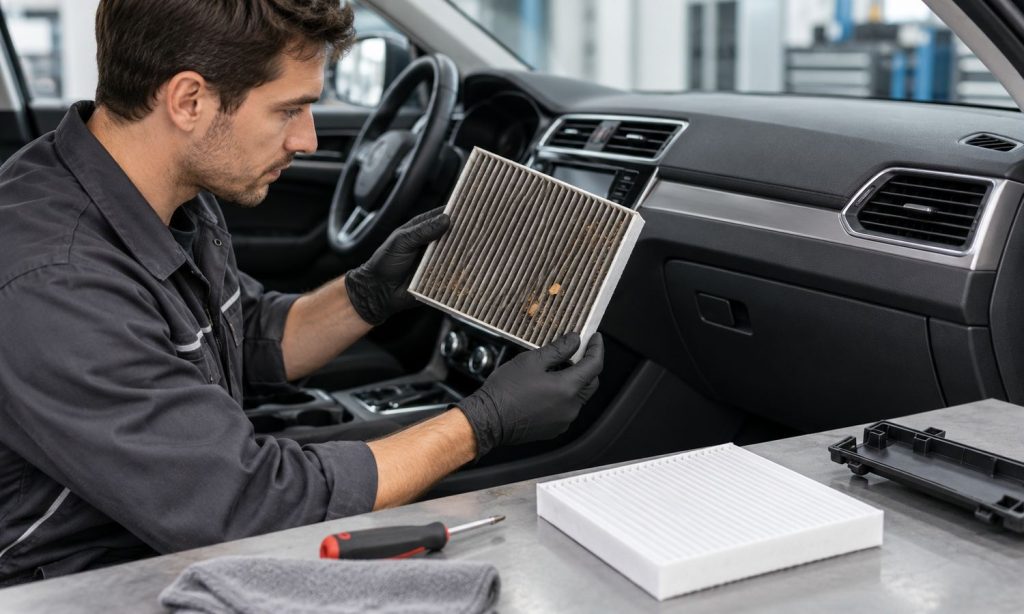
A cabin filter can collect dust, leaves, and other debris. If it becomes damp or heavily contaminated, it may contribute to unpleasant airflow. Check the owner’s manual for the filter location and replacement schedule. Some vehicles have no cabin filter or require trim removal to access it. Use the correct replacement part and do not push debris into the HVAC duct.
Moisture or a blocked condensate drain
Air conditioning removes moisture from cabin air. Water normally drains beneath the vehicle through a condensate outlet, though location varies. A blocked drain can contribute to water in the HVAC case or cabin. If you see wet carpet, standing water, or water around electrical components, stop and arrange inspection. Do not poke a wire into an unknown drain or pull apart trim without the vehicle procedure.
Residue or biological growth in the HVAC case
A persistent musty or sour odor may involve residue or microbial growth on damp surfaces. Smell alone cannot confirm mold. If the odor is strong, returns soon after cleaning, or is accompanied by visible contamination, ask a technician to inspect the evaporator case and drainage system. Avoid foggers or disinfectants unless the vehicle maker explicitly approves the product and process.
Checks you can make safely
- Remove trash and inspect floor mats and carpet for spills or dampness.
- Check the owner’s manual for the cabin filter location and service interval.
- If access is straightforward, inspect the filter and replace it if the manual indicates.
- After using AC, observe whether water drips under the vehicle; absence of a drip is not conclusive in every condition.
- Record when the odor occurs and whether cooling and airflow have changed.
Do not spray vinegar, bleach, disinfectant, perfume, or household cleaner into the intake or vents. These products may damage surfaces, leave residue, or create breathing irritation. Do not try to “top off” refrigerant based on an odor. If cooling is poor, a trained technician can test the system with appropriate equipment.
When professional service is needed
Arrange service if the smell persists after a permitted cabin-filter replacement, if water is entering the interior, or if cooling performance changes. Mention recent water intrusion, spills, and any filter work. Vehicle air-conditioning systems contain pressurized refrigerant and vehicle-specific components. In the United States, paid service of motor vehicle air conditioners is subject to EPA Section 609 requirements; refrigerant must not be intentionally vented. Do not open a service port or handle refrigerant yourself.
If the system is also blowing warm air, use the separate guide to troubleshooting car AC blowing hot air. Poor cooling and a vinegar-like odor may have different causes.
Check the simple causes of a sour odor
A sour smell from the car AC does not identify one specific fault. Odor can come from a damp cabin filter, moisture on HVAC surfaces, debris near an intake, a blocked evaporator drain, or an unrelated spill inside the cabin. Note whether the odor appears only when cooling, when the fan first starts, or whenever the HVAC runs. That pattern helps a technician narrow the inspection but does not confirm a diagnosis.
Inspect the cabin filter safely
Check the owner’s manual for the cabin-filter location and replacement interval. If it is accessible, inspect for dampness, leaves, or heavy contamination and install only the correct replacement in the indicated airflow direction. Do not spray household disinfectant or fragrance into the vents. Some HVAC cleaners are designed for vehicle systems, but use them only as directed and only if appropriate for the vehicle.
When professional service is appropriate
If odor persists after replacing a contaminated filter and removing ordinary cabin debris, ask a technician to inspect the evaporator drain and HVAC case. A drain problem can leave moisture where it should exit. Avoid reaching into the fan or inserting tools into ducts. If the smell resembles fuel, exhaust, burning plastic, or an electrical fault, stop using the system and arrange prompt inspection.
Keep windows clear and dry the cabin after spills or wet-weather trips. Make sure floor mats are not trapping water and check under them periodically. These simple habits may reduce lingering odors, but they do not substitute for repairing a leak or servicing a contaminated HVAC system.
A simple odor troubleshooting log
Write down when the smell starts, how long it lasts, which fan setting is used, and whether it changes when outside air or recirculation is selected. Note whether the cabin was wet, whether the car sat unused, and if the odor appears in heat as well as cooling. This information can make a car AC inspection more efficient. Do not repeatedly run a system that smells like burning or fuel.
Check for water and debris
Look at the floor mats, carpet edges, and cargo area for dampness, but avoid dismantling dashboard panels. Remove ordinary leaves from accessible cowl areas only when the vehicle is off and the manual permits it. If water pools inside after rain, arrange leak diagnosis. A car AC can produce normal condensation, but water should drain outside rather than soak the cabin.
Avoid foggers or disinfectant sprays unless the product is designed for vehicle HVAC use and the label gives clear instructions. Some chemicals can damage materials or irritate occupants. If a treatment is needed, let a qualified technician choose one suited to the system. Replacing a dirty cabin filter may help, but it will not repair a blocked drain or hidden leak.
When you schedule service, describe the odor without guessing at the cause. Ask whether the inspection includes the cabin filter, evaporator drain, and HVAC case. A repeatable symptom log and a clear estimate are more helpful than buying multiple odor products without a diagnosis.
Keep the HVAC system dry and clean
Use the vehicle’s outside-air setting when appropriate and follow the manual for HVAC operation before parking. Some manufacturers recommend running the fan briefly after cooling to help dry components, but practices vary by model. Do not disable safety or defogging functions to avoid an odor. Keep the cowl intake clear of leaves and check that cabin carpet is not holding moisture.
If a car AC odor appears after a spill or wet shoes, clean the affected carpet with a suitable interior product and dry it fully. Avoid saturating upholstery or pushing liquid into vents. If odor continues after the cabin is dry and the filter is replaced, a technician can inspect the drain and evaporator case. Masking smells with fragrance may make diagnosis harder.
Describe the odor and its timing accurately when booking service. A sour smell alone does not prove mold, refrigerant leakage, or a mechanical failure. Prompt inspection is appropriate if the smell changes to burning, fuel, or exhaust, or if occupants feel unwell. Leave potentially unsafe areas and arrange professional help.
How to describe the problem to a shop
When a car AC smells unusual, tell the service advisor when the odor begins, whether it fades, and whether the vehicle recently had water intrusion or HVAC work. Share whether the smell is sour, musty, sweet, fuel-like, or burning, but avoid naming a failed component. The description helps the technician reproduce the concern without biasing the inspection.
Ask for a clear service recommendation
Before approving cleaning or parts, ask what inspection found and how the proposed work addresses it. A cabin-filter replacement, evaporator cleaning, and drain repair solve different problems. Request the price and whether the service includes a follow-up if the odor returns. Keep the invoice and note the date so you can compare symptoms afterward.
Persistent smell, visible water, or a warning light deserves attention. Avoid repeatedly applying fragrances, because they can cover the symptom without correcting its source. A safe diagnosis is more useful than guessing whether the issue is mold, debris, or condensation.
Describe the odor when booking service
Tell the service advisor when the odor starts, how long it lasts, and whether it occurs with cooling, heat, or the fan alone. Mention wet carpet, recent spills, or HVAC work. A sour odor does not prove mold or a refrigerant issue, so describe what you notice without naming a failed part. The details can help the technician reproduce the concern.
Avoid repeated fragrance sprays or foggers that may mask the symptom. Ask what inspection found and whether the recommendation addresses the filter, drain, or HVAC case. If the smell turns burning or fuel-like, stop using the system and arrange prompt inspection.
Avoid masking a warning odor
A strong fragrance can make it harder to determine whether a car AC odor has improved. Avoid mixing cleaners or spraying household products into vents. If you try a filter replacement, note whether the smell changes and tell the technician. Do not continue using the system if the odor suggests burning wiring or fuel.
A clean, dry cabin helps prevent recurring smells, but it cannot correct a leak or blocked drain. Ask the repairer to explain the cause and any follow-up check needed.
If the car AC smell persists after ordinary filter service, request inspection of the drain and evaporator area. A technician can explain whether cleaning or repair is warranted.
Frequently Asked Questions
Does a vinegar smell mean my car has mold?
No. Odor alone cannot confirm mold. Moisture, filter contamination, spills, or HVAC residue can produce unpleasant smells and need different checks.
Can I spray cleaner into my car vents?
Avoid household sprays or disinfectants unless the vehicle manufacturer specifically approves the product and method. They can leave residue or damage components.
Can a cabin air filter cause a sour smell?
A dirty or damp cabin filter can contribute to odor, but it is only one possible cause. Follow the manual for inspection and replacement.
Should water drip under my car when the AC runs?
Condensate may drain under the vehicle, but amount depends on weather and operation. No visible drip alone does not prove a blockage.
Can refrigerant smell like vinegar?
Do not use odor to identify refrigerant or diagnose a leak. If cooling is poor or you suspect a system fault, have a qualified technician test it.
Final Words
A car AC that smells like vinegar needs observation, not guesswork. Check for cabin moisture and follow the manual for the cabin filter. Avoid household chemicals and refrigerant handling. If the smell persists, water enters the cabin, or cooling changes, ask a qualified technician to inspect the HVAC system.
Pingback: How to Fix AC Blowing Hot Air in a Car
Pingback: How Often Should You Change a Car Air Filter?