Uneven tire wear after suspension work on a Ford F-150 4×4 often means the truck’s alignment, ride height, or tire condition changed during the repair—or that a separate tire, steering, or suspension issue became easier to notice afterward. The pattern across the tread is a useful clue, but it does not identify the failed part by itself. Before replacing tires or adjusting anything, record where the wear appears, confirm tire pressures, and ask the shop to recheck the work and alignment using the specifications for your exact model year, axle, and suspension configuration.
Start by identifying the wear pattern
Park on level ground, let the tires cool, and inspect the full tread width on all four tires. Run your hand carefully across the tread blocks; avoid exposed cords or sharp damage. Note whether wear is mainly on one shoulder, both shoulders, the center, or in alternating patches. Check whether the same pattern appears on both front tires, both rear tires, or just one corner. A photo and a simple tread-depth comparison across inner, center, and outer grooves can help the technician distinguish a new change from older wear.
One-sided shoulder wear can be consistent with alignment angles being out of specification, but it can also follow looseness, bent parts, or incorrect ride height. Wear on both shoulders can point to underinflation, while center wear can be consistent with overinflation; pressure should be checked against the truck’s door-jamb tire label, not the maximum molded on the tire. Cupping or scalloped patches may involve wheel balance, a tire defect, or parts that are not controlling wheel motion properly. These are clues, not diagnoses. Ford’s owner manual and tire placard govern the correct pressure and maintenance details for the individual truck.
What suspension work can change
Replacing shocks alone typically does not provide an alignment adjustment, but access to parts, ride-height changes, worn hardware, or other repairs performed at the same visit can affect the final result. Control arms, ball joints, tie rods, steering links, springs, torsion-bar adjustments, and lift or leveling components can change wheel position or the geometry used for alignment. If the truck received a lift, leveling kit, different wheels, or tires with a different size, tell the shop; the original factory setup may no longer describe the current configuration.
New parts can also reveal problems that were already developing. A worn bushing may shift under load, a seized adjuster may prevent the alignment from holding, and a bent component may keep readings from reaching specification. If the steering wheel is off center, the truck pulls, or the tire wear began soon after service, return to the installing shop with the invoice and ask them to inspect the affected components and compare pre- and post-repair alignment readings.
If shocks were part of the repair, review the truck-specific considerations in how to match replacement shocks to Ford F-150 ride height and use and signs F-150 4×4 shocks need inspection. For the 2013 configuration, the 2013 Ford F-150 4×4 shock fitment guide is a starting point for verifying application; confirm the vehicle details before ordering.
Checks to make before another alignment
- Confirm tire pressure and size. Set cold pressures to the vehicle placard and verify that tire sizes match the approved fitment for the truck.
- Check wheel and tire condition. Look for impact damage, bulges, separated tread, bent wheels, missing weights, or an out-of-round tire. A damaged tire may need immediate professional assessment.
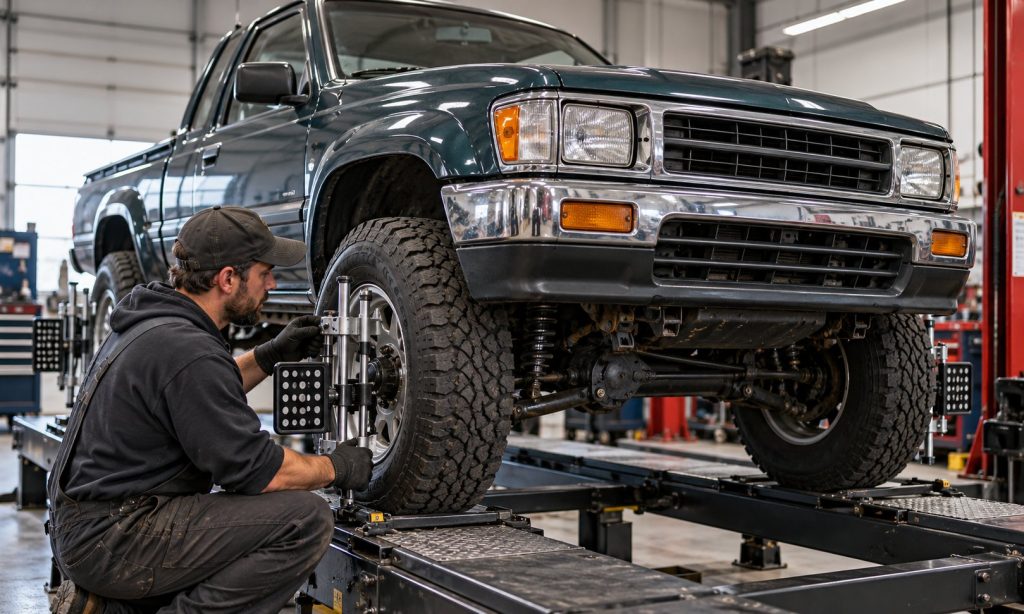
- Ask for a four-wheel alignment inspection. Request a printout showing the measured angles and the applicable specifications. The technician should explain any value that cannot be adjusted into range.
- Inspect the parts disturbed during service. Ask whether fasteners, bushings, joints, steering links, and adjusters were checked and tightened according to the repair procedure.
- Verify ride height and installed parts. Compare left-to-right stance and check that the replacement parts, springs, and any lift components match the truck’s exact cab, engine, axle, and 4×4 configuration.
- Consider rotation and balance. Rotation can help even wear when the tire maker and vehicle instructions permit it, but it will not correct an alignment fault. Balancing addresses vibration and uneven mass, not incorrect toe or camber.
Do not ask for an alignment adjustment before a loose or damaged part is repaired. A shop may be unable to obtain stable readings until it corrects the underlying issue. NHTSA recommends having uneven tread wear checked and addressing tire damage; if a tire has cords showing, a bulge, or a sudden loss of pressure, stop driving on it and arrange professional help. For general context on tire condition and replacement timing, see tread, age, and damage checks for Ford truck tires.
Use alignment results and wear monitoring together
A successful alignment printout only describes the measurements at that moment. Ask whether the readings were within the correct specifications before and after adjustment, whether the steering wheel was centered, and whether the truck’s load or modified ride height affected setup. If the truck carries tools or tows often, explain its normal use so the shop can follow the applicable service procedure. Do not assume a generic “green” result proves every suspension component is sound.
After the cause is addressed, check pressure monthly and inspect tread regularly. Record tread depth at the inner, center, and outer grooves and compare readings after a few hundred miles; a recurring difference merits a follow-up. Follow the owner manual and tire manufacturer for rotation intervals and permitted patterns. F-150 driveline, tire type, and staggered or directional fitments can limit which rotation pattern is appropriate. A general explanation of how rotation patterns affect tire life can help frame the question, but use the F-150 instructions for the actual pattern. If you are reviewing replacement tire choices after resolving the wear, compare fitment first; our Ford F-150 4×4 all-terrain tire guide covers that separate decision. For another pickup example, compare the Nissan Titan tire-wear-after-suspension-work guide; use the Ford specifications for your truck.
Frequently asked questions
Can new shocks cause uneven tire wear on an F-150?
Shocks themselves do not set alignment angles, but suspension work may coincide with changed ride height, disturbed hardware, worn parts, or an alignment issue. Have the actual tire pattern and post-repair measurements checked before blaming a specific part.
Should I get an alignment after suspension work?
It depends on which parts were changed and the vehicle’s service procedure. Work involving steering links, control arms, ride height, or related geometry commonly calls for an alignment check. Ask the repair shop what was disturbed and request its measured readings.
Will rotating the tires fix the uneven wear?
Rotation can move a tire to another position and may slow an eligible pattern from becoming more pronounced, but it cannot correct the cause. Follow Ford and tire-maker instructions, and diagnose alignment or damaged components first.
Can I keep driving if one tire is wearing quickly?
Do not continue normal driving if you see cords, a bulge, a separation, or feel severe vibration or pulling. Stop safely and arrange inspection. If wear is gradual with no visible damage, schedule a prompt tire and suspension inspection rather than waiting for the next rotation.
Does a “green” alignment report mean the suspension is fine?
No. It means the displayed alignment values fall within the selected limits at the time of measurement. It does not prove that every joint or bushing is tight, that the tire is undamaged, or that the truck will hold alignment under load.
Final Words
When uneven tire wear appears after F-150 4×4 suspension work, use the tread pattern as a clue and verify pressure, tire condition, installed parts, ride height, and alignment before replacing tires or changing settings. Ask for the alignment readings and an inspection of the hardware involved in the repair. If wear returns, pulling develops, or a tire shows structural damage, have the truck assessed promptly and follow the Ford and tire-maker instructions for its exact configuration.