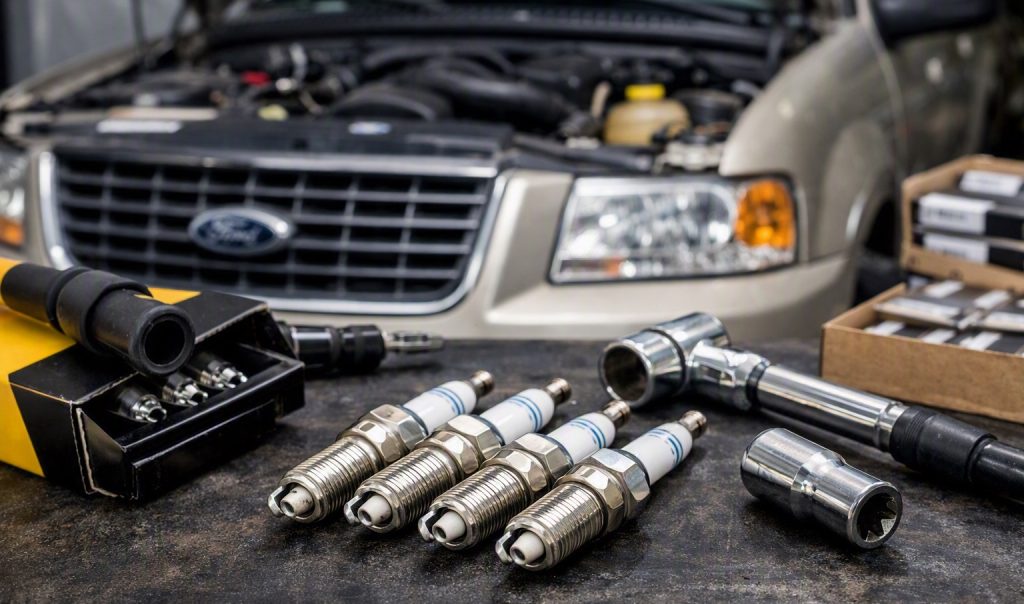
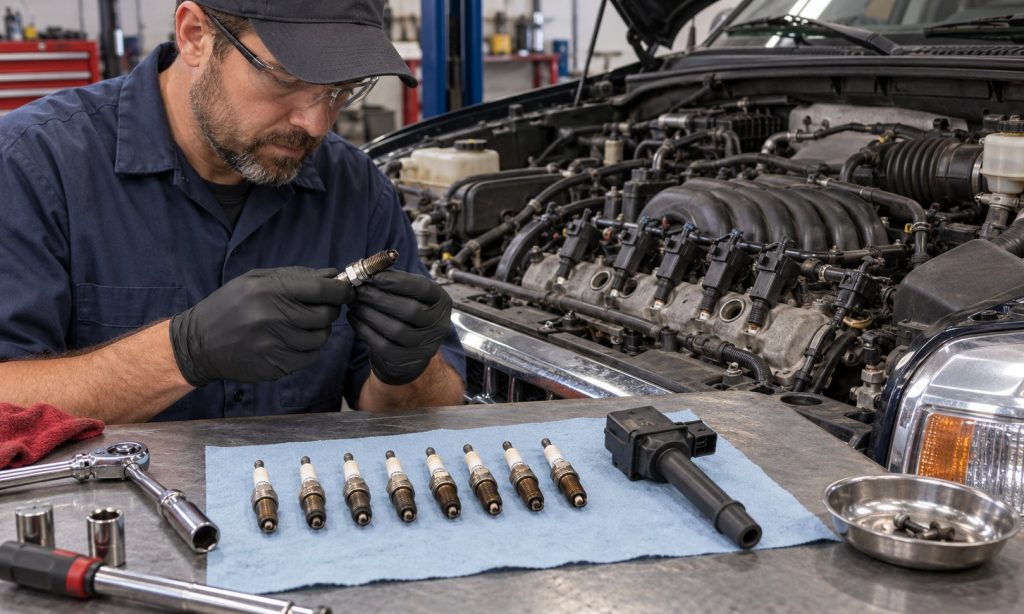
Choosing spark plugs for a Ford 5.4L Triton starts with the exact model year and engine version, then the vehicle’s original specification and the plug maker’s current application listing. The 5.4L V8 appeared in different Ford vehicles and configurations over many years, so “5.4 Triton” does not identify one universal plug, gap, or service interval. Driving conditions help determine how closely to follow maintenance guidance, but they do not automatically justify a different heat range or aftermarket design. Confirm the correct application first, then compare the plug’s material, stated service life, and intended use.
Identify the engine before comparing plugs
Record the vehicle year, model, engine, VIN, and any emissions or performance modifications. Check the owner’s manual, under-hood emissions label, and Ford or Motorcraft parts catalog for the specific engine and plug specification. Some 5.4L variants use different cylinder-head and ignition configurations; a listing for a similar Ford truck may not apply to an Expedition, van, or different F-150 year. If the engine has been replaced, tell the parts supplier or technician.
Use the VIN in an official Ford or plug manufacturer catalog. Confirm the listed plug number and any approved supersession, then check whether the catalog calls for a particular electrode design, seat, thread reach, or gap. Do not select solely by thread diameter, a marketplace title, a generic “fits 5.4L” note, or the plug removed from the vehicle. A previous service may have used the wrong part, and some plugs are replaced by a newer service number.
Ford’s owner information for certain 5.4L variants lists their own specifications and service guidance, and Motorcraft’s technical material discusses plug design for particular Triton engines. These documents illustrate why the exact version matters; they should not be used as a substitute for the manual and catalog matching your vehicle.
Compare plug features after fitment is confirmed
- Material and electrode design: Copper-core, platinum, and iridium plugs differ in electrode construction and service-life claims. Choose only a design approved for the exact engine application.
- Heat range: Use the specified heat range unless Ford or a qualified engine builder recommends a change for a documented modification. A hotter or colder plug is not a routine fix for towing, cold weather, or a misfire.
- Gap and condition: Follow the exact year’s specification. Some plugs are pre-gapped, but handling can change the gap; adjust only when the manufacturer permits it and use the correct measuring method.
- Construction and service life: Compare the manufacturer’s stated service interval, warranty, and application notes. A longer advertised life does not make a plug compatible with an engine that calls for another design.
- Installation requirements: Verify whether the service procedure specifies a cold engine, special removal steps, or a particular torque method. Triton engines have model-year-specific service details; do not assume a universal procedure.
Let driving conditions guide maintenance, not guesswork
Frequent short trips, prolonged idling, dusty operation, heavy loads, and repeated cold starts can affect how quickly ignition deposits or symptoms become noticeable. Follow the maintenance schedule for the exact truck and its normal or severe-use category. Do not shorten or extend the interval using another owner’s experience or a generic recommendation without checking Ford’s schedule.
If the engine has a misfire, hard start, rough idle, or reduced power, diagnose the cause before replacing plugs. A coil-on-plug ignition component, connector, wiring, fuel delivery, vacuum leak, or mechanical condition can create similar symptoms. Read diagnostic codes and inspect related components as directed by the service information. Our ignition-parts pre-check guide explains why a symptom alone does not identify the failed part. The Ford 5.4 Triton slow-start and battery guide covers a separate starting-system cause that can be mistaken for an ignition issue.
For product-list context after verifying the exact application, see our Ford 5.4 Triton spark-plug overview or the 2010 F-150 5.4L plug guide. Those pages compare product listings; the VIN-specific Ford specification remains the deciding check. Our cold-weather oil guidance for a different F-150 engine also shows why advice for another engine should not be transferred without checking the manual.
Other engine service items have separate applications. See the Ford 6.7 diesel oil-filter overview, the Ford 6.7 diesel air-filter overview, and F-250 diesel maintenance guidance for towing and dusty driving for those systems. Their part numbers and intervals do not apply to a 5.4L gasoline engine.
What to confirm before the service
Before buying, save the catalog result that matches the VIN and note the plug number, gap information, quantity, and any supersession. Confirm the shop understands which 5.4L version is installed and whether the engine has been modified. When plugs are removed, ask the technician to compare the wear and deposits across cylinders and report any damage, oil fouling, or abnormal combustion evidence. That inspection can reveal a separate issue that a new set of plugs would not correct.
For DIY service, use the exact Ford service instructions and appropriate tools. Avoid over-tightening, damaging the threads, or forcing a plug that does not turn normally. If a plug is seized, broken, or difficult to remove, stop and get qualified help; a rushed extraction can create an expensive cylinder-head repair. After installation, confirm the connectors and coils are seated and verify that the engine runs normally. A persistent misfire or warning light needs diagnosis rather than repeated parts replacement.
Frequently asked questions
Are all Ford 5.4 Triton spark plugs interchangeable?
No. The 5.4L name covers multiple model years and configurations. Verify the VIN, engine version, and current Ford or plug-maker application before ordering.
Should I use a different plug for towing?
Not unless the exact service guidance or a qualified engine specialist calls for it. Towing may affect maintenance needs, but it does not by itself establish a different heat range or plug design.
Do iridium plugs always last longer in a 5.4L Triton?
Material alone does not establish compatibility or service life. Use the approved design and compare the manufacturer’s stated interval for that exact application.
Can a new spark plug fix a misfire?
Only if the plug is the cause. A coil, connector, wiring, fuel, air, or mechanical fault can create similar symptoms. Diagnose the system before replacing parts.
Should I adjust a pre-gapped plug?
Follow the plug maker’s instructions and the vehicle specification. Some designs can be damaged by improper adjustment, and the required gap can differ by engine version.
Final Words
Choose Ford 5.4L Triton spark plugs by the exact year, engine version, VIN-specific catalog listing, and Ford service information. Use driving conditions to select the correct maintenance schedule, not to guess at a different plug material or heat range. Confirm the application before purchase, follow the model-specific installation procedure, and diagnose misfire or starting symptoms before treating them as a plug problem.