When your car’s air conditioner blows warm air, the cause may be a simple control setting or a fault that needs professional diagnosis. Low refrigerant is one possibility, but the system may also have a leak, compressor or fan issue, electrical fault, blocked airflow, or temperature-door problem. The symptom alone cannot identify the failed part. Start with safe checks that do not open the AC system, then note whether airflow, engine temperature, or warning lights have changed. Do not vent refrigerant or connect a recharge can based on guesswork. Paid motor-vehicle AC service is regulated under EPA Section 609, and modern vehicles may use different refrigerants and controls. This guide helps you decide what to check and when to stop.
Start with simple, safe checks
Confirm the settings
Set the temperature to cold, choose an appropriate vent mode, and turn AC on. If the vehicle has automatic climate control, check that the system is not in an unusual mode. Test more than one fan speed and outlet. A control setting problem can imitate a mechanical fault.
Separate weak airflow from warm air
If little air comes from the vents, the issue may involve a cabin filter, blower, duct, or control. If airflow is strong but warm, the cooling system may not be removing enough heat. These clues help narrow the inspection but do not establish a diagnosis. Check the cabin filter only as the owner’s manual permits.
Look for obvious external obstructions
With the engine off and cool, look through the grille for leaves or debris blocking airflow to the condenser. Do not reach behind the grille or touch electric fans; they can start unexpectedly. Do not remove components or spray high-pressure water into the cooling stack. If the condenser appears damaged or heavily blocked, ask a technician to inspect it.
Common reasons AC may blow warm air
- Refrigerant loss: A leak can reduce cooling. Refrigerant should not be added without diagnosing and repairing the cause.
- Compressor or control fault: Compressor operation varies by vehicle, and some systems use variable displacement or electric compressors.
- Condenser airflow problem: Debris, damage, or a fan fault can reduce heat rejection.
- Electrical or sensor issue: Fuses, wiring, pressure sensors, or control modules may affect operation.
- Air-mix door problem: A door inside the HVAC housing may not route cooled air correctly.
- Cabin airflow restriction: A clogged filter can reduce airflow, though it may not be the cause of warm vent temperature.
These are possibilities, not a parts list to replace. Vehicle make, model year, engine, refrigerant, and climate-control design change the diagnostic process. A technician can test pressures, temperatures, controls, and leaks using the correct service information and equipment.
Avoid risky DIY refrigerant work
Do not open refrigerant lines, release refrigerant, or add refrigerant from a retail can without a proper diagnosis. Overcharging, using the wrong refrigerant, or introducing sealant can damage components and complicate repair. EPA rules prohibit intentional venting of refrigerant, and technicians performing paid MVAC service must meet Section 609 requirements. High-voltage hybrid and electric systems add hazards; only qualified personnel should service those systems. Keep hands clear of fans and belts while the engine runs.
When to stop driving or book service
Book service if the AC stays warm, cycles abnormally, makes unusual noise, or has a visible oily residue around a component. If the engine temperature rises, a warning light appears, or you smell burning, turn off the AC and follow the vehicle’s manual for a safe stop. Do not continue driving an overheating vehicle. Tell the shop when the problem occurs, whether it changes with speed, and whether airflow is weak or strong.
If the vents also produce a sour odor, that may be a separate HVAC concern. See why a car AC may smell like vinegar; odor alone does not confirm a refrigerant or mold problem.
Separate airflow problems from cooling problems
If little air comes through the vents, check fan speed, vent selection, and the cabin filter as your manual describes. Strong airflow that feels warm points to a different set of possible issues. Note whether the temperature changes with vehicle speed, engine speed, outside temperature, or recirculation mode. These observations are useful to a technician, but they cannot identify a failed part on their own.
Use safe, non-invasive checks
Confirm that the climate controls are set to cooling, the correct vents are selected, and the engine is at normal operating temperature. With the engine off and cool, look for obvious leaves blocking an exterior air intake. Keep hands and tools away from fans, belts, and hot components. Do not open refrigerant lines, connect an unknown recharge can, or guess at a charge level.
What a technician may test
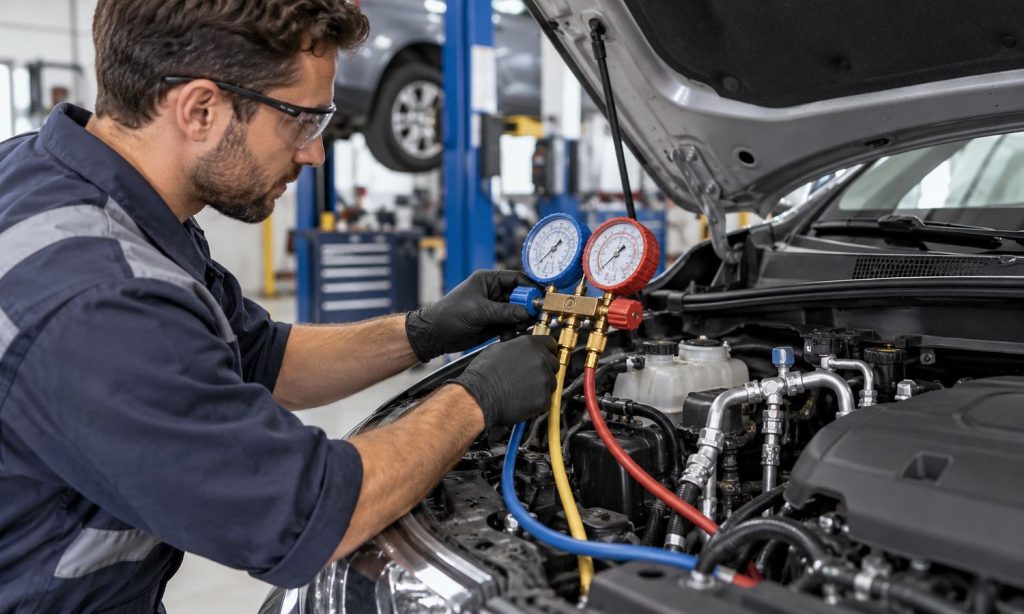
A professional can check system pressures with suitable equipment, inspect for leaks, verify compressor operation, and test electrical controls and cooling fans. Low refrigerant often indicates a leak, so simply adding more may conceal the underlying problem. Vehicle systems use specific refrigerant types and charge amounts; mixing types or overcharging can cause damage. EPA rules apply to motor-vehicle AC servicing, including refrigerant handling.
When booking service, share the vehicle details and the conditions when hot air occurs. Ask for the diagnosis and estimate before authorizing repairs. If the engine overheats, a warning appears, or there is a burning smell, turn off the AC and stop safely according to the owner’s manual. Addressing a car AC problem early can prevent discomfort and help identify related cooling or electrical faults.
When warm air needs prompt attention
Warm air alone may be uncomfortable but does not always require an emergency stop. A burning odor, smoke, abnormal belt noise, electrical smell, or rising engine temperature changes the situation. Turn off the AC, pull over safely if needed, and follow the owner’s manual. Do not open a hot cooling system. If the engine is overheating, arrange assistance rather than continuing to drive.
What information helps diagnosis
Tell the shop whether hot air starts immediately or after the car warms up, whether it happens at idle or highway speed, and whether one side is warmer than the other. Note recent battery work, collision repairs, refrigerant service, or dashboard warnings. These details help guide testing of controls, fans, compressor operation, pressure, and blend doors without replacing parts by guesswork.
Do not purchase refrigerant based only on a low-pressure gauge reading from a retail recharge kit. The system requires the specified refrigerant and measured charge amount, and low refrigerant can signal a leak. Improper charging can damage components and create safety hazards. In the United States, paid MVAC service is subject to EPA requirements and technician certification rules.
A written diagnosis should explain the cause, recommended repair, and any leak test or follow-up needed. Ask whether the repair includes evacuation, recharge by weight, and verification of vent temperature. If the car AC continues to blow hot air after service, return with the invoice and describe exactly when the symptom recurs.
Avoid common do-it-yourself AC mistakes
Do not vent refrigerant, mix refrigerant types, or use stop-leak products without the vehicle maker’s and technician’s guidance. A system may contain a flammable refrigerant or high-pressure components. Paid servicing requires appropriate equipment and compliance with applicable EPA rules. Keep cans and hoses away from children and heat, and never open a line to see whether pressure is present.
A cabin filter is worth checking when airflow is weak, but it is not a universal cure for hot air. Likewise, replacing a relay or compressor based only on a symptom can waste money. A technician can test the electrical controls, compressor command, fans, pressure, and refrigerant charge with the correct service information for your model.
If a repair estimate includes major parts, ask for the test results that support the recommendation and whether a leak check is included. Keep the invoice with any warranty terms. If hot air returns, note when it happens and contact the shop promptly. A clear diagnosis is more useful than repeated recharge attempts.
Keep the system working between repairs
Use the AC periodically when weather permits and follow the vehicle manual for defogging and climate-control operation. Keep the cabin filter on its normal service schedule and clear leaves from accessible exterior intakes. These steps support airflow but do not guarantee that the system will never need service. If hot air returns, record the condition and schedule diagnosis rather than adding refrigerant repeatedly.
Know what a complete repair includes
A repair may include leak detection, component replacement, evacuation, and a recharge measured to the specified amount. Ask whether the shop tested the system afterward and whether parts carry a warranty. If the compressor failed, ask whether contamination was found and whether related components need attention. A clear work order explains why the repair should resolve the hot air concern.
Keep the final invoice and any refrigerant service record. If the symptom recurs, return to the same shop with the dates and driving conditions. Avoid attempting to open the system yourself; high pressure and refrigerant exposure can cause injury. Professional testing is the safe way to confirm whether the fix held.
Keep a symptom log
Note outside temperature, fan setting, vehicle speed, and whether hot air comes from every vent. With dual-zone controls, verify both sides are set as intended. Do not remove dashboard panels to inspect actuators; wiring and airbags may be nearby. These observations help a technician test the system without guessing.
Bring previous service records and mention any recharge or repair. If hot air returns, record when it happens and contact the shop with the invoice. Avoid another recharge without diagnosis because low refrigerant can indicate a leak.
If warm air appears only on one side, mention that when you schedule service. The technician may need to check a blend door or dual-zone control in addition to refrigerant performance. Record whether the symptom changes after restarting the vehicle.
Avoid replacing parts based on online symptom lists. Several faults can produce similar hot air, and testing for your vehicle is needed.
Frequently Asked Questions
Can low refrigerant make car AC blow hot air?
Yes, low refrigerant can reduce cooling, often because of a leak. Testing is needed to confirm the cause; simply adding refrigerant may hide the problem or damage the system.
Can I recharge my car AC myself?
Avoid guesswork and refrigerant handling. The system needs the correct refrigerant and charge amount, and paid service is subject to EPA rules.
Can a cabin air filter cause warm air?
A restricted cabin filter can reduce airflow, but warm vent temperature has several possible causes. Inspect the filter as directed by the vehicle manual.
Why does my AC cool while driving but warm at idle?
That pattern can point to an airflow, fan, or system-performance issue, but it is not diagnostic by itself. A technician should test the system.
Should I keep driving if the AC blows hot air?
Warm AC alone may not make the vehicle unsafe, but watch for engine-temperature warnings, burning smells, or other symptoms. Stop safely if the engine overheats.
Final Words
To address car AC blowing hot air, verify the controls, distinguish poor airflow from poor cooling, and look only for obvious external debris with the engine off. Do not open the refrigerant system or replace parts based on the symptom alone. Persistent warm air, abnormal noise, or warning signs call for qualified diagnosis using vehicle-specific service information.