Mold on car carpet usually means moisture has remained in the cabin long enough for growth to begin. Removing the visible patch is not enough if wet padding or a leak remains underneath. First find and stop the water source, then assess how widespread the problem is. Small, surface-level contamination may be manageable with careful cleaning, but soaked carpet, extensive growth, or mold in hidden insulation can require professional removal. Mold exposure can irritate some people, so anyone with asthma, allergies, breathing problems, or a weakened immune system should avoid cleanup and seek appropriate advice. This guide explains a cautious approach, when to stop, and how to keep the carpet dry afterward. It adapts general EPA and CDC cleanup guidance to a vehicle interior; those agencies’ household guidance is not a vehicle-specific remediation standard.
Find the source of moisture first
Look for clues such as wet floor mats, damp carpet edges, a musty odor after rain, water around doors or windows, or condensation that keeps returning. Water may enter through a damaged seal, blocked drain, spilled liquid, or another fault. These clues do not identify the exact cause. If water returns after drying, have the leak or drainage issue inspected. Cleaning without fixing the source can lead to renewed growth.
Decide whether DIY cleanup is appropriate
A small, limited area on a hard, nonporous surface is different from mold embedded in carpet and padding. Carpet is porous, and contamination can extend below what you see. EPA guidance says porous materials such as carpet may need to be discarded when they become moldy, particularly when they cannot be cleaned and dried thoroughly. In a car, lifting carpet and removing padding can expose wiring, modules, or sharp edges. Use a qualified automotive detailer or remediation professional for broad contamination, repeated water intrusion, soaked padding, or growth beneath seats and trim.
If the affected area is small and accessible
1. Protect yourself and the cabin
Move the vehicle to a ventilated location, away from children and people who may be sensitive to mold. Wear gloves and eye protection. Avoid dry brushing or using compressed air, which can spread dust and spores. Do not run the vehicle’s fan to dry moldy carpet. If you have a respiratory condition or are unsure about exposure, skip DIY cleanup.
2. Remove loose items and dry surface water
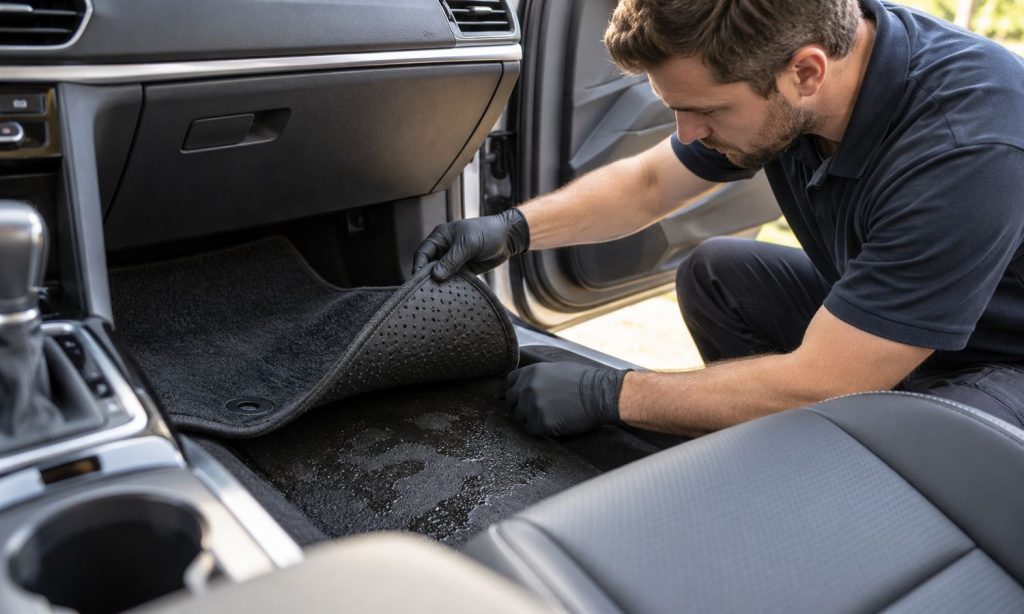
Take out floor mats and movable items. If the carpet is wet, use towels or a wet vacuum designed for the task to remove standing water. Do not pull up trim or disconnect electrical components unless you know the vehicle-specific procedure. Keep liquids away from seat wiring, airbag components, and electronic modules.
3. Clean only with a compatible method
Use a cleaner labeled as safe for the carpet material and follow its directions. Apply it to a cloth or small area rather than soaking the floor. Avoid mixing cleaners, especially products containing bleach and ammonia. Test a hidden spot first. A household surface cleaner may discolor fabric or fail to reach contamination in the backing and padding.
4. Extract and dry completely
Remove cleaning residue and moisture with an appropriate extractor or wet vacuum. Dry the carpet, backing, and padding fully; a damp surface can conceal a wet layer underneath. Use safe ventilation and dehumidification, and do not leave the cabin sealed while damp. If the padding remains wet or the odor persists, professional assessment is warranted.
When carpet or padding should be replaced
Replacement may be more appropriate when mold is widespread, embedded, or returns after cleaning, or when flooding has saturated the padding. The correct decision depends on contamination, material condition, and whether complete drying is possible. A professional can inspect beneath the carpet and identify affected layers. Ask the shop to document the moisture source, material removed, drying process, and any electrical components that need inspection.
Prevent mold from returning
- Repair water leaks and clear the source of repeated dampness.
- Remove wet floor mats and dry them outside the vehicle.
- After a spill, extract moisture promptly and check the padding.
- Inspect the cabin after heavy rain or a water intrusion event.
- Do not mask a persistent musty odor with fragrance; identify the moisture source.
A sour or musty odor from the ventilation system may have a different cause. If the smell appears when the air conditioner runs, see the guide to why a car AC may smell like vinegar. Odor alone cannot confirm mold or diagnose the HVAC system.
Find and stop the moisture source
Visible mold is often a sign of a continuing moisture problem. Before cleaning, look for wet floor mats, damp carpet, water in the spare-tire well, clogged drains, a leaking door seal, or a sunroof drain problem. Check after rain and note whether the wet area returns. Do not assume that a musty odor is mold, but persistent moisture deserves attention because simply cleaning the visible spot will not solve the cause.
When a small cleanup may be manageable
For a small affected area on a hard, nonporous surface, follow public-health cleanup guidance, ventilate the work area, wear gloves and eye protection, and avoid stirring up dust. Keep children and people with asthma or mold allergies away during cleanup. Never mix cleaning chemicals, especially bleach with ammonia or acids. Use a product only on surfaces and in concentrations allowed by its label, and dry the area completely.
Why carpet and padding are difficult
Carpet fibers may look dry while the foam padding or insulation below remains wet. Porous material with extensive growth may not be cleanable in place and may need removal by an experienced remediator. Pulling up seats or trim can involve airbags, wiring, and restraint systems; leave those jobs to a qualified shop. Do not run a household vacuum over visible growth or use a fragrance spray to mask the smell.
After cleanup
Dry the cabin thoroughly and verify that the leak has been repaired. A dehumidifier or airflow can help, but do not use an open flame or unattended high-heat device in the vehicle. Replace contaminated cabin filters if appropriate and follow the vehicle manual. If symptoms occur, the affected area is large, or the odor returns, stop DIY work and seek professional advice. Mold cleanup is complete only when the moisture source is controlled and affected materials are addressed.
Decide whether to call a professional
Consider professional remediation if the affected area is extensive, growth returns, water has soaked padding, or a leak has reached electrical components. Also seek help if someone in the household has asthma, a mold allergy, or another health concern. A qualified company can assess the moisture source, containment needs, and whether porous materials should be removed. Ask what work is included and how the company will verify that the leak has been corrected.
Prevent the cabin from getting wet again
Check door and window seals for visible damage, clear debris from accessible drainage areas, and inspect the trunk and spare-tire well after heavy rain. Avoid blocking factory drains with aftermarket accessories. If the windshield was recently replaced, contact the installer about a suspected leak. Water can travel under carpet and appear far from its entry point, so the wettest location is not always the source.
During cleanup, avoid carrying contaminated mats through the home. Bag removable items for transport and follow local waste guidance. Do not rely on bleach to clean porous carpet; it may discolor fibers without reaching growth beneath them. A strong fragrance only masks odor. Keep notes and photos of the affected area, especially if you need to discuss a repair with an insurer or shop.
After repairs, check the vehicle again following rain and keep a simple moisture log. If the carpet becomes damp again, stop and investigate promptly. Repeated wetting can allow mold to return and increase repair costs. A dry interior, a repaired leak, and safe handling of affected material are the key parts of lasting cleanup.
Health and safety precautions
People can react differently to mold exposure. If cleanup causes coughing, wheezing, eye irritation, or other symptoms, leave the area and seek appropriate medical advice. Do not ask someone with asthma, a mold allergy, or a weakened immune system to perform cleanup. Keep the car outdoors or in a ventilated space while work is underway, and avoid using fans that blow contaminated dust toward occupants.
Wear gloves and eye protection, and use a properly fitted respirator when the cleanup guidance or job conditions call for it. A simple cloth mask is not a substitute for suitable respiratory protection. Avoid dry brushing, sanding, or vacuuming visible growth. If the carpet must be removed, secure loose material for transport and follow local disposal requirements. A professional can advise on containment for larger jobs.
Take photos before and after cleanup, note the location of dampness, and keep receipts for leak repair or remediation. These records help establish whether mold returns and what work was completed. Do not put a wet carpet or removed padding back into the vehicle. Reinstallation should wait until the underlying area is clean and fully dry.
Know when to stop DIY cleanup
Stop if you cannot identify how far moisture has spread, if the odor is strong after the visible area is dry, or if water has reached wiring or seat components. Mold hidden under carpet can extend beyond what you can see. Do not remove airbags, seat belts, or electrical connectors without the correct service procedure. A repair shop or remediation professional can inspect safely and advise whether materials should be replaced.
Build a lasting prevention routine
After fixing the leak, check the affected area after the next heavy rain and after washing the vehicle. Keep floor mats clean and dry, and avoid leaving wet sports gear or towels in the cabin. If windows fog unusually or musty odor returns, investigate promptly. Do not assume an air freshener means the mold problem is gone.
Use a written record of the leak location, repair date, and cleanup steps. This is useful if the issue returns or you need to explain prior work to a future buyer. A dry cabin is the goal: any recurring dampness signals that further inspection may be needed.
Document cleanup and repairs
Photograph damp areas, keep receipts, and note the leak repair date. Recheck the cabin after rain. If moisture returns, the mold risk remains until the source is controlled and affected porous material is addressed. Do not reinstall wet carpet or padding.
Frequently Asked Questions
Can I vacuum mold from car carpet?
Avoid ordinary vacuuming of visible mold because it can spread contaminated dust. A trained professional can choose containment and equipment appropriate to the material and extent.
Does vinegar remove mold from car carpet?
Do not rely on vinegar to solve mold embedded in carpet or padding. The moisture source must be fixed, and porous material may need removal if it cannot be cleaned and dried.
Should I use bleach on car carpet?
No. Bleach can damage fabric and create hazardous fumes if mixed with other cleaners. Use only a compatible cleaner according to its label.
Can mold in a car make people feel sick?
Mold can trigger irritation or allergic symptoms in some people, and individual sensitivity varies. People with asthma or weakened immune systems should avoid cleanup and seek health guidance if concerned.
When should I hire a professional?
Get professional help for extensive growth, soaked padding, recurring leaks, contamination beneath trim, or symptoms during exposure. Do not disturb material you cannot safely access.
Final Words
To get mold out of car carpet, address the water source, assess how far contamination extends, and dry every affected layer. Limited surface cleaning may not solve mold in the backing or padding. If the area is extensive, hidden, or recurring, use a qualified professional. Protect people first, and do not treat an odor with fragrance while the moisture problem remains.